



On Storage
While not usually considered a venue for storage announcements, there were a variety of storage devices demonstrated at Seybold, especially for servers. Several companies demonstrated hardware on and off the floor.
In the Xserve section of Apple’s booth, attendees could catch a glimpse of the forthcoming XServe RAID. Due by the end of the year, the 3U rack-mounted storage unit will connect to the server with a Fibre Channel interface and support 14 drives. The unit matches the Xserve’s brushed aluminum look and has a set of softly glowing LEDs.
Grand Vitesse also introduced the Nomadic 1U, the company’s latest rack-mounted storage system. The Nomadic 1U uses a hardware-based RAID controller for 8 drive bays that can support a total on-line capacity of 1.6 terabytes. It can connect with a variety of host interfaces, including Fibre Channel, Ultra SCSI 320 and even FireWire. The base configuration costs $4,968.
While giving non-disclosure preview briefings in a suite off the floor, Maxtor still took the time to go public with a new line of very-high capacity drives, called MaXLine. The drives offer capacities up to 320 GB and offer a MTBF (mean time between failure) rating upwards of one million hours, the company said.
The MaXLine II line will have a rotation speed of 5,400 rpm, while the MaXLine Plus II series will run faster at 7,200 rpm but top out at 250 GB. Prices will start from $299 to $399 when the drives ship in the first quarter of 2003, the Maxtor said.
On Systems
Aside from Apple, there was little system-related news at this year’s Seybold San Francisco — a place in bygone days, where Unix and Windows vendors vied with the Macintosh for the desktops of content creators. Still, outside on the street, Sony parked a van showcasing its Vaio models’ performance with graphics applications.
Apple offered some illustrations about its key technologies in Mac OS X such as its Quartz imaging model, and new features of the Jaguar update. As mentioned in a previous column, Jaguar also adds support for the Common Unix Printing System (CUPS), a printing service that supports PostScript Printer Description (PPD) architecture as well as Internet printer management.
The inclusion of CUPS now lets OS X take advantage of several other common Open Source Unix printing services, assisting in areas vital to many content creators: printer drivers and PostScript. Apple announced OS X-savvy installer packages for two important applications: Ghostscript, a PostScript interpreter, and Gimp Print, a package of printer drivers.
With Gimp Print, OS X can take advantage of standard Unix drivers for printers (and let vendors avoid the necessity of supporting a separate OS X driver). It also gives owners of older printers a better chance of using the hardware with OS X.
Of course, Ghostscript lets users display and print PostScript files.
The Corel booth — really an lounge section on one side of the show floor — featured demonstrations of the company’s applications, including its Graphigo collaboration environment for the Tablet PC, Microsoft’s forthcoming pen-based tablet platform.
The Tablet PC unit I got a look-see at was Acer’s TravelMate 100 Tablet PC. The forthcoming $2,000 device is a convertible model, meaning the screen can face the keyboard, as well as swivel and fold to work as a pen tablet (see figure 6.). I was concerned about the long-term reliability of the swiveling hinge.
 Figure 6: It’s difficult to describe the twist-and-fold movement that turns the Acer TravelMate 100 into a pen input configuration. An illustration in Popular Science shows its various modes.
 On the Floor
For most of us, the words “digital workflow” signifies our familiar content-creation applications and color-imaging devices. However, these tools can also be used for fine arts printing.
For a number of Seybolds past, vendors such as ENCAD, Epson America, and Mutoh America, have underwritten a fine-arts printing demonstration on the show floor, called the Digital Atelier. The artists involved in the project showed their process of layering large-format images on a variety of unusual substrates such as aluminum sheets, plastic, and thin hand-made papers.
As you might imagine, most of these alternate materials don’t readily accept color inkjet dyes and pigments. However, several of the artists used a new precoating medium from inkAID. It’s very interesting gunk and comes in both clear and colored versions.
I was also impressed by the expressive power available from digital output. Photographer Stephen Johnson created a temporary gallery of his work on the show floor, including several of his large panoramic images.
One of the images was an immense 360-degree color panorama titled Dawn at Stonehenge, England. The image was printed on a single sheet and covers an entire wall. I chanced upon the image, turning a corner and looking up from my appointment sheet. It is truly striking in person, gaining impact from both the subject and its hardcopy realization.
Could a traditional photographic process create such an image? Doubtful.
According to a rabbinic saying: “Better a little with beauty than much without it.” Thanks to digital imaging tools and the creativity of folks like Johnson, we can have beauty and sometimes even a lot of it.
This article was last modified on January 18, 2023
This article was first published on September 19, 2002
Commenting is easier and faster when you're logged in!

Recommended for you
The Riddle of the Ring Contest Answer and Winner
Solve this InDesign mystery for a chance at winning a great prize.

GREP of the Month: Email Addresses
Learn how to automatically format email addresses when applying a paragraph styl...
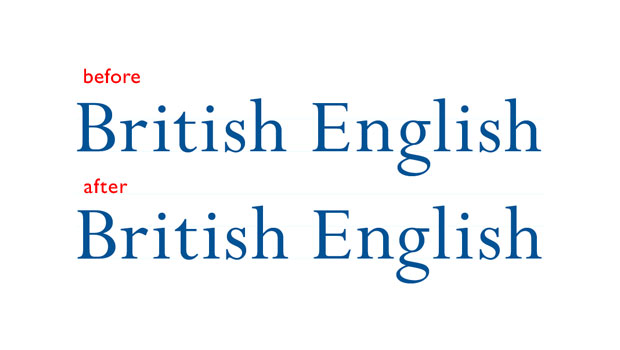
Kerning: A Master Class
I’ve just finished reviewing two rounds of printed page proofs from the se...