



Originally published December 29, 2011
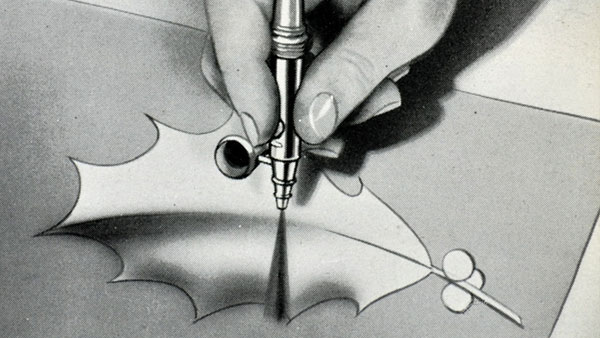
When I came across a 1947 edition of “Painting With Air” (published by the Paasche Airbrush Company and written by Frank J. Knaus), I assumed the airbrush had lost favor in our digital times. Once a standard for photo retouching and original illustration, the airbrush was a common tool in many commercial art and design studios. Now it’s software like Adobe Illustrator and Photoshop that dominate the creation of original art and the retouching of photographs.
But the airbrush is far from dead. After researching it, I was surprised to find that today, people use the airbrush to paint on cakes, fingernails, and fishing lures, and even to apply cosmetics and spray tans. And there’s an active airbrush market for motorcycle and vehicle painting, hobbies and crafts, and textile painting. I imagine some illustrators still choose to use traditional airbrush technology, too. So while its role has changed, the airbrush remains an important art tool. Click on any image for a larger version.


I was always fascinated by airbrushes. They seem like such complex and precise instruments, and very difficult to master — more like a technical pen than a paintbrush. I worked in studios that had them, and someone always seemed to be fussing to get them to work correctly.

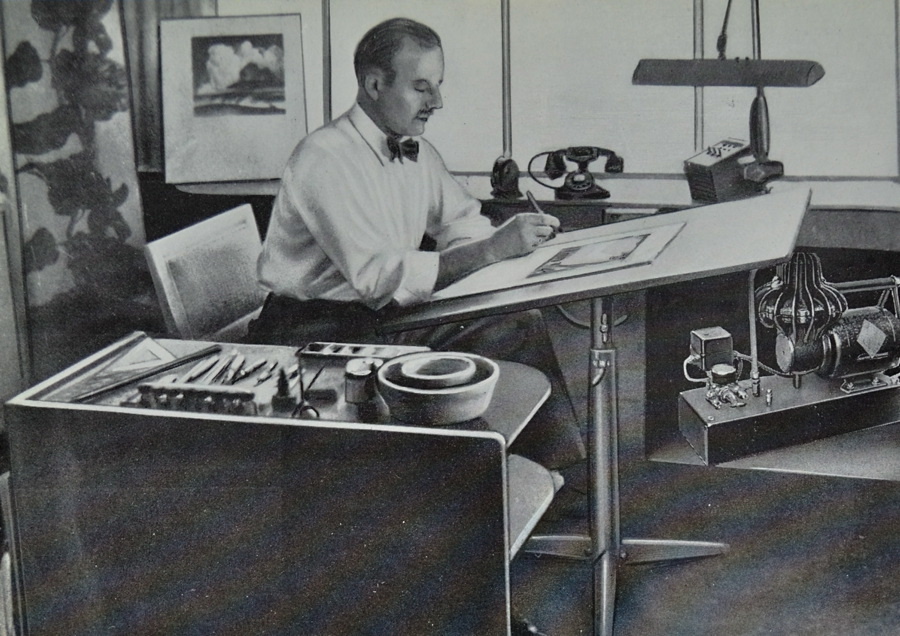
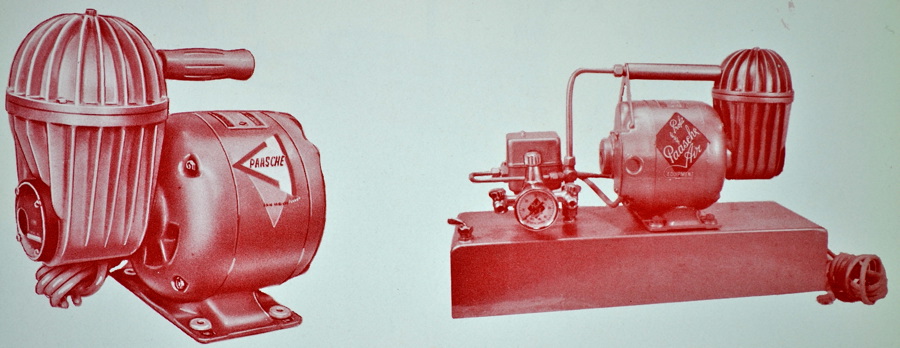
And at least in the original illustration and photo-retouching areas, most of the work seemed to be in cutting the “frisket” paper to create masks and guides so the paint didn’t go beyond where the artists wanted it. The actual airbrush time was minimal in comparison.

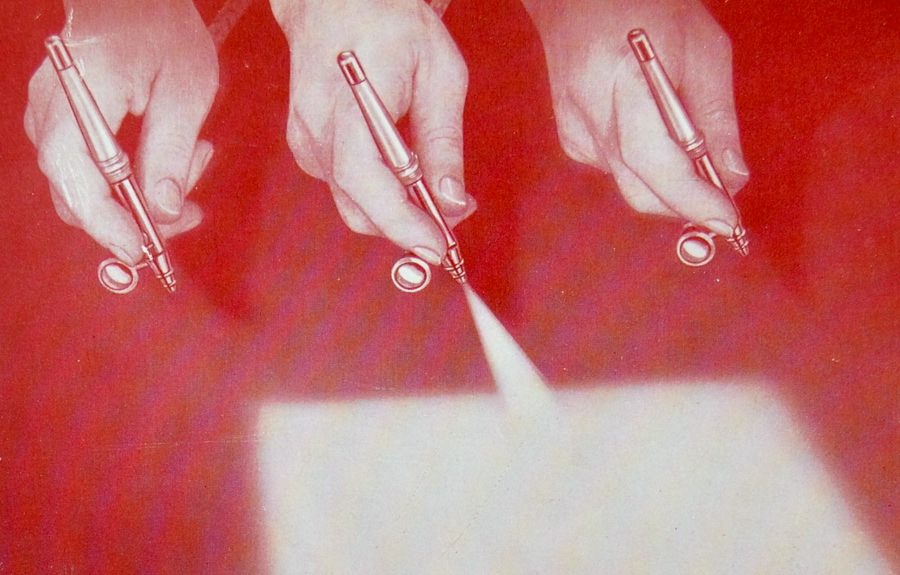
The airbrush has a rich history. Did you know that “Aurignacian Man” used hollowed-out deer bones to spray cave art some 35,000 years ago?


One of my favorite uses for airbrushes is in the field of industrial art — illustrations of machinery and things technical. Some of these illustrations started as photographs and became highly retouched, and others are original works of art with extremely complex detail.


The airbrush seems like a natural tool for illustration of the human form. Hollywood imagery and the airbrush have gone hand in hand over the decades.


Long before drop shadows became so popular thanks to digital tools, a good airbrush artist could turn simple type into dynamic, three-dimensional art.


I know it’s possible to do just about anything with digital art tools, but there is something unique about real airbrush art, at least to me. Perhaps it’s the slight imperfections that make the difference.


I’m glad the airbrush is still in use in many fields, though I do wish we’d see more original illustrations and even photo retouching done this traditional way. There is a softness that’s lost with digital technology.


I’d love to hear if you’re still using an airbrush, and for what. Just click the word “Comments” below. I hope commercial artists keep this tradition alive on some level, even if it isn’t for use in heavy production, which, admittedly, is impractical.


This article was last modified on June 11, 2020
This article was first published on September 28, 2015
Commenting is easier and faster when you're logged in!

Recommended for you

Out of Gamut: Photoshop, Previsualization, and Print Prediction
In my last column, I addressed the question, “How can I get Photoshop to m...

Design How-To: Using Ghosted Backgrounds
A beautiful technique that's unusually easy to design: ghost and repeat a foregr...

Using InDesign, Illustrator, and Photoshop Together: Getting the Most From the Interface
When Adobe first created the concept of a “Creative Suite,” they wanted to make...