



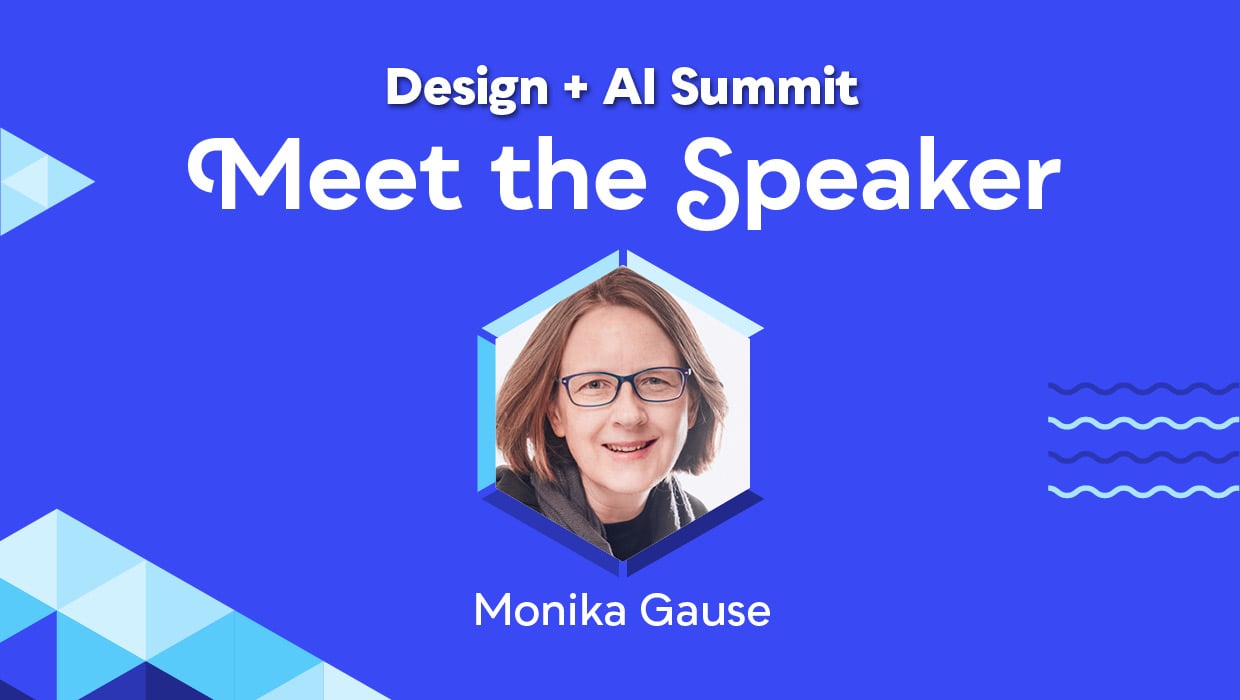
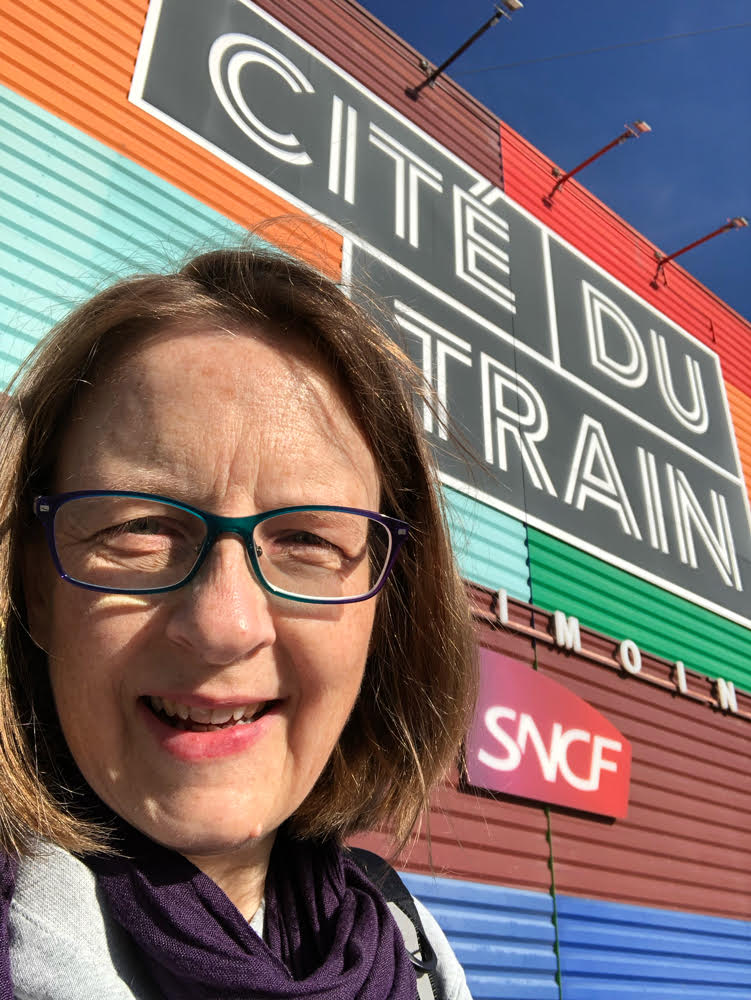
Monika Gause is a graphic designer based in Hamburg, Germany. She is a freelancer designing mostly for print as well as an instructor, writer, and speaker. Monika is a lecturer at Designschule Schwerin and has produced a couple of LinkedIn Learning (formerly video2brain) trainings on Adobe Illustrator, Affinity Designer and Inkscape.
Monika is speaking at our upcoming online event, The Design + AI Summit 2026, part one of which takes place April 9–10, 2026. We thought it would be fun to get to know her better with some Q&A.
You’ve spent years helping designers understand how Illustrator really works. From that long view, what do you think most designers still misunderstand about Illustrator and vector artwork today?
Most of the times when talking about the difference between pixels and vector, people are talking about it being infinitely scalable. For me what sets it apart is its object-oriented nature. Paths having attributes is what makes the difference. In other words: the Appearance panel, effects, brushes, dynamic objects.
When you evaluate a new tool or feature—especially something as disruptive as AI—what questions do you ask yourself first?
I am fascinated by tech first and foremost. I want to understand how it does what it does and then I want to understand the options and the limitations. And then I also want to figure out ways I can use it to make things.
I dislike the term “disruptive”, because it’s just a buzzword. It once had some really positive vibes about it, breaking with old rules and changing the world for the better. But with generative A.I. it’s showing its true colors.
After spending time researching and testing what’s available right now, what surprised you most about AI and vector art in practice?
Nothing. Following this as closely as I do, then there aren’t any apps that suddenly produce overall surprising quality, there aren’t any options that enable new workflows. But the small steps might of course be huge for a certain thing you want to do.
For designers who are newer to Illustrator or vector-based work, which fundamentals do you think still matter just as much today as they did when you were starting out?
An interest into real-world production, so that you can ask the relevant questions in order to be able to deliver files that give you the results you want, and not a headache, nightshifts, and extra costs.
Curiosity, technical understanding and the desire to learn the craft in order to develop your individual style as an illustrator, clever workflows, neat automation, or clean final artwork (whatever applies to your profession).
Layers and Appearance Panel didn’t exist when I was starting out, so when interpreting this question the German way, I cannot name them here. But they sure help you find the cause of the issue you are having with your file.
You are famously passionate about trains and railways. What is it about them that fascinates you most?
It’s a melange of childhood memories, fascination with huge machines, the culture and heritage around them, the fact that they bring you somewhere and the magic of traveling, the atmosphere in and around the train and the stations, the sound of them passing the sleepers when rolling and their signals when approaching crossings, and the logos, typography, architecture, product design. I hope I didn’t forget anything—there is no “most”, it’s all in. No other means of transportation gives me that feeling.
This article was last modified on March 25, 2026
This article was first published on February 17, 2026
Commenting is easier and faster when you're logged in!

Recommended for you
AI in Ai
Improve your vector art workflow with new artificial intelligence features in Ad...
InDesign Magazine Issue 147: Illustrator vs. InDesign
Issue 147 has articles on InDesign vs. Illustrator, InCopy vs. Word, emphasizing...
How to Make a Spiral in Illustrator
Learn how to make spirals of all sizes and varying depths with Illustrator’s Spi...