Valentine’s Day is fast approaching and love is in the air! During a pandemic, you may be even more motivated to show your love digitally. Among the tens of thousands of glyphs listed in the Unicode standard, there is one particular symbol that shows up repeatedly: the heart. Characters include:


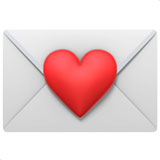
and many more. How did this shape achieve its universal popularity, and how can I get on board?
History of the Heart Shape
There are many theories on how the heart shape came to be. Many believe that the heart symbol originated from the shape of the silphium plant seedpods. The Greeks and Romans used the plant as a form of birth control, and it was so popular that it became extinct by the first century A.D. Another theory is that the shape was based off of a part of the body (you can imagine which ones) or from heart-shaped leaves. Whichever theory is correct, the heart shape was seen as early as in pictograms in the last ice age (Tormsen), appeared upside down until the 14th century, and was used regularly by the 15th century as we know it as a sign of love (Docesvski).
The Digital Heart
You can insert classic heart shapes in text with Unicode U+2764 or U+2665 but there are oodles of other hearts for your typing pleasure, too—hearts with bows, broken hearts, kissing hearts, and hearts in every color you can imagine. A couple online favorites are “smiling face with heart eyes” (U+1F60D)

and “face blowing a kiss” (U+1F618)

This page has a number of popular heart glyphs you can copy and paste. See w3schools.com for the full list of emoji.
How the heart shows up in different fonts
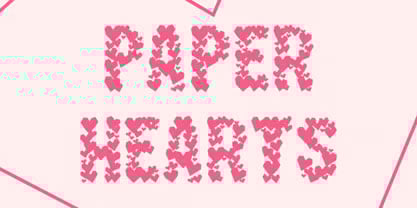
Hearts show up in various fonts—some incorporated into letters, some creating letters from heart shapes, or as alternate characters in a regular font set. Check out the Heart Sweet Heart font or the Paper Hearts font where the actual strokes of the letterforms are built with hearts. The Wedding Heart Monogram font by Happy Letters incorporates hearts into letters to use as a monogram on an invitation, product, or greeting card. I even slipped a heart ligature into my font, Mr. Gabe, because I know it will be well loved.



In a world where a majority of our communication is shared digitally, we crave emoticons and symbols to help us express ourselves. In 2020, the red heart was ranked #2 most popular in emoji use. (Emojipedia) And as we become more and more dependent on digital use, I can’t imagine the heart will lose popularity but perhaps we will seek new shapes to reflect the same sentiment. Which one is next?
Works Cited
Docevski, Boban. The origin of the heart shape ideograph as a symbol of love. 2017.
Emojipedia. https://emojipedia.org/stats. 2020.
Tormsen, David. 10 Intriguing Backstories Behind Common Symbols. 2016.
Unicode.org. Full Emoji List, v13.1
This article was last modified on February 5, 2026
This article was first published on February 2, 2021
Commenting is easier and faster when you're logged in!

Recommended for you
InDesign Magazine Issue 95: Footnotes
We’re happy to announce that InDesign Magazine Issue 95 (March, 2017) is now ava...
Think You Know What OpenType Is? Think Again! Part 2
OpenType is today’s font format of choice for design professionals. Compared to...