



Mix ‘n’ Match Design Process
Most badges seem to have been designed by the engravers, on instruction from the municipality or department placing the order. There are common shapes and elements that, based on catalogs I have going back to 1919, engravers simply mixed and matched.
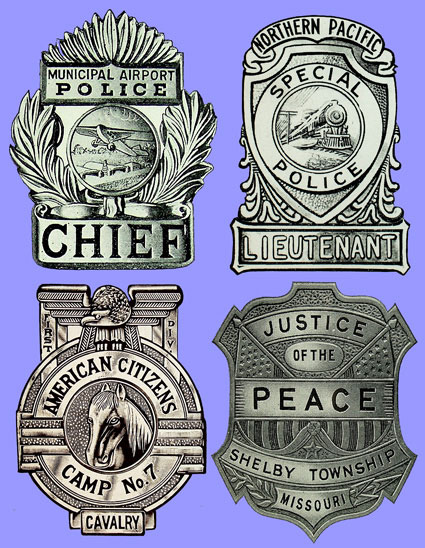
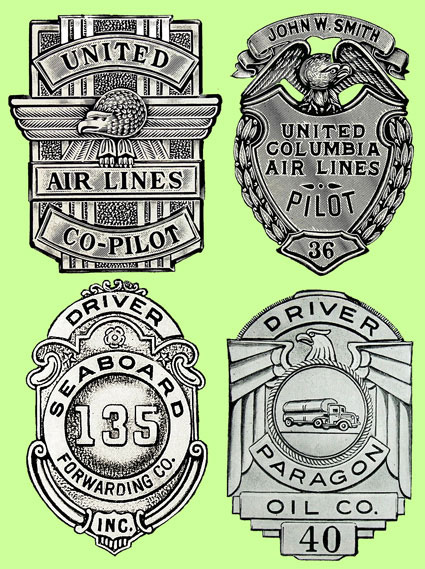
Figure 17 and 18. Many badges, particularly those for smaller organizations and non-law-enforcement, were made up of various stock components and images: the badge equivalent of clip art. The badge maker would start with a basic blank shape and then stamp various designs and lettering based on customer specifications. Most badges could be ordered in a variety of alloys and precious metals, depending on the intended use and budget.
Various agencies favored certain styles and shapes — most sheriff departments still use a star design, though those can range from five to eight points. The U.S. Marshal Service favored a crest-like shield. Railroads had their own unique look.
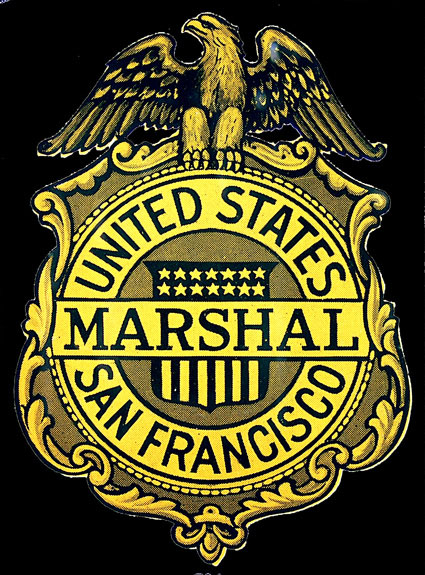
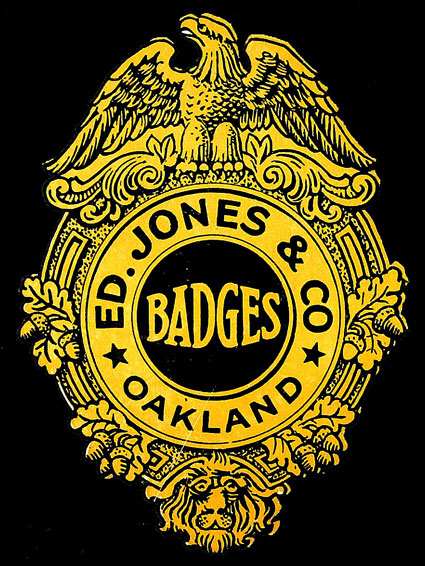
Figure 19 and 20. The United States Marshals (top) favored a shield-type design, produced by the Ed Jones Company, which used a more circular design for its own badge (bottom).
Most recently, the oval-shaped shield has become popular, thanks in part to use by the Los Angeles Police Department and often seen in television and movies. Some people use the term “shield” interchangeably with “badge,” but a shield is really a particular shape of badge.
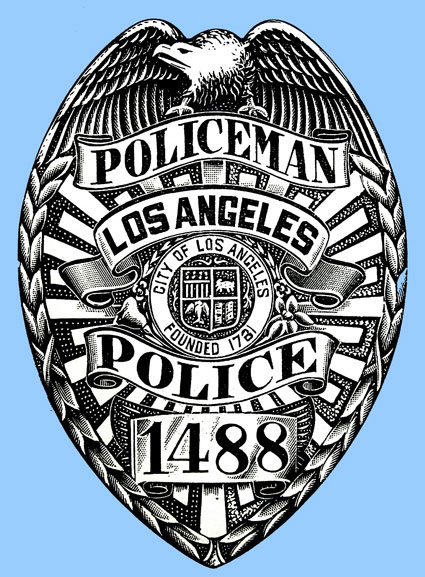
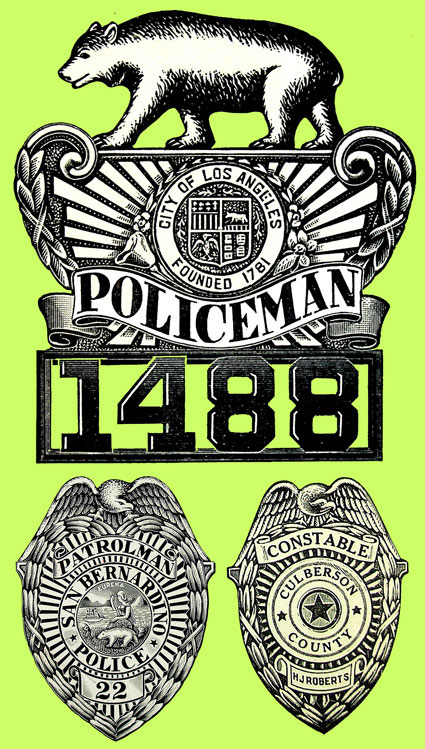
Figure 21 and 22. The radiating-sun ray design of the Los Angeles Police Department (above) became very popular after its use from 1923 to 1940. The cap-badge version (below) used the California state bear instead of an eagle. Below that example are two similar designs from other police departments. The current LAPD badge, made famous during the opening credits of Dragnet, was adopted in 1940 and features an image of the Los Angeles City Hall.
As far as I can tell, other than certain symbols used to denote rank, there are no hard-and-fast rules as to the shape or style of badges and what they convey. A five-star sheriff is no less powerful than an eight-star one, and some departments seem to change back and forth at the whim of the sheriff in charge. In recent years some departments have moved away from five-point stars, as some gangs favor that symbol.
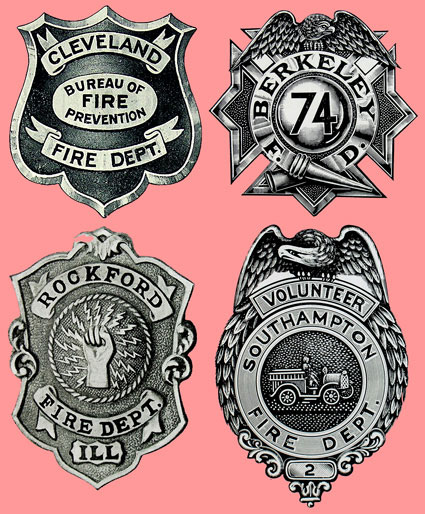
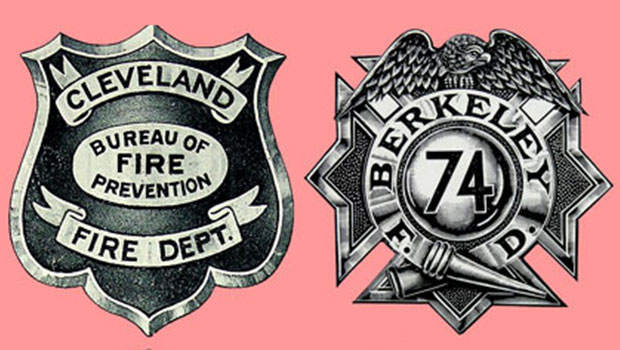
Figure 23 and 24. Fire department badges often use more traditional symbolism. Many departments, such as the Berkeley Fire Department (above, top right), feature a Maltese cross, long associated with fire fighting. The points of the cross represent gallantry, perseverance, loyalty, dexterity, explicitness, observation, tact, and sympathy. The arrangement and number of fire-hose nozzles (below) indicates rank.
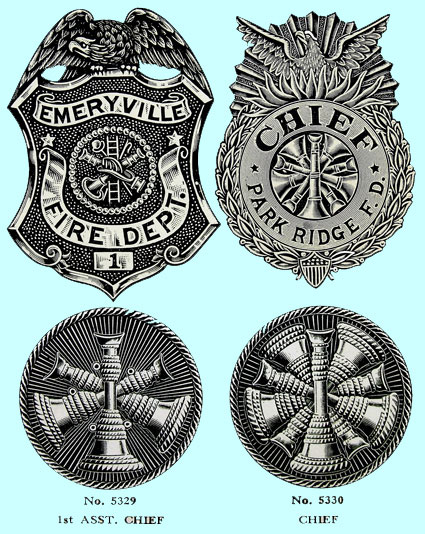
Badges can be made from a variety of material, clearly dependent on the budget of the agency making the purchase. The finest badges are hand engraved using old-style techniques and either gold plated or gold filled. These days they also might include colored cloisonné made from melted colored glass.
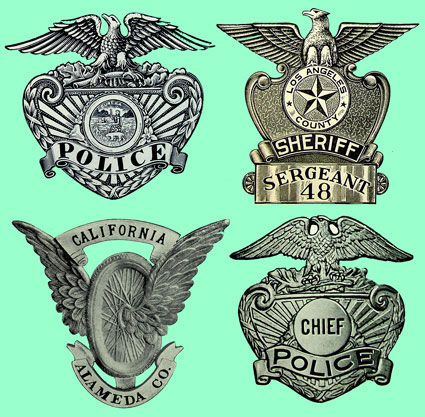
Figure 25 and 26. The smaller badge shapes (above) were often used on caps or other accessories. Cap badges were popular for a variety of professions (below).
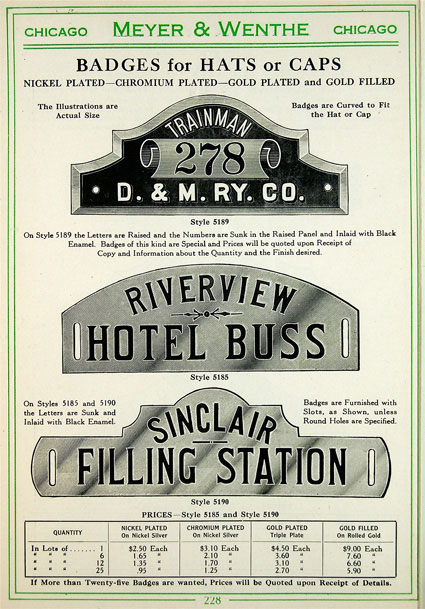
Badges can be made from nickel, brass, silver, gold, chromium, and various combinations thereof. More recently, badges have been embossed using heavy dies, auto-engraved by computer-controlled machines. Many of the companies making badges at the turn of the century are still in business today. Of course, what once cost a few dollars now runs between about $70 and $300, depending on the metals used and the work involved.
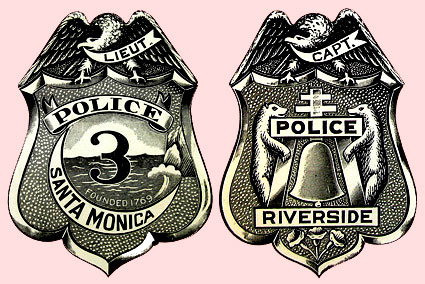
Figure 27. Not all badges use traditional images, as demonstrated by two of my favorites, the City of Santa Monica and the City of Riverside. I’ve been to Santa Monica, so I know there is an ocean there, but despite having been to Riverside, I don’t have a clue what those two animals are.
While badges may be akin to jewelry, they also often serve as the basis for law-enforcement seals that are used on vehicles, buildings, and other official places. So the design of the badge is critical to the look of the entire department. That’s why classic American images, such as stars, eagles, and wreaths are commonly incorporated into the designs.
Contest: A Badge for All Reasons
I don’t think we’ll see a day soon when newspaper delivery folks again carry badges, or waiters present their badge along with the daily specials. Law enforcement has established somewhat of a lock on badges. In most states in the U.S., it’s illegal for citizens to own law-enforcement badges, and even the collector market is a bit nervous about some recent crackdowns. Clearly, any use of a badge (official or not) to imply authority you don’t have is a no-no.
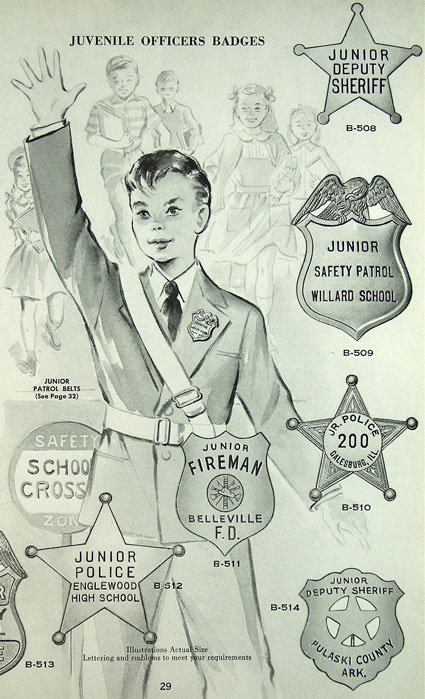
Figure 28. Everyone got in on the badge act at one time, even Junior. This page is from the C.H. Hanson catalog of 1955.
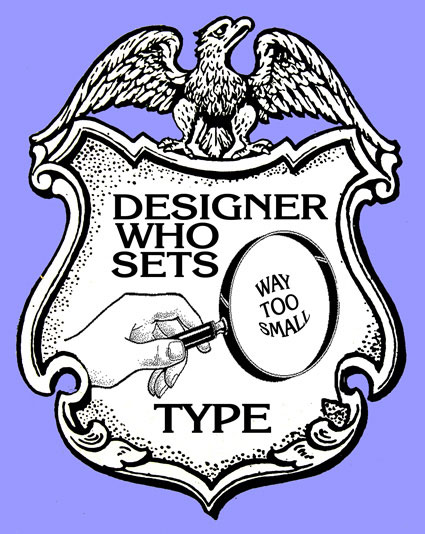
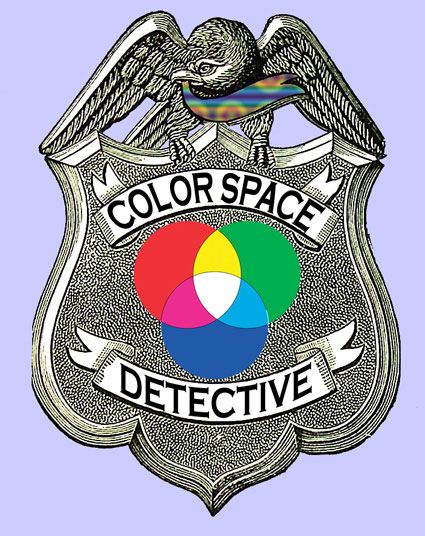
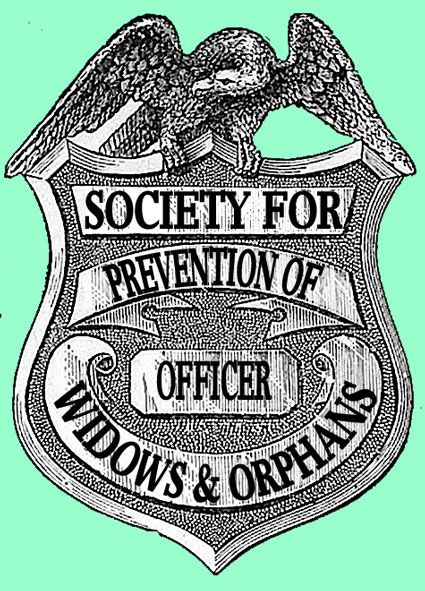
But I do wonder what a resurgence in the use of ornate badges to indicate job status might look like. Accordingly, I’ve designed several modern badges from the historical material in my library, specifically for the Creativepro.com audience. Perhaps next time you show up at a friend’s house to fix a computer or design a logo, you can, along with your preference for Mac or Windows, present your badge.
If you don’t find these insulting enough, you can pretend you’re an Old West Sheriff and craft your own. Just download the file below, which contains JPEGs you can customize. Send your creations to ed****@*********ro.com by January 28, 2008, and we’ll give our top five favorites a $20 gift certificate to Amazon.com!
DOWNLOAD BLANK BADGES HERE
This article was last modified on May 18, 2023
This article was first published on January 11, 2008
Commenting is easier and faster when you're logged in!

Recommended for you

Bringing Out Shape and Detail in the Darkest of Colors
Light Hogs “Is there detail in the blacks?” If you ever asked this question when...
CreativePro Video: How to Use Camera Raw in Photoshop
In the following CreativePro video, Michael Ninness shows us how to use Camera R...

3D Printing With Photoshop CC
Adobe has been building increasingly sophisticated 3D modeling tools into Photos...