




There’s a great new book by Dan Roam called The Back of the Napkin – Solving Problems and Selling Ideas with Pictures. As you might imagine from the title, this book advocates working through complex business ideas by using simple visuals. Indeed, many successful (and plenty of failed) ideas have begun as a few squiggles on the back of a cocktail napkin after a couple Manhattans, or these days, some sort of flavored vodka concoction (or something called a Mojito, which from the ads on television I gather is both an actual cocktail and some sort of lifestyle choice).
If you search around the Web, you can find images of important back-of-the-napkin drawings, such as the simple business plan for Southwest Airlines, early Picasso sketches, a crude first-attempt at a design for the Bilbao Museum by Frank Gehry, and plenty of others.
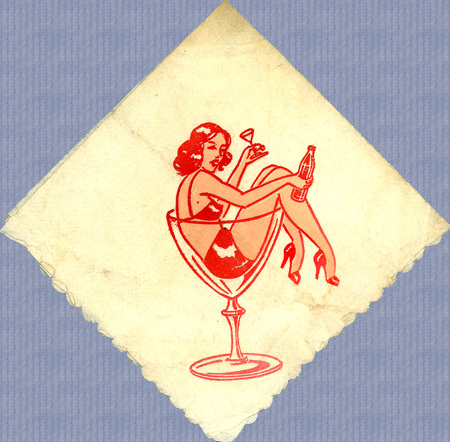
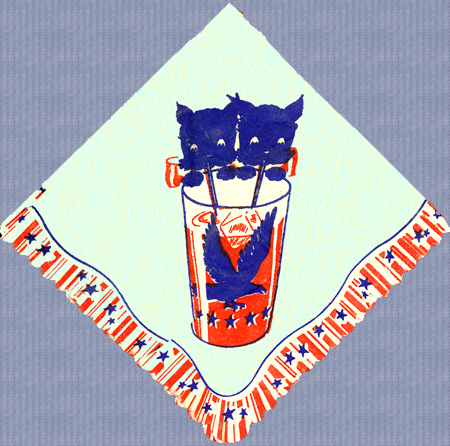
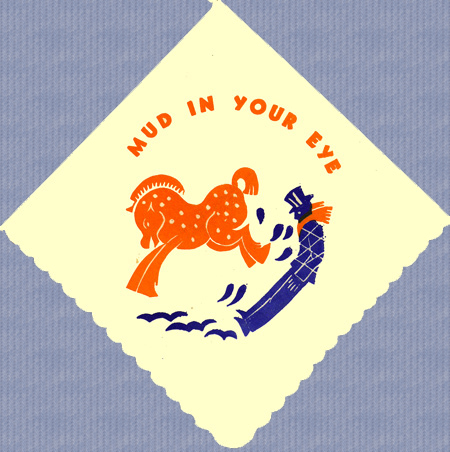
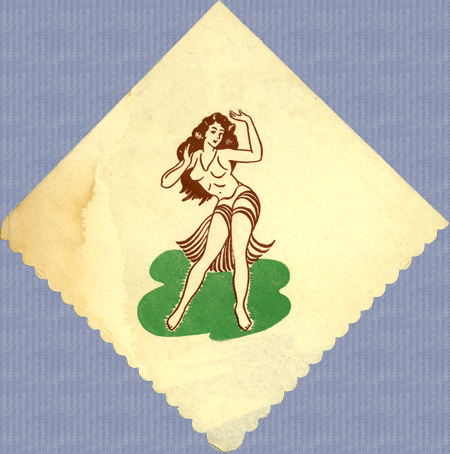
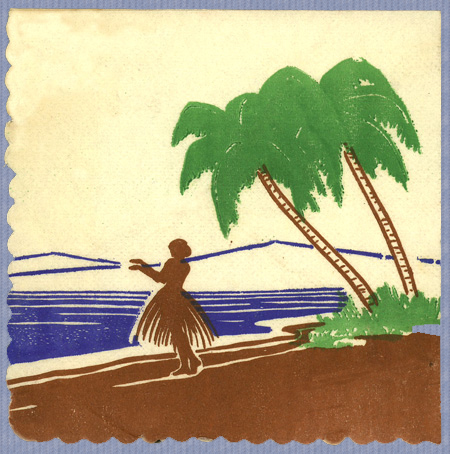
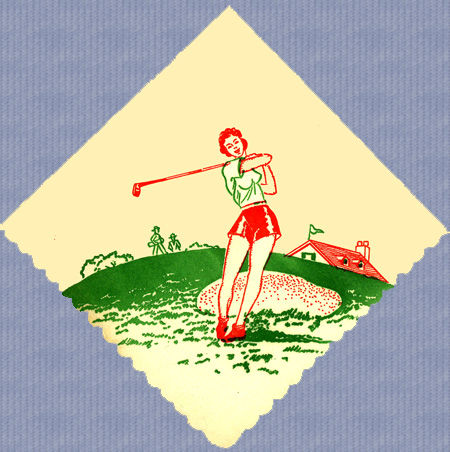
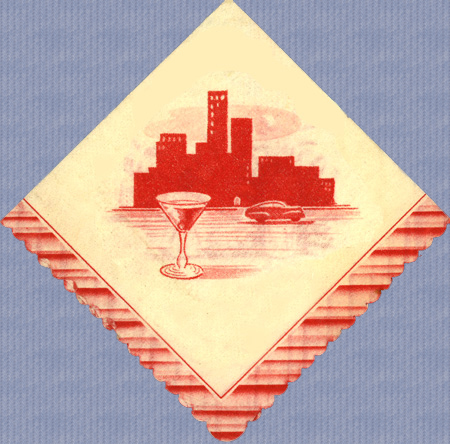
But this week I thought I’d take a look at the front side of some cocktail napkins, lest we forget that not all inspiration and art resides on the back side. All of these are from a scrapbook I came across that belonged to a couple who saved cocktail napkins as mementos of evenings out and travels across the country. On the back of each of these were also written important things: the date and place of the drinking, and the names of other guests at the table.
My favorite cocktail-napkin moment is actually a fictional one. In the final episode of “The West Wing,” there’s a touching moment when then ex-president Jed Bartlet is flying home on Air Force One after eight dramatic years as Chief Executive. His best friend and former Chief of Staff, Leo, has recently died and Bartlett is sitting alone opening a small gift presented to him by Leo’s daughter. In it he discovers a frame containing a worn, tattered cocktail napkin with the words “Bartlet for America” written in ballpoint pen. It is the napkin from a much-earlier episode when Leo first pitched the idea of running for president to his friend. That one piece of paper and those three small words summed up everything that had happened in between.
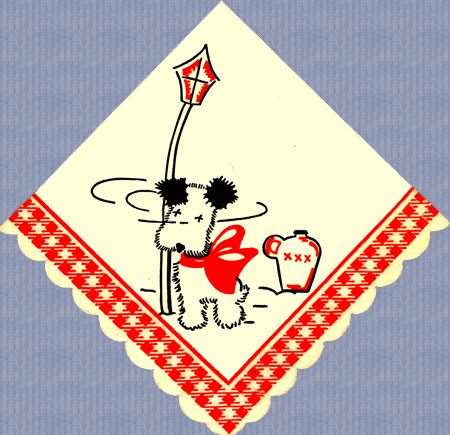
The greatness of napkin wisdom is not just that it is simple, but that it is shared. We write on napkins mostly to engage another person or persons. We use the back of a napkin to prove an important point, to demonstrate a complicated thought, or to send the signal and information that we’d like to see someone again. A napkin thought kept to oneself is just a reminder, not a call to action.
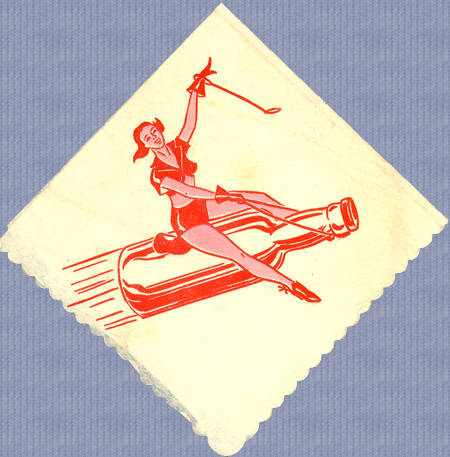
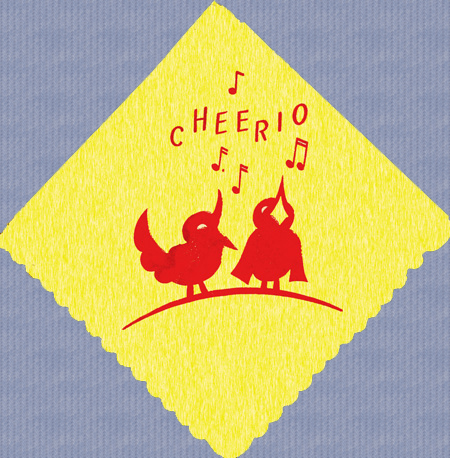
Of course, it isn’t just cocktail napkins that provide a spontaneous white-board for on-the-fly ideas. Bar tabs, menus, coat-check receipts, and many other items have filled in when nothing else is available. The glove box of my car is full of notes and ideas written on tire-rotation schedules, owner’s manuals, and the like.
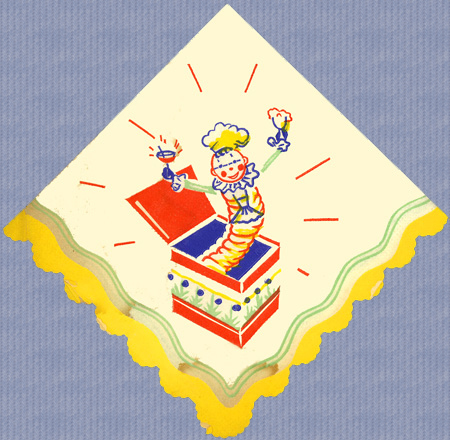
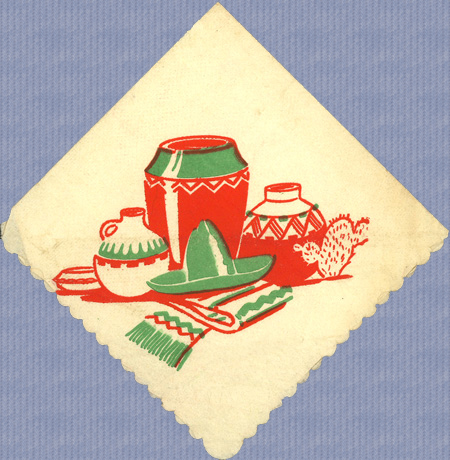
But cocktail napkins certainly play a special role in the exchange of ideas and information. I’ve chosen here to show only cocktail-napkin art of a generic quality—the sort a tavern might buy from a supplier catalog, as opposed to those establishments rich enough to have custom-printed napkins. I prefer the whimsical nature of stock art, unencumbered by logos, phone numbers, and addresses.
I’m sure we all spend a lot less time these days in bars, and discussing business over a few cocktails has lost favor. But somehow getting that special person’s phone number or sketching out a billion-dollar Internet start-up on the back of a Jamba Juice receipt just doesn’t cut it. And I know for certain that wheat grass doesn’t get the creative juices flowing quite the same way a good martini does.
This article was last modified on May 18, 2023
This article was first published on April 4, 2008
Commenting is easier and faster when you're logged in!

Recommended for you
Enfocus PitStop Automate Unveiled at Intergraphic
In its ongoing effort to make graphic arts workflows as reliable and productive...
Top Tips for Illustrator Book Now Available!
Our most popular Illustrator tutorials collected in a convenient PDF book format
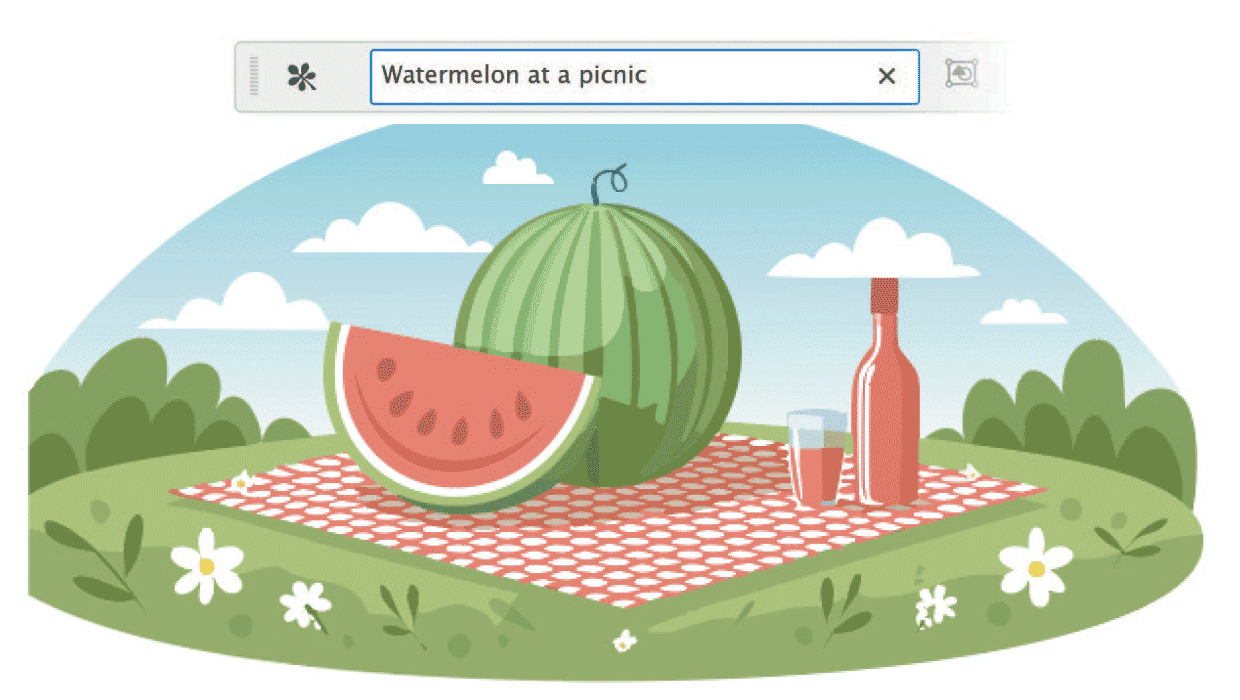
Getting Started with AI in Illustrator
Basic steps to create and modify vector content using the Generative AI features...