


Photographic Lessons from a Political Convention


The 2008 Democratic National Convention, which I covered for The Digital Journalist, just wrapped up. It may have been the most well-documented political convention in the history of the world. Some 15,000 media members were there to record our take on this historic convention, including thousands of photographers.
How do you stand out from the pack when literally millions of frames are being captured? It’s a question with an answer that can benefit all photographers, including amateurs and semi-pros.
Access Is Everything
In photojournalism, if you can’t get access to what you want to photograph, the pictures just won’t happen. At the convention, security was tight, and even with the right credentials, things could change, access was always limited, and overzealous security or real safety issues could mean a camera position you were counting on disappeared.
In your own work, it’s important to explore as many angles as you can. You’re not restricted as I was at the convention, so take advantage of your freedom. Get away from your comfort zone and try new and different angles.
When shooting in the field, you may not have that opportunity again, so shoot a lot and move around to give yourself maximum choice when editing. Don’t survey the scene with your eyes only: Look through the camera and start close-up, really close-up, and work your way back.
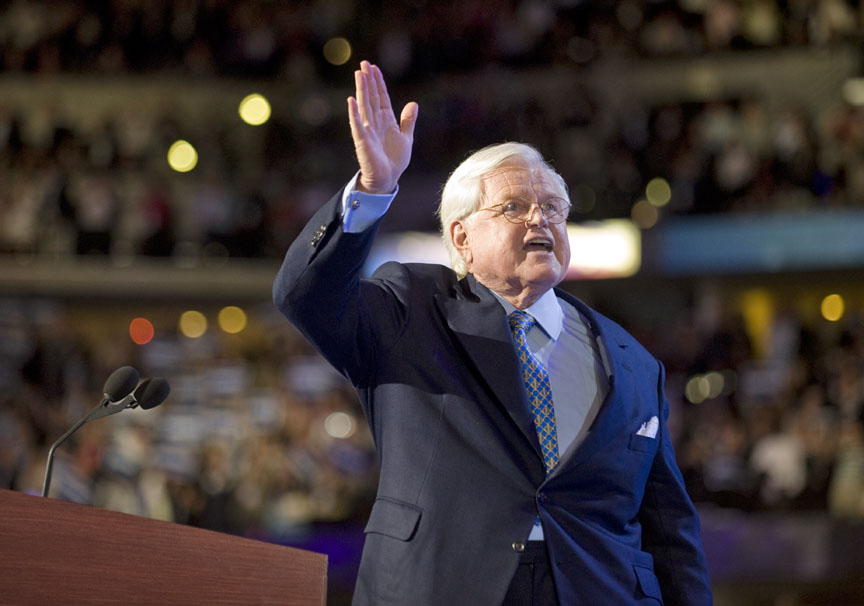
I photographed Senator Ted Kennedy from several angles. Click on the images to see larger versions.

Access Isn’t Everything
Even in the very restricted access world of a tight-security convention, there are parts of the story that amateur photographers are well-situated to capture.
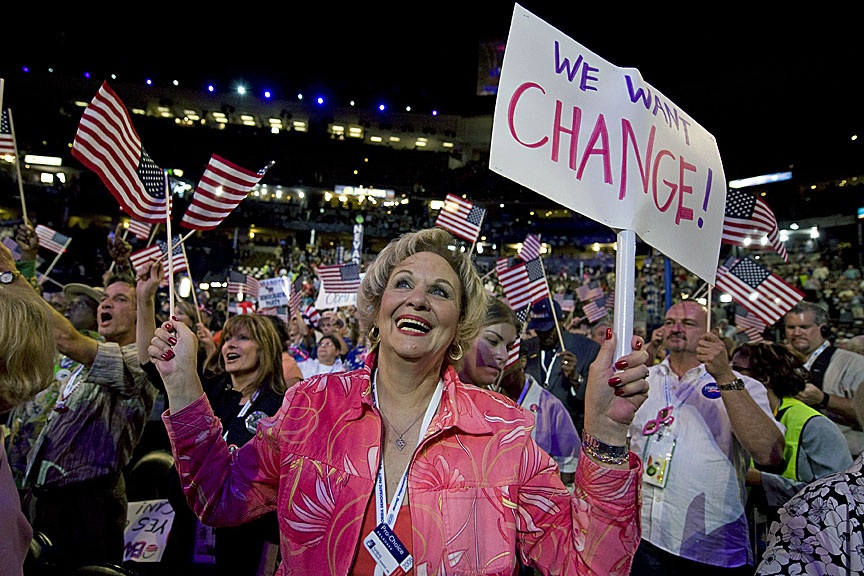
Just because I have accreditation and can get close doesn’t mean I’ll shoot a better image than delegates in the cheap seats. They can get the vista of the thousands of delegates and stage, which ultimately might be better than a forgettable tight close-up of a celebrity speechmaker.
I took this crowd shot, but a delegate could have gotten something similar. Click on the image to see a larger version.
I’ve heard it many times: “This place is boring. If only I were at an exotic location, I would really make great photos.” Truth is, good photographers can make poor photo opps good and good ones great. Make the most of any shooting situation by zeroing in on the elements of your subject that have the greatest visual potential, then shoot away.
Find Places of Visual Potential and Great Photos Will Come
A high-energy event like a political convention brings with it unlimited visual variety; so much goes on in so many places.
But the savvy photographer knows that you can lock yourself in a room with a macro lens, explore the world of the small, and end up with great abstract imagery. Choose your subjects well and you’ll come back with good stuff, even if you have a basic point-and-shoot camera.
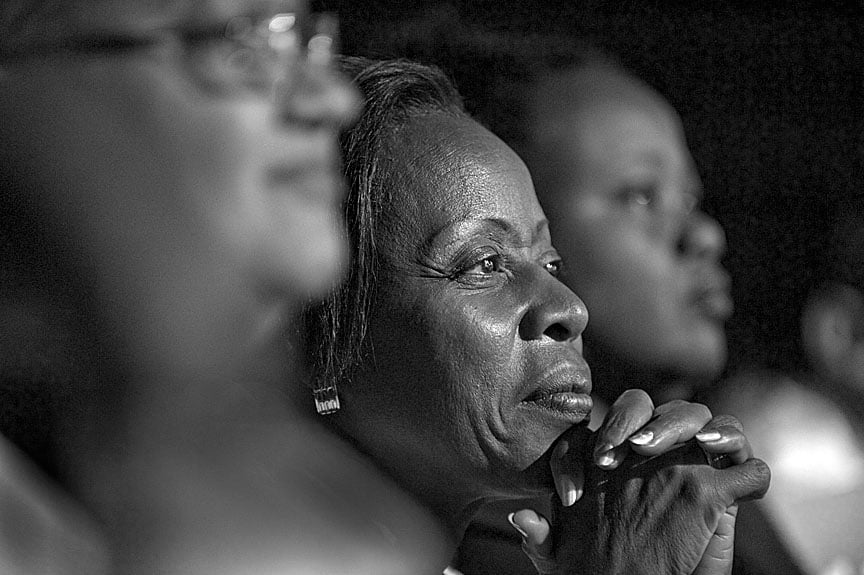
Bring your camera to a parade or farmers market, but once there, don’t try to document everything. Be choosy; look for people or situations that catch your eye and spend time working the situation by taking a series of images.
This woman caught my eye. Click on the image to see a larger version.
To put the odds even more in your favor, shoot in the early morning or golden afternoon light, or in inclement weather.
Hurry Up and Wait
Patience is a virtue, particularly at an event like a convention. There’s so much preparation, lugging equipment to different locations and staking out spots that you think will yield good photos. Then there are bursts of high energy you need to be ready for, because when they’re gone, they’re gone.
I learned through travels in Africa that it’s good to take twice as much water as you think you’ll need. The digital photography equivalent is to take more SD or CF cards than you think you’ll fill, particularly if you don’t have download opportunities to clear them.
Toward the end of night one of the convention, my four 4GB and one 8GB cards were full. I had to delete on camera to make space. Not very professional, but it won’t happen again.
In the fast-moving environment of the convention, you must be able to press the shutter at any moment. Something photo-worthy can happen without warning. You need to react quickly and have your camera ready and focused to capture that moment.
The same holds true in other shooting circumstances. Make sure your camera is set to go from the moment you step out the door. Set it on automatic, with a high enough ISO that the shutter speed can freeze every unexpected moment. I’m not a fan of lens caps because in the time it takes to remove one, the picture might be gone. Keep a clear or UV filter on your lens to protect it and then you won’t miss the fleeting action.
Nine times out of ten you won’t need this kind of preparation, but one amazing moment captured will more than make up for the short time it takes to be ready before you head out.
The Game of Concentration
Having an image-review screen on the back of your camera is a great tool, but don’t overuse it. Taking photographs should be a fluid process to which you give your complete concentration. You can’t concentrate on what’s in front of you and look at the back of the camera at the same time.
I recommend limiting your peeks behind the camera. It’s a good idea to set your camera’s review menu to reveal the Histogram, which gives you the exposure information, as well as the image itself. Check it at the start, making sure that the digital data represented on the histogram isn’t clipping on the left (for dark shadows) or on the right (for blown-out highlights) and adjust your f-stop/shutter speed or exposure compensation dial accordingly. Then periodically check to make sure your exposures are good.
Now you can concentrate on what’s in front of the camera. To do your best work, the technical should become second nature, freeing you to move around and trigger the shutter on instinct and impulse.
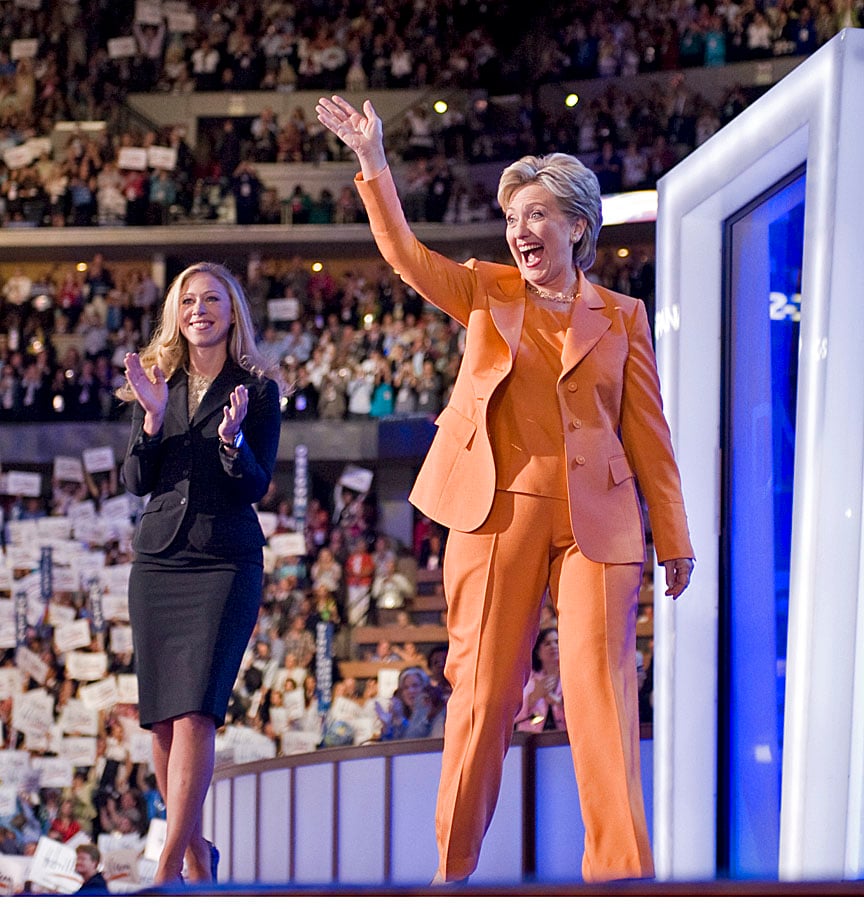
If I had been chimping, I would have missed this. Click on the image to see a larger version.
Inside the main convention venue, which was brightly lit for television and a consistent 5,000 degrees color temperature, I was able to custom-set my white balance to 5,000 degrees Kelvin and use my camera on manual, since the exposure remained fairly constant. As the stage lighting changed, which it often did, my exposures stayed consistent. At times, I opened up in the shadow areas or used fill flash.
When you’re photographing subjects that have large areas of dark or are spot-lit, you’ll likely have to dial down your exposure compensation dial if you’re on automatic — sometimes as much as -2 stops to get the correct exposure. This is when you can eyeball your image review screen, determine whether the exposure is correct, and then shoot away.
Of the hundreds of speeches at a political convention, most are just ordinary, a few better than that, and the odd one is electrifying. If you take some time to work on your photography and follow a few of these tips, it may not make you president, but you could add a few electrifying images to your collection, something all photographers want regardless of political stripes.
This article was last modified on July 11, 2023
This article was first published on August 29, 2008
Commenting is easier and faster when you're logged in!

Recommended for you

Microsoft Launches Icons of Imaging Program at First Microsoft Pro Photo Summit, Recognizing Present and Future Leaders in Photo
At the first Microsoft(R) Pro Photo Summit, Microsoft Corp. announced the launch...
Framed and Exposed: Death, Taxes, and Focal Lengths
While we can all count on the inevitability of death and taxes, photographers ha...
Heavy Metal Madness: I'm Looking Through You. Where Did You Go?
I’m a bit late in this eulogy to a couple of products from Eastman Kodak t...