




Since I started this column in February, I’ve heard from and met quite a few other letterpress hobbyists and they all seem to have one thing in common — they either worked at a newspaper back in the “old days” of metal typesetting, or they have a fascination for fine, limited-edition books.
I love a good book as much as the next guy, but I’m too rough on my possessions to really appreciate something hand-crafted and of limited edition — the last letterpress book I purchased ended up as a chew toy for our new dog Joey, who picked it out of hundreds of other books on the shelf and destroyed it in under two minutes. And while I am thrilled that Joey has good taste, I don’t think a line of letterpress dog toys makes a whole lot of sense (see Figure 1).

Figure 1: Joey looks innocent enough, but she can tear through a fine limited-edition book in under two minutes.
No, for me the interest in letterpress and hot metal is definitely from the romantic days of newspapers flying off the back end of a huge three-story press, of noisy composing rooms, of phones ringing off the hook in bustling newsrooms and men shouting for the copy boy every few minutes. Only in my case, I never worked in such a place. Everything I know about that world is from the movies.
Get Me Rewrite!
My wife Patty will tell you that everything I know about love and relationships is also from the movies and I’ve learned the hard way that Hollywood doesn’t always tell the truth. So while I suspect the newspapers I grew up watching on the big screen are also fantasies, I still love them and I still like to imagine myself a dashing young reporter in 1940, charming my way to the big story, or holding court at a fancy nightclub catching the latest gossip for my popular column. Those were the days when the press made and destroyed politicians, mobsters, society matrons, and anyone who dared get caught in the crosshairs of big-city journalism.
So part of what I’m trying to recreate in my little garage shop, is the feeling and mood I learned to love so much by watching people like Clark Gable, Orson Welles, and Cary Grant rush into the pressroom and grab the latest edition off the back of the press. Men pulled proofs in composing rooms and pages were remade over and over again until the last possible moment — the power of the printed word was immediate and dramatic.
The Best Newspaper Movies
Newspapers, magazines, and journalism figure prominently in many films, and a good start for a comprehensive list is the Newspaper Movies Page as part of the Detroit Free Press site. Great movies like “Meet John Doe” and “Sweet Smell of Success” have newspaper subplots and are well worth watching. But I prefer those films where the bulk of the action takes place in the newspaper office.
I know it’s an obvious choice, but I never tire of popping in “Citizen Kane.” It’s an inspiring movie on so many levels. There’s the terrific newspaper angle, the study of a powerful man and his foibles, the interaction of friends turned employees, great “Rashomon” story telling, breakthrough filmmaking techniques, and the fact that Orson Welles was 26 when he co-wrote, directed, and starred in it. (Of course when I was young, that fact was inspiring. Now that I’m older, it’s sometimes depressing.) When my wife asks me what I want to do with my life, I often answer with a line from Kane: “I think it would be fun to run a newspaper” (see Figure 2).
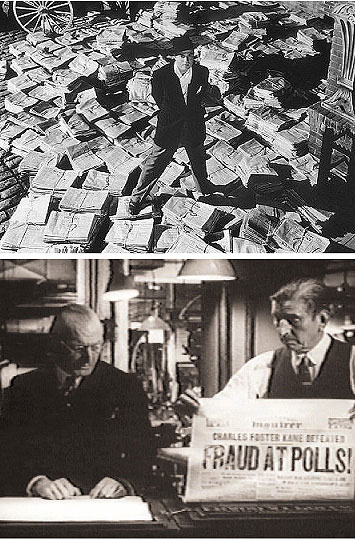
Figure 2: “Citizen Kane” is the ultimate newspaper movie, and a great source of creative inspiration. The Turner Gold Edition on DVD and Video is fully restored and includes a great documentary on the importance of and controversy surrounding the movie.
When I’m feeling more cynical, I always turn to what is probably my favorite newspaper movie, “Ace in the Hole,” the great 1951 Billy Wilder movie starring Kirk Douglas as a jaded big-city journalist stuck at a small New Mexico newspaper, waiting for a big story to set him free. It’s full of some of the best lines in movie history, including when co-star Jan Sterling says to Douglas: “I’ve met a lot of hard-boiled eggs in my time, but you…you’re 20 minutes.” Sadly, this movie was a huge flop, and is still not available on video or DVD, though it shows on AMC quite often and is sometimes re-titled “The Big Carnival.” I love this movie because like so many insightful ’50s flicks, it paints a darker picture of our motivations and greed, and shows what happens when artists (in this case a journalist) inserts themselves into their art (see Figure 3).
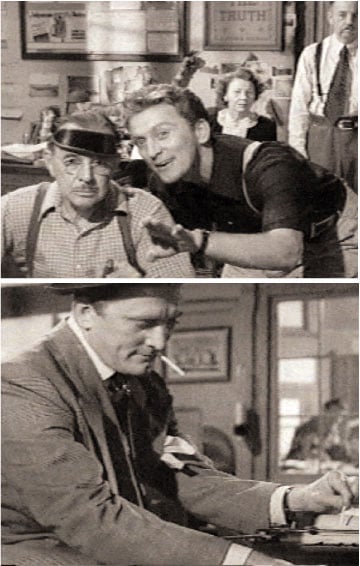
Figure 3: “Ace in The Hole” is one of Billy Wilder’s best, and stars Kirk Douglas as a brash reporter who can’t draw the line between reporting the news and making the news. In a favorite scene, below, Douglas lights his match holding it against the typewriter platen and hitting the return key.
For a more straightforward Hollywood drama about journalism, try “Deadline USA,” starring Humphrey Bogart and Ethel Barrymore. This 1952 movie chronicles the last days of a major city newspaper as it races deadlines to bring down a local mobster. It has the best pressroom scenes of any of the newspaper movies, including a death scene where a small-time gangster ends up falling into the press. And the ending shows Humphrey Bogart holding the phone out toward the running press, its sound a metaphor for truth, justice, and the unstoppable role of the media. It’s a great Bogart part and the newsroom is full of interesting characters and lots of action (see Figure 4).
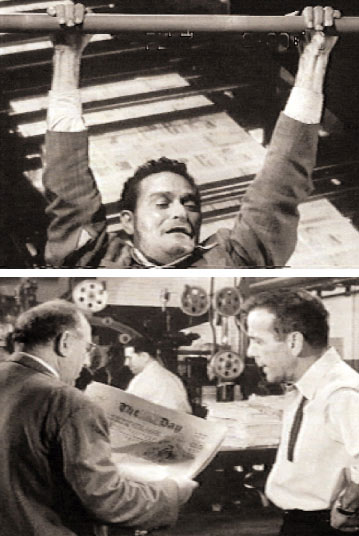
Figure 4: “Deadline USA” stars Humphrey Bogart as a smooth managing editor trying to save a daily paper while also nailing a local mob boss. Scenes include a murder in the pressroom as a local gangster falls into the running press (top).
Hustle, Bustle and Romance
If you’re more in the mood for comedy, you can’t go wrong with “His Girl Friday” (1940), which is a remake of the 1931 movie “The Front Page.” (To confuse things even more, this was re-made again in the ’70s as “The Front Page,” starring Walter Matthau and Jack Lemmon, then again in a TV setting as “Switching Channels” in 1988, and appeared many times as a stage production). But the Howard Hawkes version starring Cary Grant and Rosalind Russell is by far the best version, and captures not only the flavor of the newsroom, but has the type of snappy dialog and sexual tension that makes so many ’40s movies great (see Figure 5).
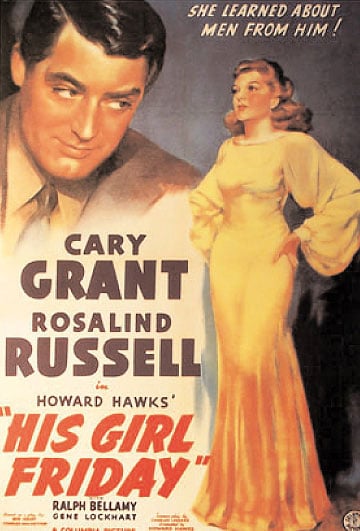
Figure 5: For the best of newspaper themes and romantic comedy, nothing beats “His Girl Friday” starring Cary Grant and Rosalind Russell. Grant plays the conniving editor to Russell’s smart but soon-to-be-married reporter.
There are some contemporary newspaper movies worth mentioning. All the Presidents Men” gives a fairly realistic view of the Washington Post’s operation and does a terrific job of capturing the creepy nature of the Watergate era, and Ron Howard’s 1994 “The Paper,” starring Michael Keaton, Robert Duvall, and Glenn Close is charming if flawed.
As far as I know, there aren’t any movies with graphic design or page composition as the main theme (though in the satirical 1994 Michael Tolkin movie “The New Age,” Judy Davis plays a graphic designer frustrated by a downturn in client billing), so newspapers are about as close as you’ll get to our industry.
But as for inspiration, I can’t think of anything greater than when Bernard Hermann’s musical score swells and that Kane childhood sled gets thrown into the roaring fire.
Of course here in Petaluma we don’t have sleds, and the traumas of my own childhood pale in comparison to Charles Foster Kane. But sometimes late at night as I play in my garage, surrounded by the artifacts of my life, I imagine I’m lording over a small newspaper empire of my own, Hollywood style (see Figure 6).
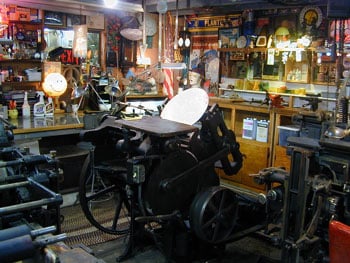
Figure 6: It’s not Xanadu, but I try to make my shop as personal as possible, and somewhere in all that stuff is my own Rosebud.
Of course, I bet I’m not the only creative professional who’s fallen under a cinematic spell. I’d love to hear about your favorite newspaper movies, or other films that may have inspired you in your creative work. Post yours in the Vox Box feedback area to the left of this column.
Read more by Gene Gable.
This article was last modified on March 2, 2021
This article was first published on June 12, 2003
Commenting is easier and faster when you're logged in!

Recommended for you
Scanning Around With Gene: When Are You in “Good Enough” Shape?
Over the holidays I had my “annual” physical, which I’d put off for...
InQuestion: Making Sideheads
Q: I’ve been tasked with laying out a document that uses side heads. I’ve figure...

Tip of the Week: Using More Than One Object Style to Format an Object
This InDesign tip on using more than one object style to format an object w...