




Taking Control
Canon’s interface has always been streamlined and simple, with a minimum of buttons. The top of the camera provides a status display that’s well organized and includes all of the camera status that you’d ever need. The shutter button has a good feel and is well positioned. Just beyond it is a control wheel that provides simple menu control when configuring the camera and automatic reciprocity change when shooting.
A mode dial on the top left of the camera lets you select between fully automatic, program, priority, or custom-scene modes.
The camera back has seen the most change. A large control wheel lets you select shooting functions such as exposure compensation, as well as let you navigate menus and select options.
The 20D sports a new back panel control in the form of a tiny joystick that can be used for manually selecting an autofocus point, panning across images during playback, or using the camera’s new white balance fine-tuning feature. The joystick is responsive and reasonably well positioned, though users with smaller hands might have trouble reaching it while holding the camera for shooting.
The most noticeable improvement in terms of controls on the 20D is the On/Off switch. Like it’s rival, the Nikon D70, the 20D now powers on seemingly instantaneously. In addition, it wakes up from sleep immediately, meaning you won’t miss a shot due to boot times or a dozing camera. This is a huge improvement over previous versions and a much-needed change.
Canon’s SLRs have always been very speedy and responsive and, amazingly, the 20D seems to have been accelerated even more. Menus pop up faster, images play back quicker, and zooming and deleting is speedier.
The camera’s viewfinder status display provides a new white-balance adjustment readout, but the camera still lacks an in-viewfinder display of ISO, an annoying omission.
Overall, Canon has taken a sturdy, speedy, functional design and tweaked it to be just a little bit better. Like the 10D, the 20D feels like a solid block of camera, with a comfortable heft and intuitive, easy-to-use controls.
Shooting Star
Canon’s simple control layout makes shooting with the 20D easy and enjoyable. With reciprocity control under your shutter finger, and exposure compensation under your thumb, you rarely need to switch out of program mode, or take your eyes away from the viewfinder to build the exposure that you want.
What’s more, for those times when you do need a settings change, you’ll be able to adjust the camera’s parameters quickly and easily, whether it’s focus mode, drive mode, white balance, or metering mode. Rarely will you miss a shot because you’ve had to try to change a camera setting.
Canon has implemented a much-improved autofocus system on the 20D. Using a new 9-point autofocus mechanism, the camera focuses much faster than any of its predecessors, and performs better in low light.
The camera’s most startling feature is its new drive mode, which can shoot 5 frames per second for roughly 25 high-quality JPEG frames (or 6 raw frames). This is almost twice as fast as the 10D, a dramatic improvement. Unfortunately, one of the reasons the feature is startling is that the camera now has an amazingly loud shutter, akin to the “mirror-whack” quality of the Rebel. As opposed to the quiet, sophisticated electronics sound of the 10D, the 20D has a very mechanical, clunky shutter sound.
The 20D’s pop-up flash is now positioned much higher than on any of its predecessors. This is a much-needed improvement that causes a tremendous reduction in red-eye potential, as well as eliminating the shadows that can be cast by very large lenses. The 20D also provides support for Canon’s new E-TTL-II flash, the first update to Canon’s flash system in years.
Other nice changes include:
- Finer exposure compensation. Thanks to an additional two notches between each full stop, you can apply exposure compensation in finer increments.
- USB2 support. This allows for faster file transfers
- Much faster write and recycle times. It’s amazing how quickly this camera gets data off to even a slow CompactFlash card. For those who shoot raw images, or anyone who shoots regularly in drive mode, the camera’s speed is a tremendous boon.
- True Raw plus JPEG. You can now select JPEG quality level when shooting in Raw+JPEG mode, and the camera produces separate raw and JPEG files.
- Adobe RGB color space selection.
- Max shutter speed of 1/8000th of a second.
All of these changes are valuable, and there are many more. Ultimately, though, for any number of reasons, this camera is simply fun to shoot with. Its solid feel, speedy response, and excellent feature set make it a camera that you simply want to carry around and use.
Image Quality
As mentioned earlier, the hallmark of Canon CMOS-based image quality has always been silky smooth, noise-free images (see Figure 3). The 20D continues this tradition with a noticeable decrease in noise from previous versions when shooting at higher ISOs.

Figure 3: Like its predecessors, the EOS 20D delivers silky smooth images with excellent color and sharpness — and an extra 2 million pixels more than the EOS 10D and Digital Rebel. Click here to see full-size image..
That Canon has managed to reduce noise levels at all is impressive, that they’ve managed to do it while increasing the number of pixels on the sensor is a great surprise.
The ability to crank up the ISO a couple of stops without seeing a disturbing increase in noise presents terrific shooting flexibility and greatly expands your creative control.
The most noticeable change in image quality with the 20D (in addition to increased resolution) is more-aggressive default settings. Following in the footsteps of the Rebel, the 20D comes pre-configured to perform a little more sharpening than the 10D, and its images consequently receive a boost in contrast. The camera comes equipped with a number of parameter sets, and it’s easy enough to change and customize them to yield images with more or less processing.
As one would expect, overall, the 20D’s images are excellent, yielding beautiful accurate color, low noise and, thanks to the increased resolution, even better detail than what we’ve seen before. There’s really nothing to complain about with the quality of this camera’s images.
Conclusion
The fact that the 20D is not “revolutionary” should not be held against it. The market that Canon created — relatively inexpensive, high-quality digital SLRs with interchangeable lenses — has matured a lot over the last two years. Canon’s own entries, along with those of Nikon, Fuji, and Pentax, simply make it harder to take a huge leap from one model to another.
This is a little ironic, because for many people the 20D may be the camera that will cause them to finally make the switch to digital. It’s got more resolution than most people need, startup and shooting speeds comparable to some of the best film cameras, exceptional image quality, and support for all three types of Canon lenses.
The 20D also shows the maturity of Canon’s overall SLR line, drawing features from both the higher-end cameras, and the entry-level Rebel. Though this camera may not “raise the bar” as much as some of Canon’s previous breakthroughs, it certainly keeps the bar high. And in a market with as much change as the digital camera market, that’s pretty revolutionary.
If you’re a 10D owner who’s wondering if the new features warrant an upgrade, check out the 10D -to-20D blog that I created in conjunction with the forthcoming third edition of my book "Complete Digital Photography." Here you’ll find a more-detailed discussion of the changes between the two models as well as more smaple pictures.
Read more by Ben Long.
This article was last modified on January 18, 2023
This article was first published on October 19, 2004
Commenting is easier and faster when you're logged in!

Recommended for you

Managing Problems With Rotated Images in InDesign
Does anyone else have problems with poor previews of placed graphics in InDesign...
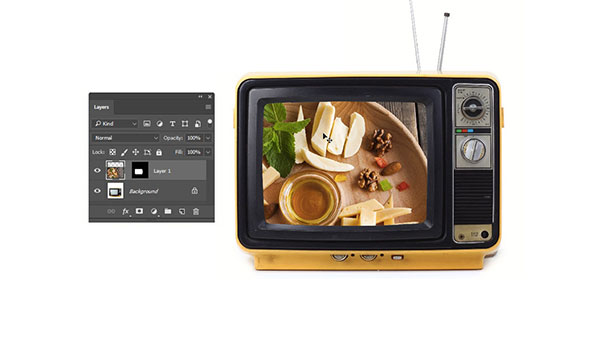
Photoshop Tip: Pasting into a Selection in Photoshop
Learn how to create layers with layer masks with Photoshop's Paste Into command.

How to Digitize a Film Archive with Adobe Lightroom or Adobe Camera Raw
Digitizing an archive of film images can be a time-consuming process. Instead of...