



About three years ago I was invited to New York to see a new scanner made by Nikon. The scanner — the Nikon Super Coolscan LS2000 — was the first commercial product to incorporate technology invented by Applied Science Fiction (ASF). It was to be the first of numerous impressive encounters I’ve had with ASF technologies, and the beginning of a discovery that has allowed me to salvage numerous previously unusable 60-year-old photographs. (Disclaimer alert: I was hired to write the help screen system for another Nikon scanner, the Coolscan LS4000. But the story that follows is true, and my excitement about ASF’s technology is real.)
Applied Science Fiction develops imaging technologies and then licenses those technologies to manufacturers. Nikon was impressed by one of these inventions and chose to embed the technology — ASF’s Digital ICE (Image Correction and Enhancement) — into its Coolscan scanners. ICE is a hardware and software addition to scanners that analyzes the surface of the film as it is scanned and removes defects, including obvious problems such as fingerprints, scratches, dust, and dirt.
I remember my first viewing of ICE in action. I was in a lab at Nikon’s Long Island offices with Mike Rubin, now Nikon’s Product Manager for scanners. Rubin took a color transparency, removed it from its mount, and then — in an act I had never seen in a photographic environment before — applied the business end of a piece of sandpaper to the film. A frightful series of scratches resulted.
I Gasped; He Grinned
Mike then placed the film in the LS2000 to scan it. On the first pass, the scanner faithfully reproduced the scratches Mike had inflicted. Then he turned on Digital ICE via a software control in Nikon’s scanner software and scanned the film again. As the image revealed itself the second time, the scratches were gone and the image appeared as good as any scan one would make with a good 35mm film scanner.
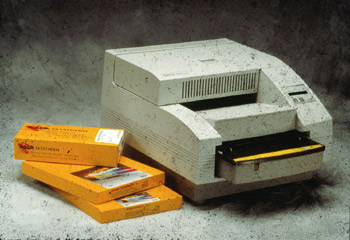
Conventional scan of dusty transparency
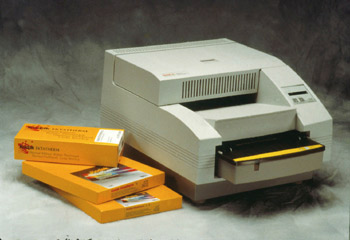
Scan with Applied Science Fiction’s ICE-cubed technology
I was really dazzled by this demonstration, enough to be a little distrusting: I didn’t want to be the butt of some belated April’s Fool’s joke or, worse, show myself to be a simple dupe. To confirm it wasn’t a trick, I performed a similar experiment myself. I put a perfect fingerprint right in the middle of another frame of film. My first pass was made without ICE, and as before, the scanner faithfully reproduced the problem — well enough to serve as crime-scene evidence in any trial against my photographic felony. On the second pass, the image appeared with no fingerprint at all. Digital ICE had eliminated the defect altogether.
I bought one of those ICE-equipped LS2000 scanners.
Meet Al Edgar
Last year I had an opportunity to visit the offices of Applied Science Fiction, the creator of ICE and some other great imaging technologies. I met ASF’s senior scientist, Dr. Albert Edgar, and got my first look at the company’s complete bag of tricks. Digital ICE was just the beginning.
Since the first Nikon scanner was released with Digital ICE included, ASF has licensed its technologies to several other scanner manufacturers, inclusing Kodak, Minolta, Acer, and Durst Phototechnik. Durst and Kodak have incorporated Digital ICE into high-speed scanners used in photographic processing labs. Acer, Minolta, and Nikon have embedded ASF technologies in consumer/professional scanning products.
GEM and ROC
ASF’s team moved on to other challenging issues with film scanning after getting rid of dust and scratches. Its next project was ROC — Reconstruction Of Color. The ASF software, which works in concert with a scanner, analyzes the grain in the film, identifies different grain patterns in the “original” colors of that film, and then restores the color to near-new quality.
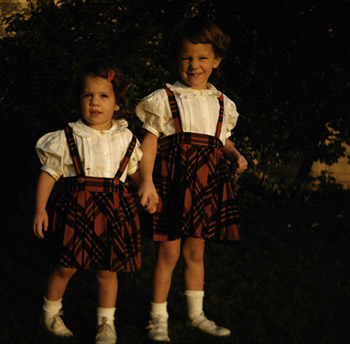
Conventional scan of discolored 1940s Kodachrome slide

Scan with Applied Science Fiction’s ICE-cubed technology
Edgar explained that a great deal is known about specific film emulsions and film grain patterns, and that if you can identify a particular grain pattern, you can determine what the original film carried in terms of colors and densities. If you measure the densities of the various grain patterns, and reassign colors to those densities (it’s actually more complicated than this, but…) — voila! — the color of the “original” comes back.
GEM — Grain Equalization Management — is the third component of ASF’s scanner-related technologies. Mr. Edgar’s team of inventors has been very clever here. Since the company’s other technologies identify color and image defects, they realized that they could essentially remove film grain from an image after scanning. GEM maps the film grain, and then treats it like a “defect.” In other words, GEM removes the grain patterns without removing the image, color, or detail. As with the other two related technologies, the result is very impressive.
When bundled as a trio of technologies, ASF calls the system Digital ICE-cubed, usually expressed with the use of a superscript. With these three technologies in a scanner it’s now possible to get great scans of damaged and faded originals, and it’s possible to minimize film grain to a tremendous degree. And, when scanning clean, sharp, beautiful originals, you get images that rival those from the best drum scanners.
This article was last modified on January 18, 2023
This article was first published on March 1, 2001
Commenting is easier and faster when you're logged in!

Recommended for you

Sound Advice: Thinking in Audio
Good audio in a video or film isn’t a theoretical, feel good, groovy sort...

Before&After: Make Desktop Holiday Cards
If you need to make your own quick and easy holiday card, this one fits the bill...

User Dictionaries
Sandee Cohen takes you on a deep dive into InDesign’s obscure but important User...