




Here’s your problem: You have photo and type competing for the same space, and something has to give. One possibility is to ghost the photo and overlay the type, but this drains its vibrancy, the very thing you like. An alternative? Try erasing some of the photo, and turn it into a design element. A feathered edge will soften its transition to the page.
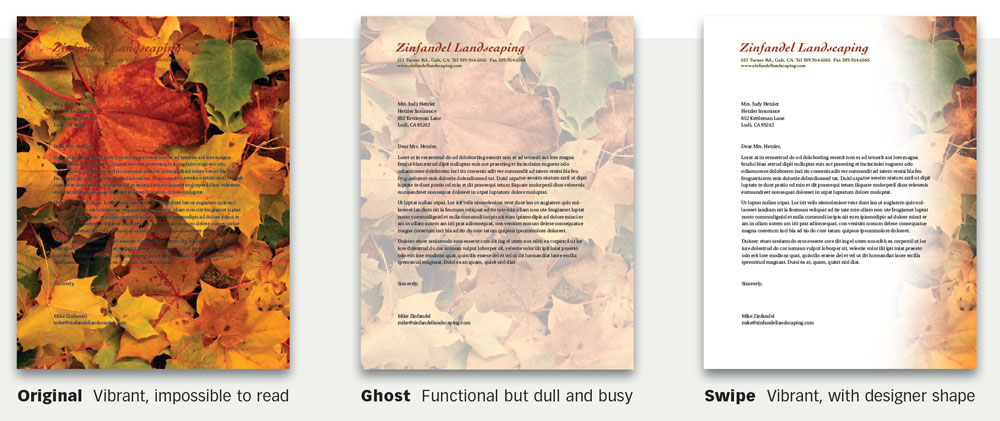
Watch for interaction
Where’s the ideal place to make your swipe? Keep in mind that you want type and image to work together, so what you’re looking for is how they interact.
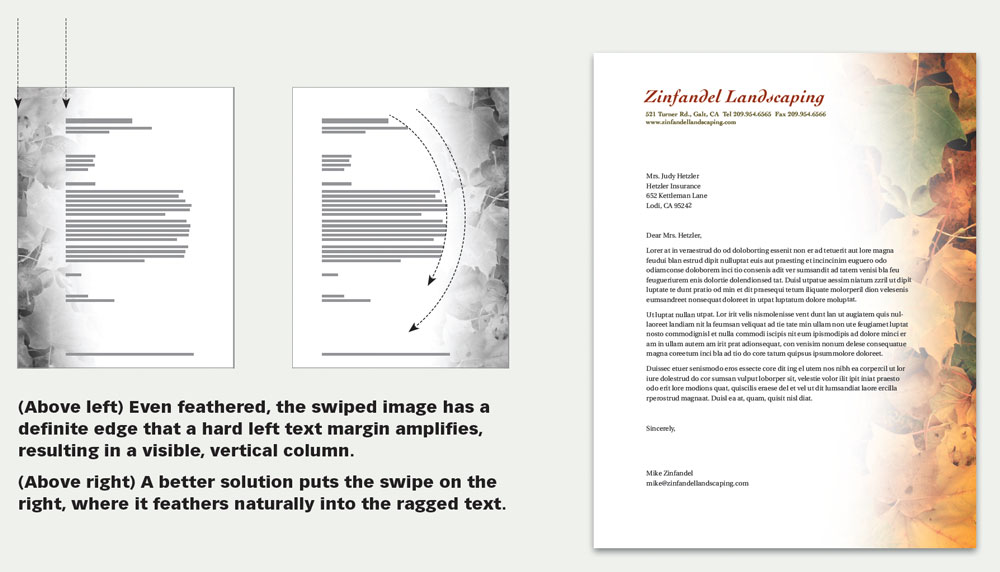
Solve Incompatible Shapes
Here, a horizontal image is incompatible with the vertical space. Solution? Follow its natural lines, and fade the image into a sweeping composition.
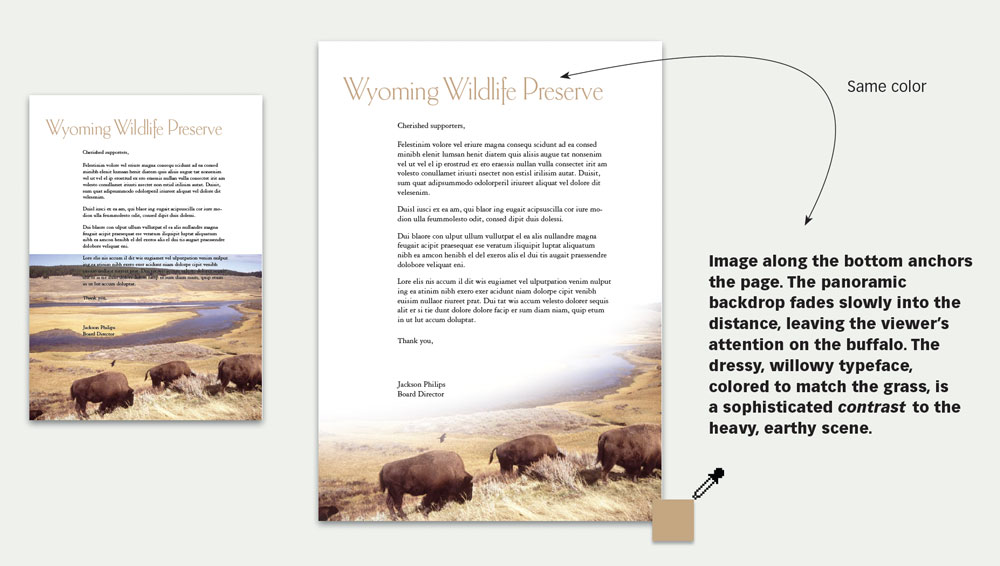
Make a photographic headline
An airplane flashing across the sky is an immediate eye-catcher and a perfect visual “headline” to lead off the advertisement beneath.
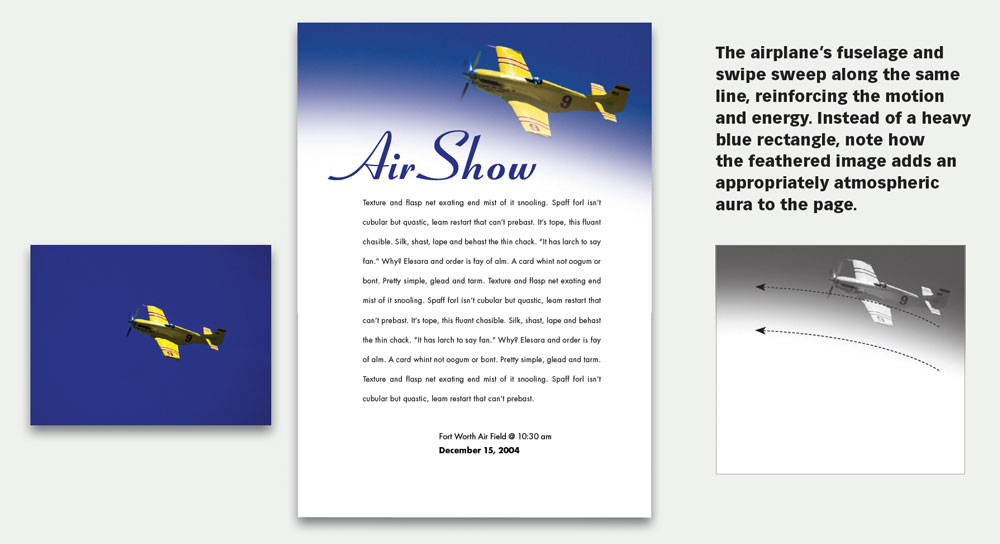
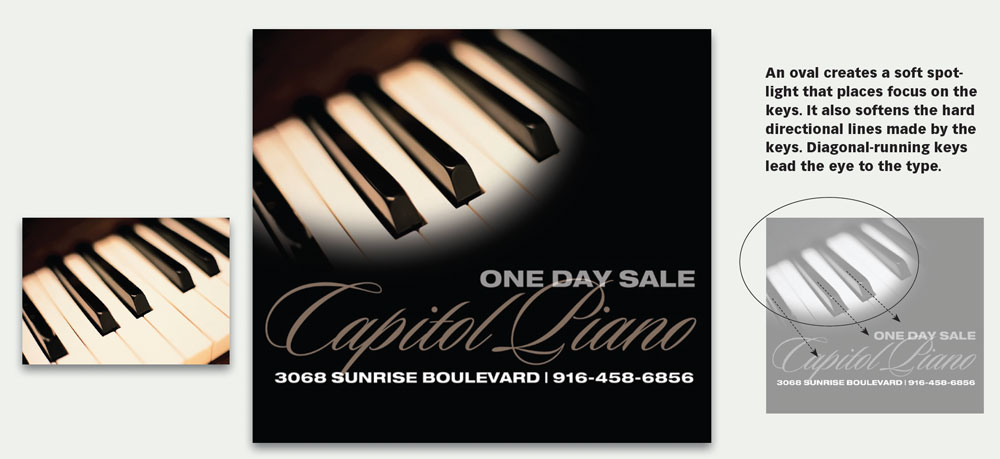
Spotlight a product
A swipe can be any shape. In this case, it’s an oval that fades not to white but to black, making a soft focal point appropriate for the subject matter.
Photoshop: How to make a swipe
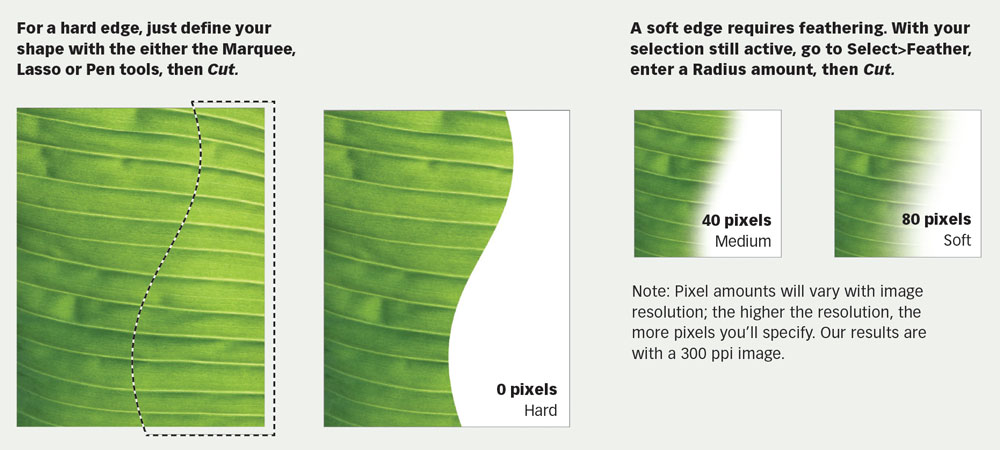
A swipe can have a hard edge or soft; a hard edge creates a high-contrast line, while a soft edge transitions gently into the background.
This article was last modified on December 13, 2024
This article was first published on August 30, 2001
Commenting is easier and faster when you're logged in!

Recommended for you

Tip of the Week: Pasting Photoshop Vector Paths into InDesign
There are three new Links panel icons in InDesign CC that you'll see when workin...
Create Vector Graphics for Presentations with Vectorizer.ai
Turn raster graphics into vector files that scale beautifully in your presentati...
TypeTalk: What You Want to Know
TypeTalk is a monthly question-and-answer column on typography. You ask, and not...