




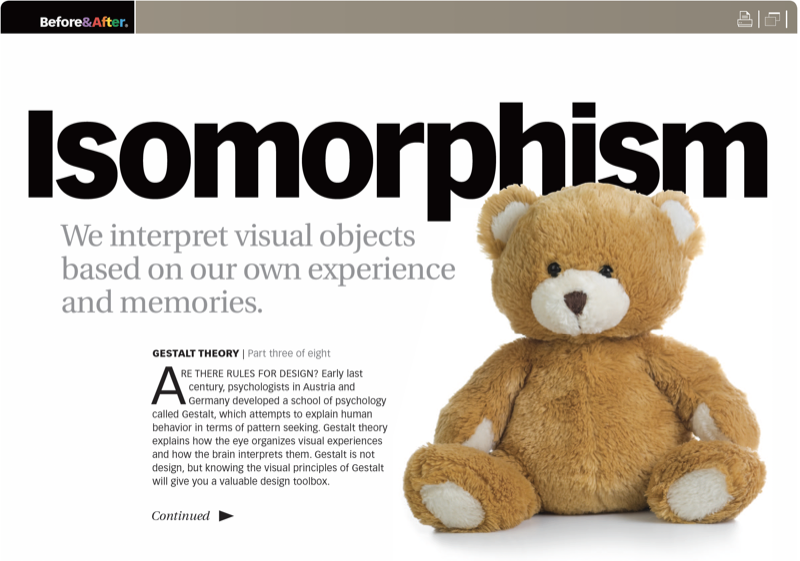
Early last century, psychologists in Austria and Germany developed a school of psychology called Gestalt, which attempts to explain human behavior in terms of pattern seeking. Gestalt theory explains how the eye organizes visual experiences and how the brain interprets them. Isomorphic correspondence means that humans respond to meaning—that we interpret visual objects based on our own experience and memories. This 12-page article from issue 51 of Before&After Magazine shows you how to use Gestalt theory to create design that conjures up memories.
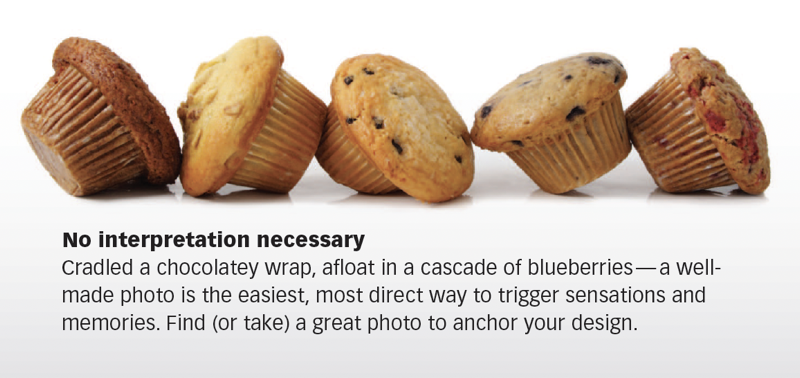
Using a photo instead of a drawing evokes sights, tastes, and smells that we’ve experienced before.
© John McWade/Before&After Magazine, courtesy of Gaye Anne McWade.
Commenting is easier and faster when you're logged in!

Recommended for you
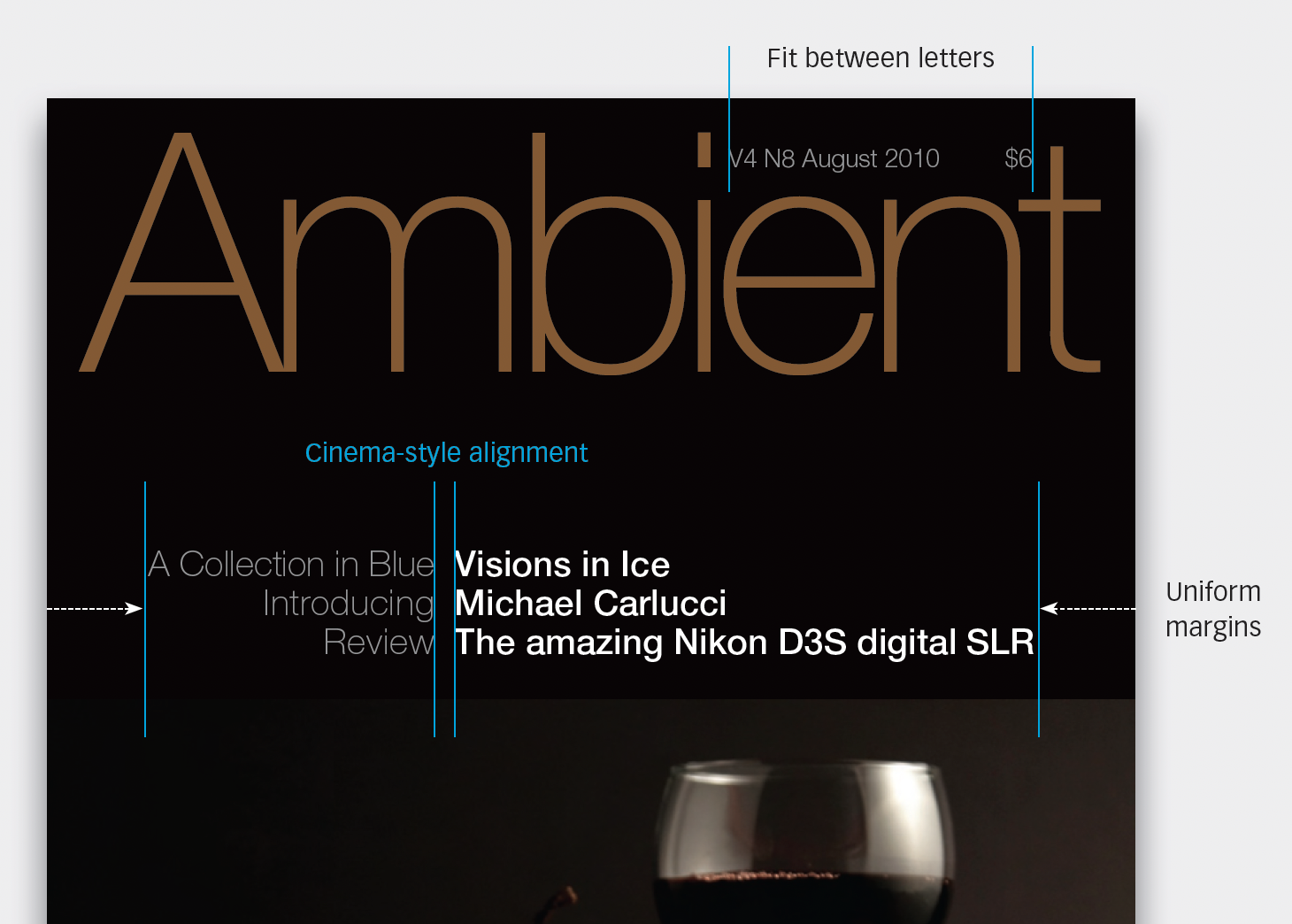
Before&After: Design a Photo Magazine Cover
So how do you show off great images in a photography magazine?
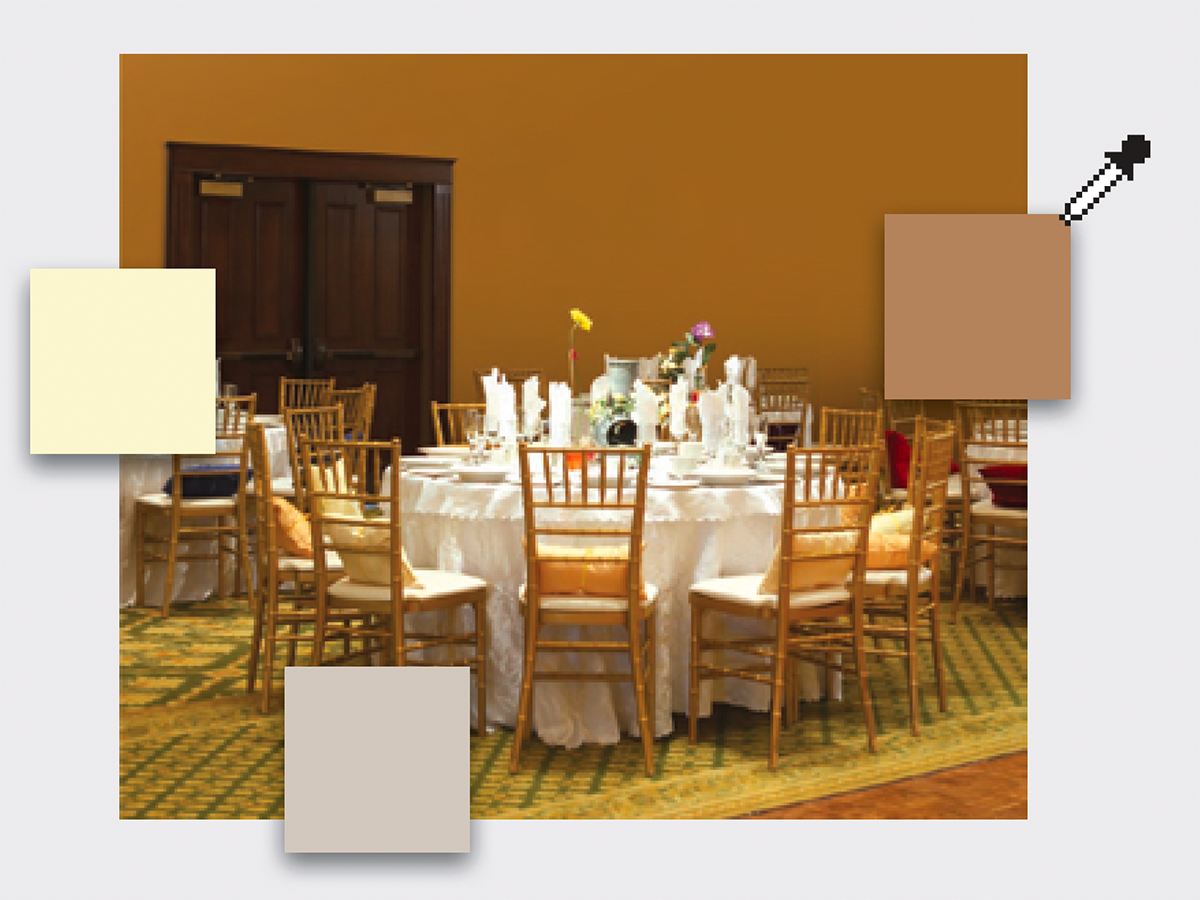
Before&After Design Tip: Differences Establish Hierarchy
How to add appeal and at-a-glance clarity to a bland flier
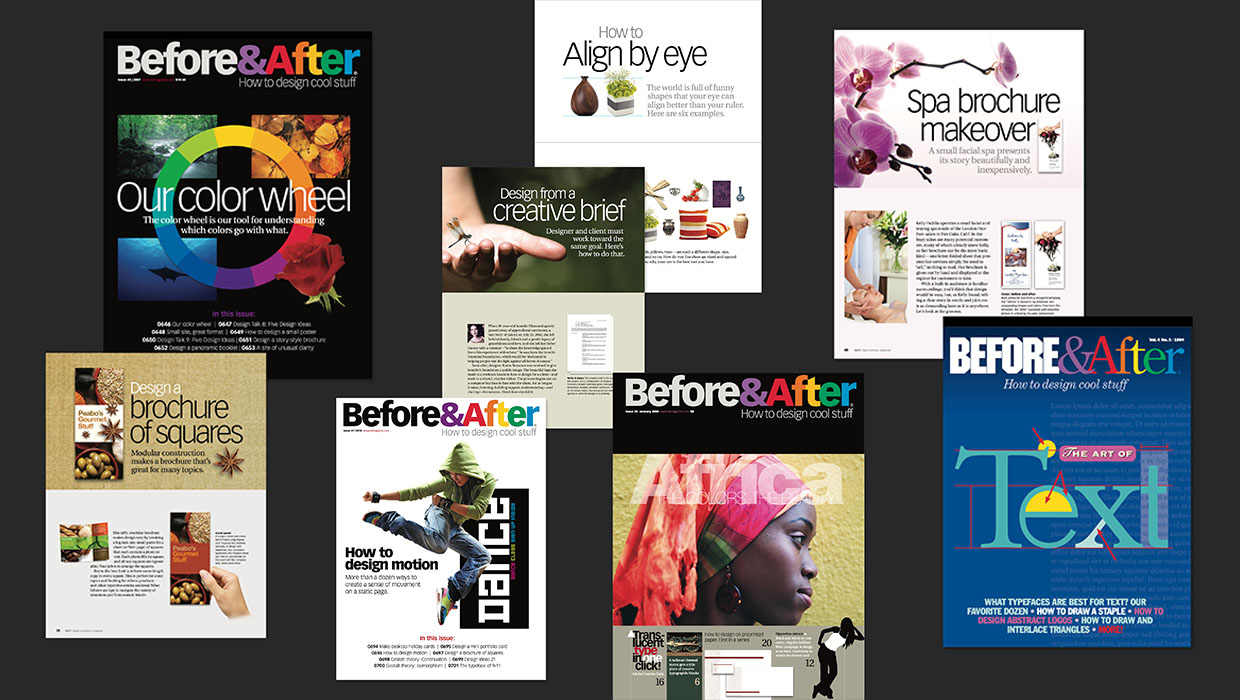
The Before & After Collection
John McWade’s treasury of design instruction finds a new home at CreativePro.