



In recent advertising, Volkswagen has brought back a vintage Beetle to serve as the company’s talking “spokescar,” complete with surprise interviews at dealerships and a mock late-night talk show. It’s an odd campaign, but if any single vehicle has the right to be personified this way, it’s the Beetle. By the time production of the original Beetle ended in 2003 (still being sold in Mexico), 21,529,464 units had rolled off assembly lines throughout the world.
I came of age in the Beetle era, but I realize several generations since me never had the pleasure, or curse, of driving one of these fine automobiles. Throughout the 1960s and ’70s, a used VW Bug (the Beetle’s other nickname) was the first-car choice for many young drivers. So I was thrilled recently at a garage sale to come across a small brochure (undated) that appears to be a very early, if not the first, marketing piece given out by dealers trying to sell the Bug to skeptical Americans. All of these images are from that brochure.
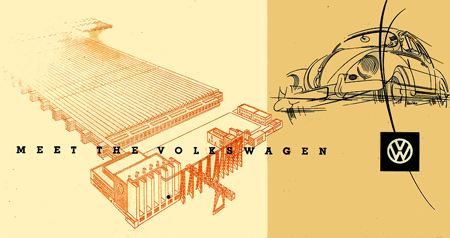
Of course, with anything “vintage Vollkswagen,” it’s a little hard to tell the year, or even the decade, of origin. One of the things that made the Beetle is that it rarely changed from year to year. It mattered little when a VW was actually made, only how many miles it had on it and if it leaked oil too badly.
I never actually owned a Bug (I was a Corvair man), but many of my friends had them, so it was probably the most common form of transportation in my teen years. It’s a wonder any of us survived. Not only where there no airbags in a Beetle, there was a good chance the seatbelts were either missing or didn’t work. And of course the entire car could be crumpled into a twisted mess with little effort.
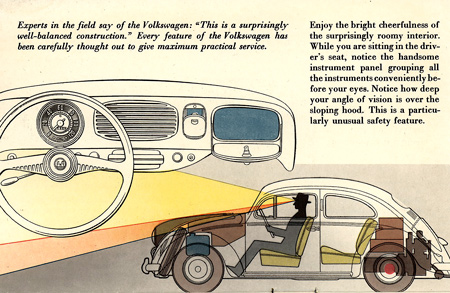
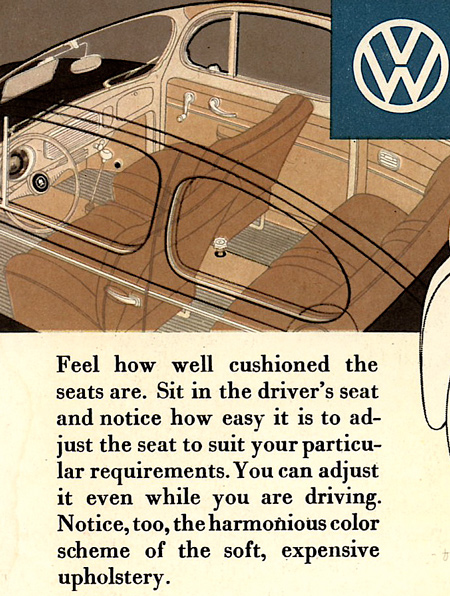
When you sat in a VW Bug, your head was essentially right up against the flat-glass windshield, and of course the dashboard was solid metal — no fancy padding. The cars were incredibly noisy, uncomfortable, and underpowered. But we loved them because they were cheap. Whoever first picked this brochure up at the dealer wrote the price in pencil.
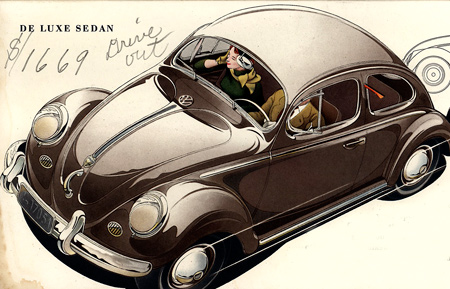
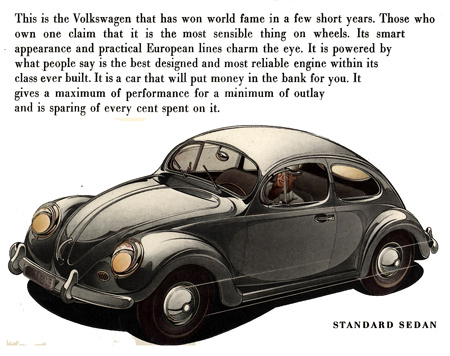
There is always a bit of a disconnect between marketing material and reality. But if you ever owned a VW Bug you can appreciate the irony of some of the claims made in this brochure. “The standard and deluxe sedans both have a handsome, brilliant finish, a remarkably fast getaway, comfortable seats for both driver and passengers that are designed for tireless long-distance driving, finger-tip steering, and that astounding, fast little engine.”
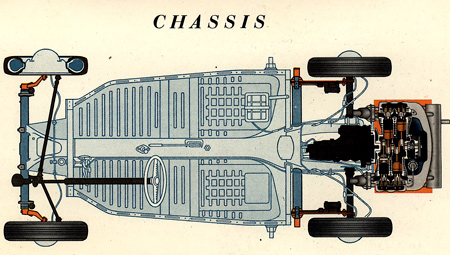

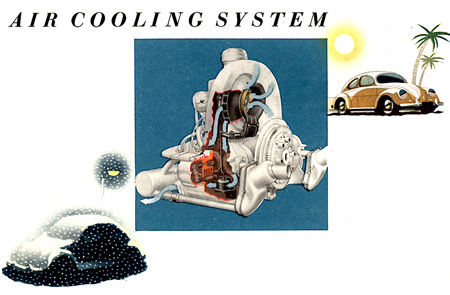
Of course the beauty of the Bug was not so much in its looks, but in the fact that you could drive them to death and they just kept running and running and running. For a poor teenager with little money for oil or maintenance, the Bug was a perfect car. The simple and easy-to-get-to engine made self-repair a regular part of ownership. But you had better wear a sweater, because despite the claims made here, riding in a Bug was closer to being on a motorcycle than inside a car.
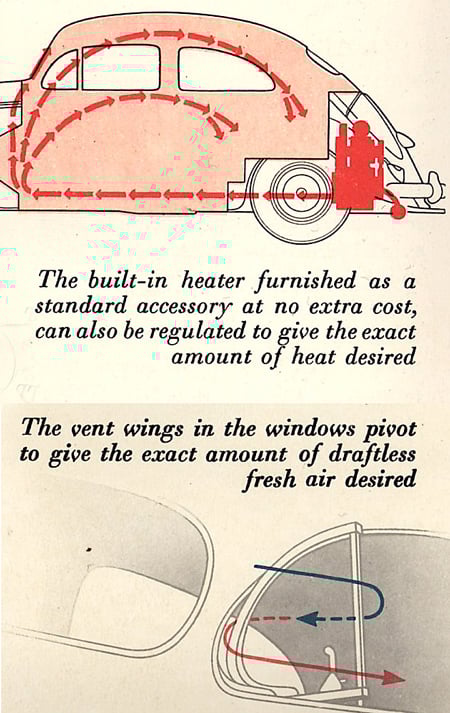
In great marketing tradition, Volkswagen made exposure to the elements seem like a benefit, and I suppose for Americans accustomed to giant Detroit monster vehicles, there was a certain novelty in this little car with a sunroof.
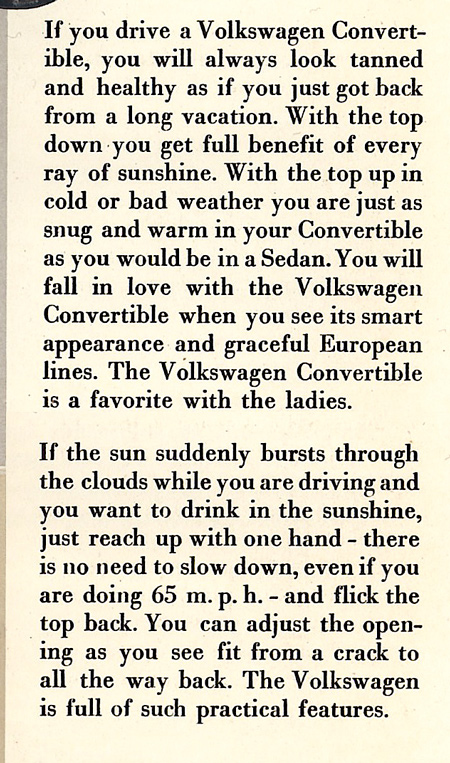
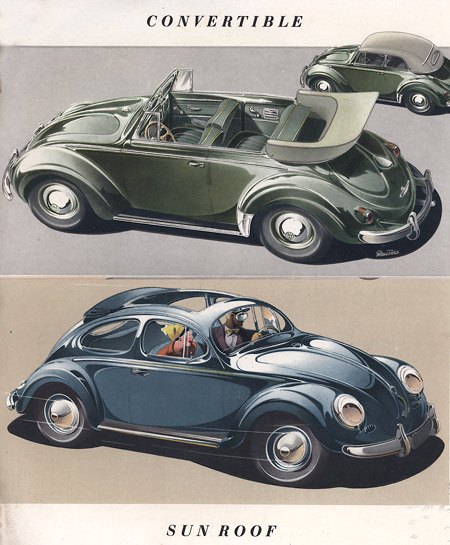
There has been much written about the history of the Bug, and it is one of the great icons of popular culture. Buying a brand-new Beetle was, indeed, a bit of a political statement back then when “foreign” cars were the strong exception. But the VW Beetle was just lovable enough that Americans accepted it. Plus, having origins in Germany made it slightly less foreign than the Japanese cars that began showing up in the ’60s.
I suspect a few CreativePro readers have early Beetle experiences (anyone who remembers waxers and paste-up qualifies)! I’d love to hear your VeeDub stories — just use the Comments button below. And congratulations if you were a Beetle owner and survived the experience with your teeth and hearing intact.
This article was last modified on May 18, 2023
This article was first published on July 18, 2008
Commenting is easier and faster when you're logged in!

Recommended for you

Adobe’s Amazing New Utah Campus
Adobe’s future may be located somewhere up in the Cloud, but its 10,000 em...

5 Freelancing Myths Holding You Back
There are many myths surrounding freelancing, and these five can slow your caree...

How Designers Can Use Video Marketing
Video marketing is something that more creatives and brands are seeing the need...