




As the bidding commenced, I discovered two further details that could lead to confusion for novices: the surcharges on every purchase and the handling of lots with multiple, similar items.
Auction houses charge a 10-percent fee on every item sold, and then add sales tax to that total — that’s another 8.25 percent in San Francisco. As you can imagine, it’s easy to forget this almost 20-percent overhead during the bidding competition.
Secondly, when there are several similar items sold together, such as five Ethernet switches, the bidding price is for each item, not for the total of the group. So in this example, if the price bid is $10, then it’s really $50 (or more exactly, $50 plus the $9.13 overhead). What seems like a bargain at the outset may not be by its conclusion.
Moreover, if the high bidder doesn’t want the whole lot of switches, he or she gets to select the specific switch(es) desired. Thereafter, any remaining items in the group will be sold as a firm batch, requiring the next successful bidder to take all of the items.
Since there are thousands of items being sold, the bidding happens at a brisk pace. And it’s hard to tell how long the bidding will last for which items. I found some single items took a while, especially if there was a lot of bidding, whereas a long list of identical monitors could go in a couple of minutes. Go figure.
Some of the prices were good, especially if you wanted to pick up a spare system for home or for testing a workflow. The machines were last year’s technology but still a good buy. For example, a 600MHZ Pentium III box with 256MB of memory, SCSI card, and a 21-inch Sony monitor sold for $350 ($413.88 with overhead). At retail, a comparable new Compaq Presario model with an AMD Duron processor costs about $500, but without the monitor.
One lot that I really wanted to bid on was an Apple LaserWriter 8500, a PostScript 3 workgroup printer that handles tabloid-size sheets. Back in 1998, when it was new, the printer cost about $2,000. Oh, if only I had the room or the cash: The winning bid was $375 ($443.44).
Rising from the Ashes – Not!
In addition to the surcharges and taxes, each purchase at the auction exacted an emotional toll. Although attendees welcomed the bargains, it was clear that the sale was also a wake for both a company and the past Internet era.
Phoenix POP’s three-story building was a great space, with windows on three sides. Totally open and hip. The company’s sign on the street simply proclaimed “Start[UP] Here.”
According to one attendee working in a local commercial real estate business, the now defunct dot-com services company spent around $1.5 million to fix up the building, a former garment factory. Phoenix POP reportedly spent less than a year in the site before going bust. Onlooker Al Wong, an electrical engineer on a break from a job down the street, said a typical renovation costs about $250,000 per floor to install ventilation, lights, power, and networking.
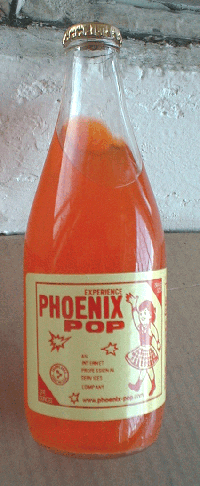
Pop! goes the dot-com.
Some excesses of the Internet bubble were also evident, such as the custom light fixtures in the stairway. One lot in the auction was of 31 folded chromed metal monitor stands (very, very heavy). Or perhaps the bottles of orange soda (see above) that some Phoenix POP marketing genius had made with a custom joke label; there were 14 cases. Another interesting item was a video installation using a bunch of old computer monitors removed from their enclosures and hung on wires in the lobby (below). Around the corner, stacked on several shelves, were all the installation’s cases and motherboards, still connected to the displays but with extra-long cables. Could the lucky bidder disassemble and move it out in time?
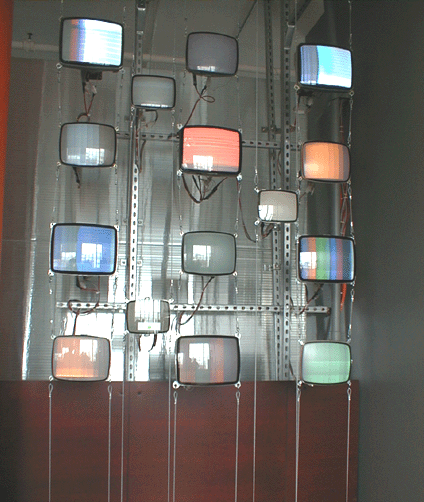
This custom-video installation — signs of happier times — was among the items sale.
Adding to the gloom was an ad hoc reunion of Phoenix POP’s former employees. The group shared stories and reconnected personal networks and considered bids. One video nerd taped the auction.
“It just freaks me out,” former employee Julie said, pointing to binders packed with logo designs she had created. They were on a shelf with packages of empty binders. She took no solace in my observation that now it was the binders that bidders wanted, not her creative material held within. After the auction, the owner would certainly toss the papers representing hours of her labor in the recycling bin. “It’s strange to see them here. Weird,” she said.
I left hoping the team would go out for a few drinks after the auction. The medieval sage, Moses Ibn Ezra, said, “Wine, though bitter, sweetens all bitterness.” True enough, but its relief falters when the blood alcohol level dips below .04 percent.
This article was last modified on January 8, 2023
This article was first published on July 26, 2001
Commenting is easier and faster when you're logged in!

Recommended for you

The Case of the Disappearing Text
A client of mine sent me a problem child InDesign file -- a legacy file in which...
Dueling Styles: InCopy vs. InDesign
Recently I’ve received a number of e-mails from InCopy users with question...

The Friendly Alien Easter Egg in InDesign
Back in the day, just about every major desktop publishing and design program ha...