Hey Andy
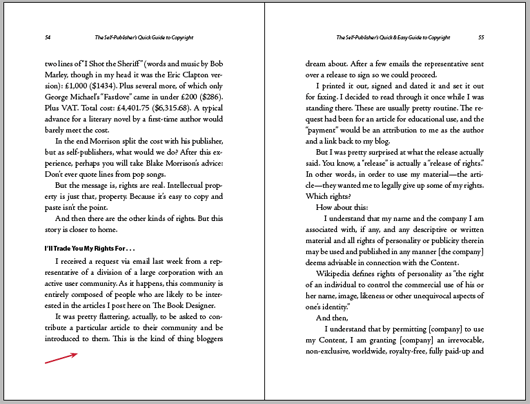
I always refer to widows as the last line of a paragraph at the top of the page. And an orphan as the last word of a paragraph on it’s own line. However, if it’s more than 4 characters (excluding punctuation), then it’s fine. We normally try for a whole word down (and a few publishers want a full word down, but will allow it to be hyphenated if it’s a very long word).
I looked at your links, and:
1) We always require a minimum of two text lines at the top of the page. The last line of a paragraph is not acceptable at the top of the page. It has to be at least two lines.
2) We allow the first line of a paragraph to end at the bottom of the page (I believe it’s the second link you provided where they refer to it as a widow). We allow it, and so do most publishers (at least with the ones we work with).
With that being said, sometimes you get an old-time editor or proof reader who doesn’t like those things, and they will mark them as PEs (printer errors). They aren’t, as the publishers allow them, but they sometimes get marked when 1st pass is sent back to us for corrections. We cross them off and ignore. We do check with the publisher first, however.
And although you didn’t ask, I will say that we always require two lines of text above and below text elements such as space breaks, extracts, bulleted lists, verse/prose, numbered lists, etc. And two lines of text above and below any element that has space above and below it. We pretty much go by the rule of “two,” except when it comes to the first line of a paragraph ending at the bottom of the page. That is when it’s regular text. LIke I said, if there is space above it, then it’s two.
Sorry for rambling. In the case of the second link, we don’t consider what they termed a widow as unacceptable.
Also–in book pagination, we are allowed to either go one line short or one line long on spreads to avoid bad breaks (this depends upon the foot margin and the page count wanted). So to avoid the last line of a paragraph falling at the top of the page, we can run the spreads either a line short or a line long. Normally, you can’t have three spreads in a row that are short or long, and you can’t mix and match. It’s either shorts or longs. But normally, we would try to make or lose a line in the text to avoid running shorts or longs.
And, of course, that’s why we use the “keep together” option in the paragraph style sheets. We normally use 1 and 2 (one at bottom and 2 at the top). Some designers refuse to use that feature, which makes no sense to me. By using it, InDesign will show you the bad breaks.



.