




I haven’t seen the TV series “Mad Men” yet, but several people have recommended it to me, mostly because of its authenticity in depicting 1960s office style. And indeed I do have a certain nostalgia for that period, with memories of going to visit my father at work and being amazed by the rows of steel desks and busy workers, each with their own typewriter and rotary-dial telephone.
The early ’60s was a golden era for big business. Automation was just taking hold and something new called “data processing” was creating a buzz among the largest corporations. Steel office furniture was rolling off assembly lines as fast as companies could make it, and industries like aerospace were ramping up as quickly as they could hire people. All of the images here are from 1961 — click on any one for a larger version.
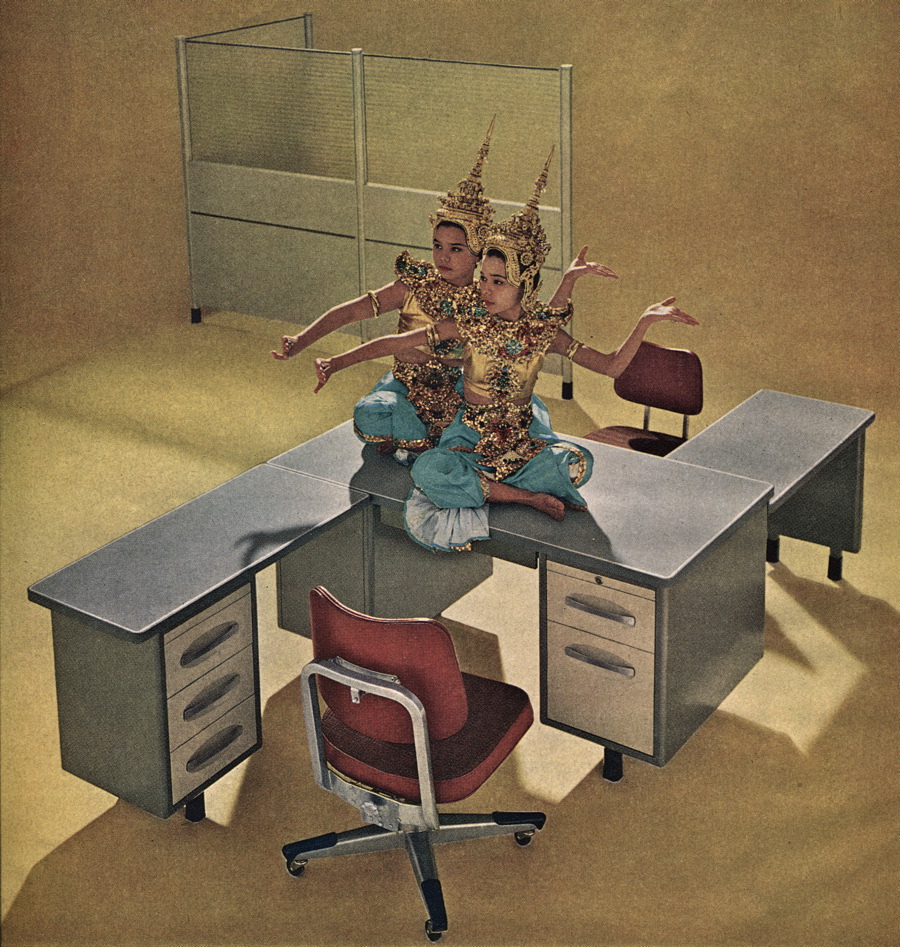
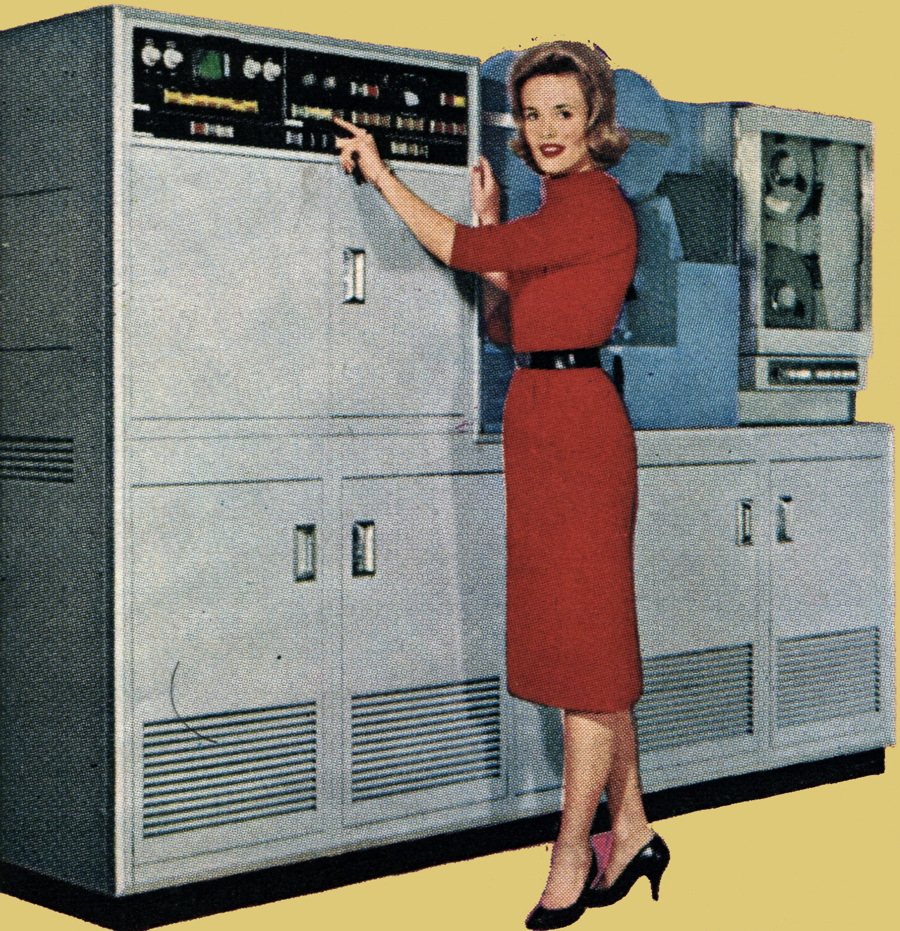
Aside from the style, though, it was not necessarily the greatest time. Men still dominated the executive ranks, while women were assigned to the secretarial pool. In my father’s case the two-martini lunch was a staple, and I often wonder now how anyone got any work done in the afternoons.
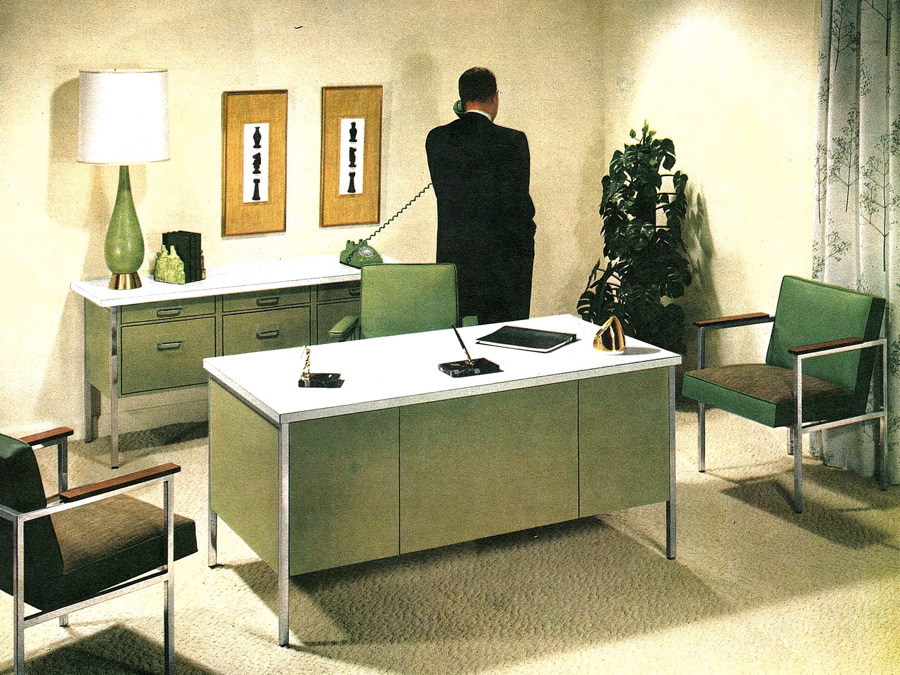
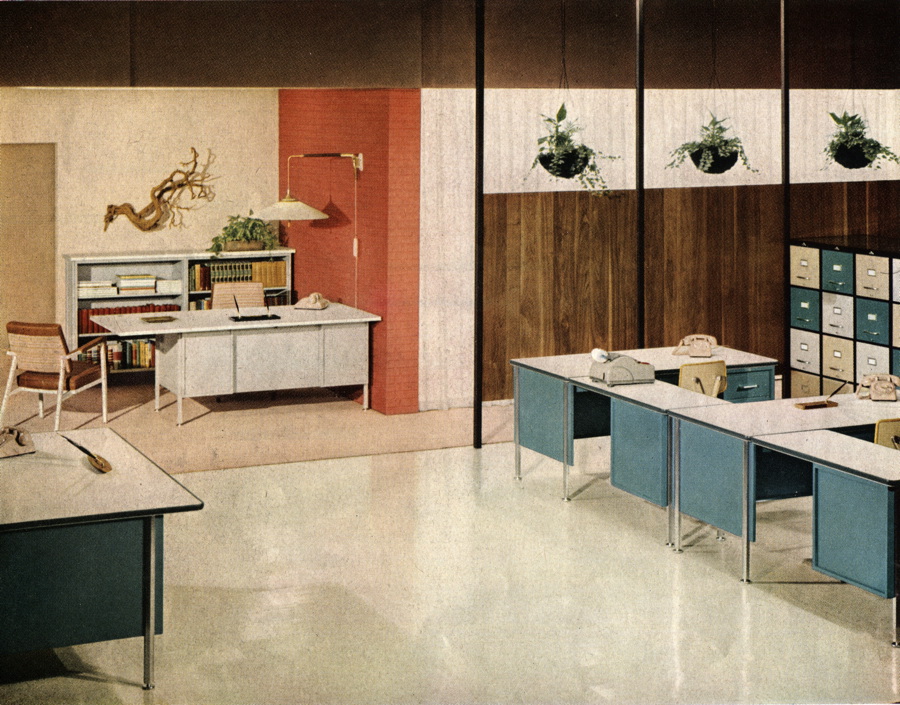
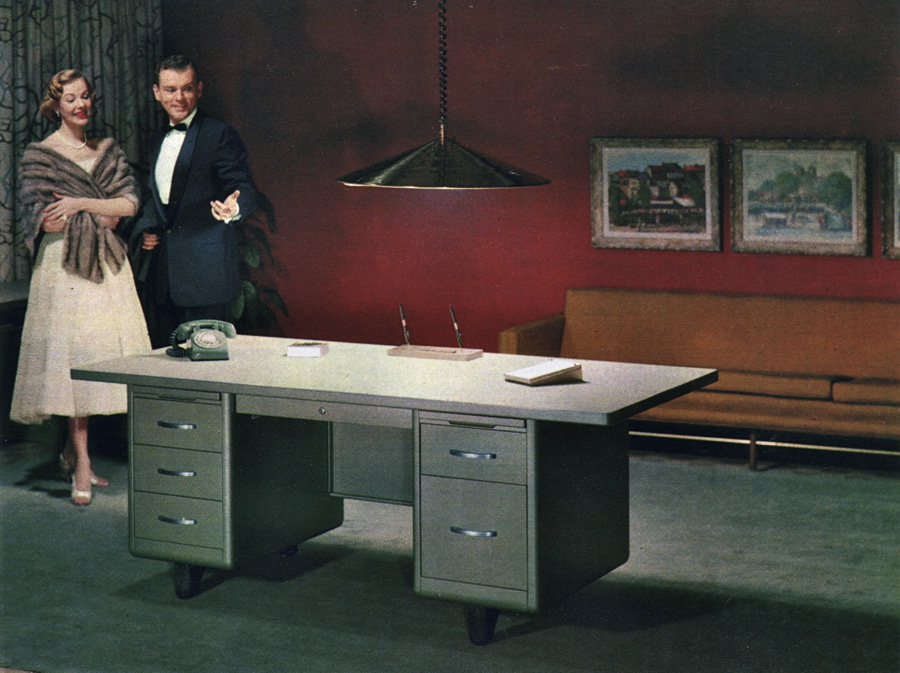
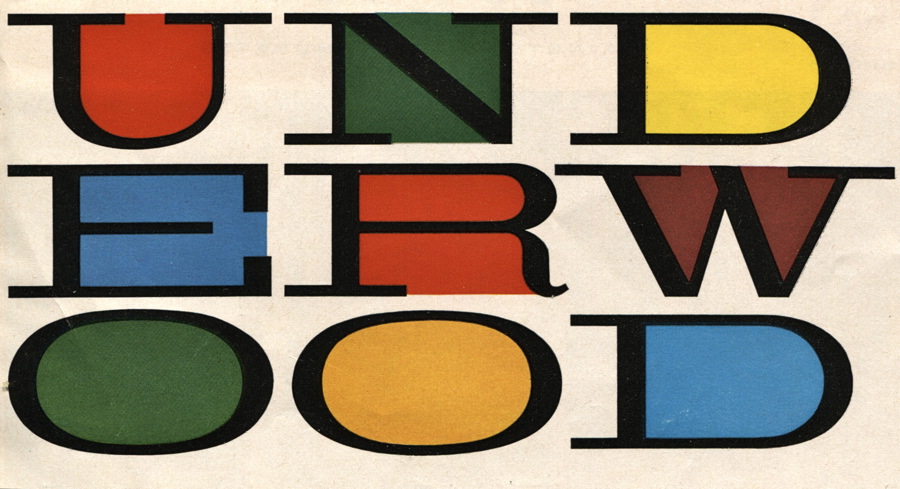
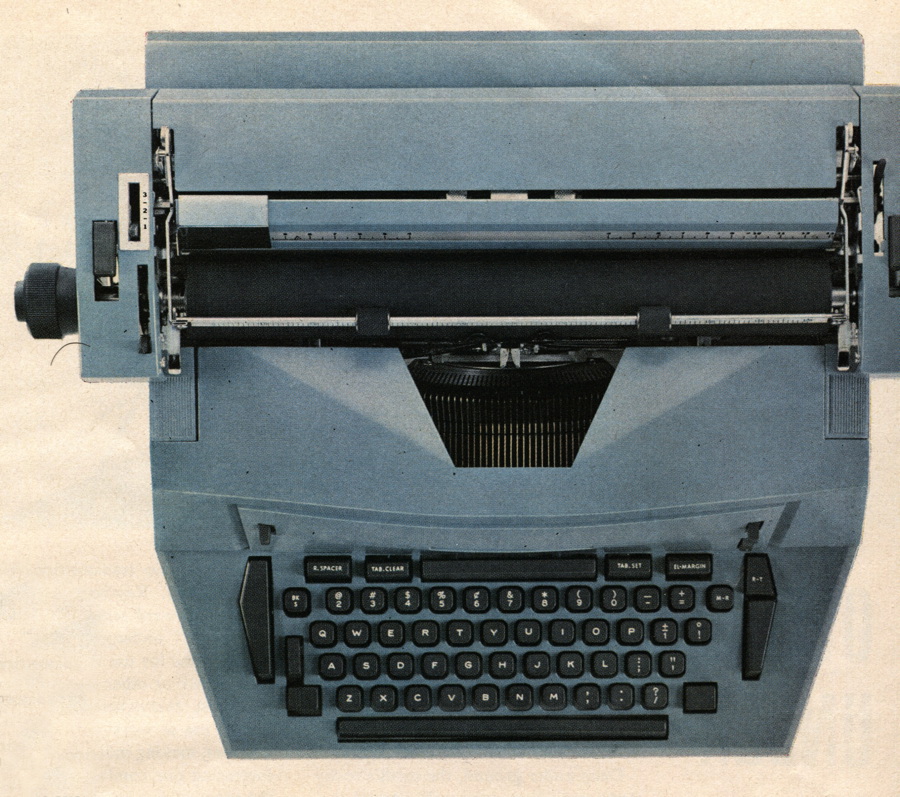
The cubicle culture we grew to know so well in the 1980s and ’90s hadn’t really started. Instead, desks were often lined up in rows in large rooms, where I imagine the noise was distracting. But people worked at their desks back then; eating and surfing the Internet were not part of the equation. Aside from a photo of the spouse or family, there wasn’t much in the way of personalization tolerated. You had your phone, your adding machine or typewriter, and an in and out box. Here’s an ad for the Underwood Raphael electric typewriter.
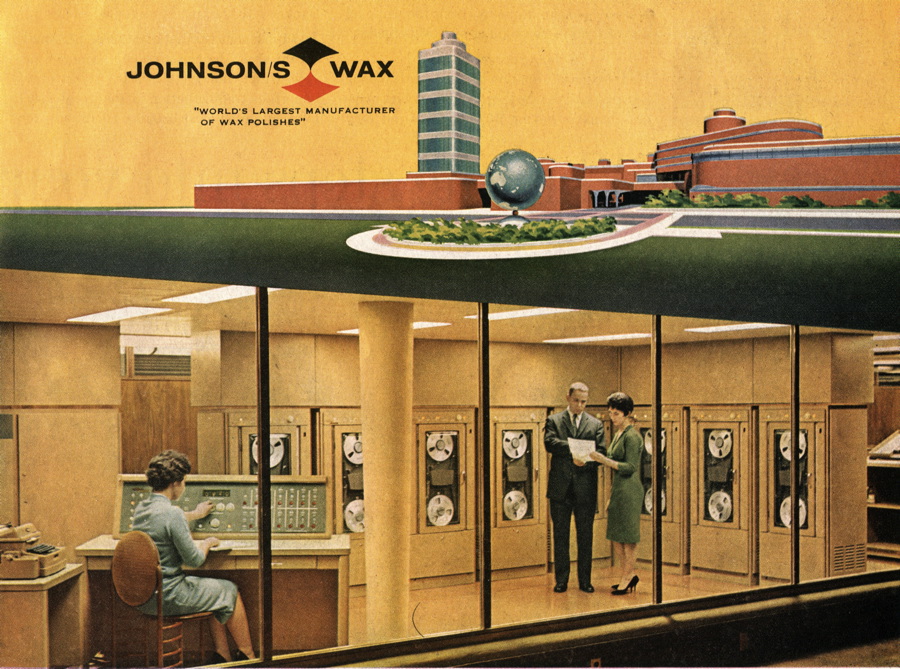
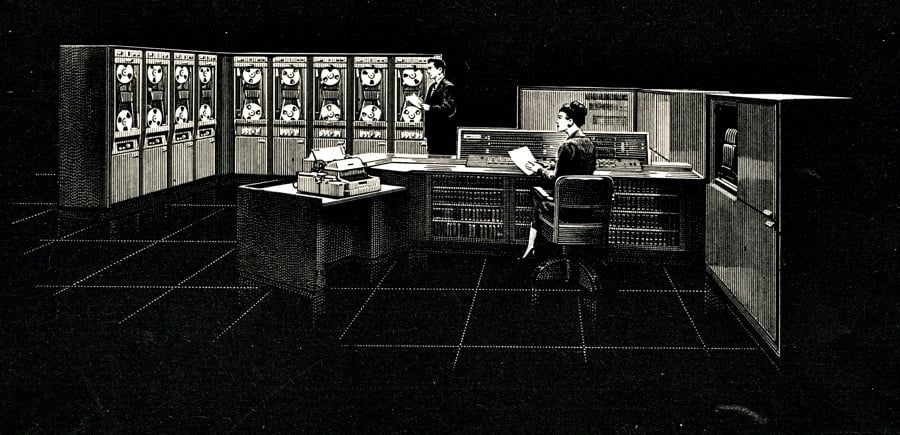
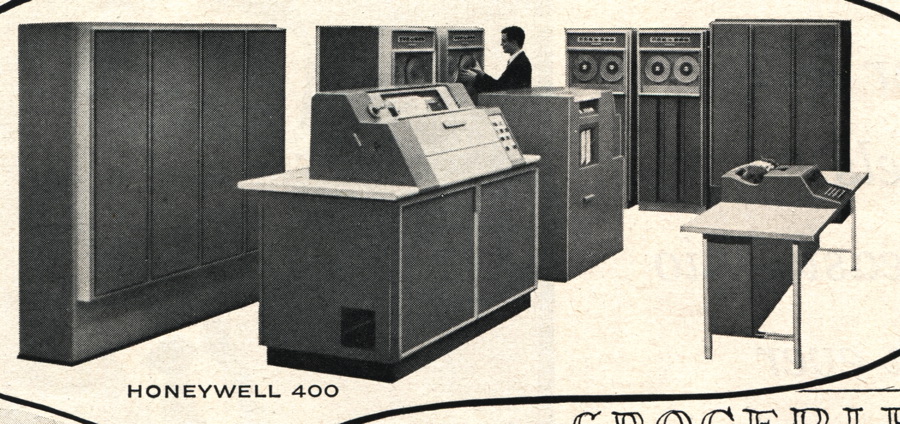
There was nothing particularly romantic about that sort of clerical work, and the big data-processing computers that were entering the scene foretold a wave of change. Those rows and rows of steel desks would soon be gone, as manual processes like bookkeeping, order processing, and typing individual letters became automated. Here are ads for the National 304 Data Processing System, the Philco 2400, and the Honeywell 400 Electronic Data Processing unit.
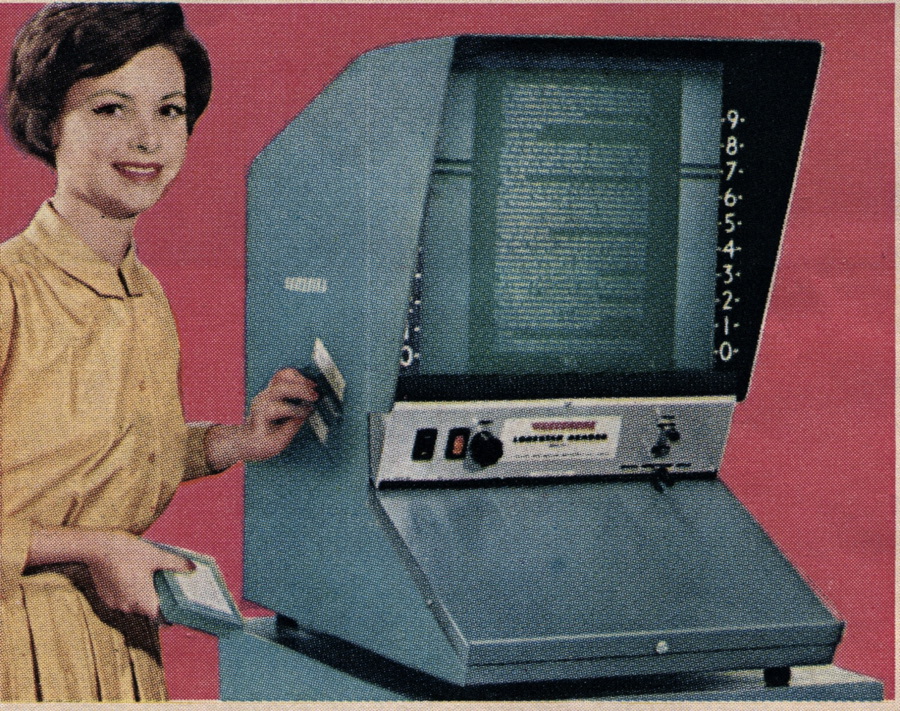
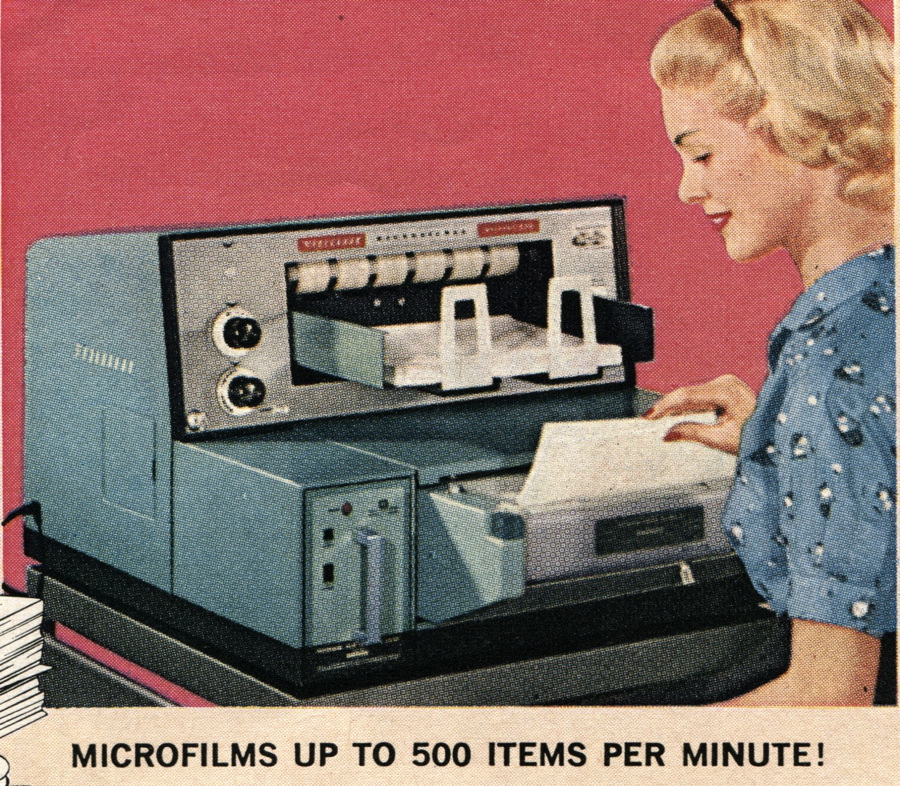
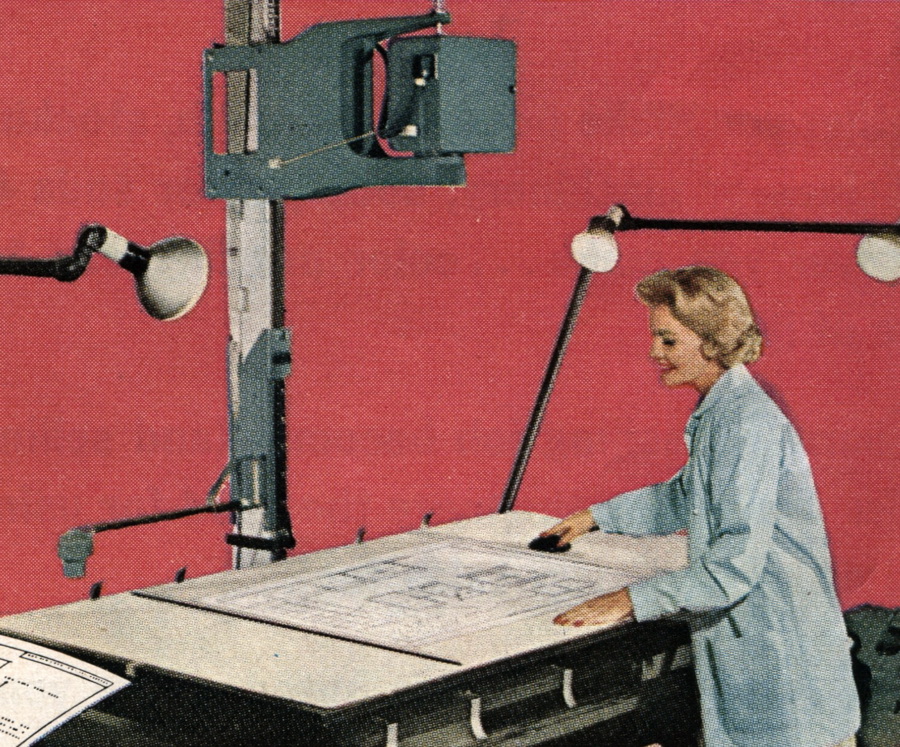
There was no such thing as electronic data storage, so physical record keeping was a big part of the workforce. Here are several images from an ad for microfilm equipment, which was standard issue in most large companies. Huge file rooms were common in basements and darkened storage facilities. Hard copies were the only kind there were.
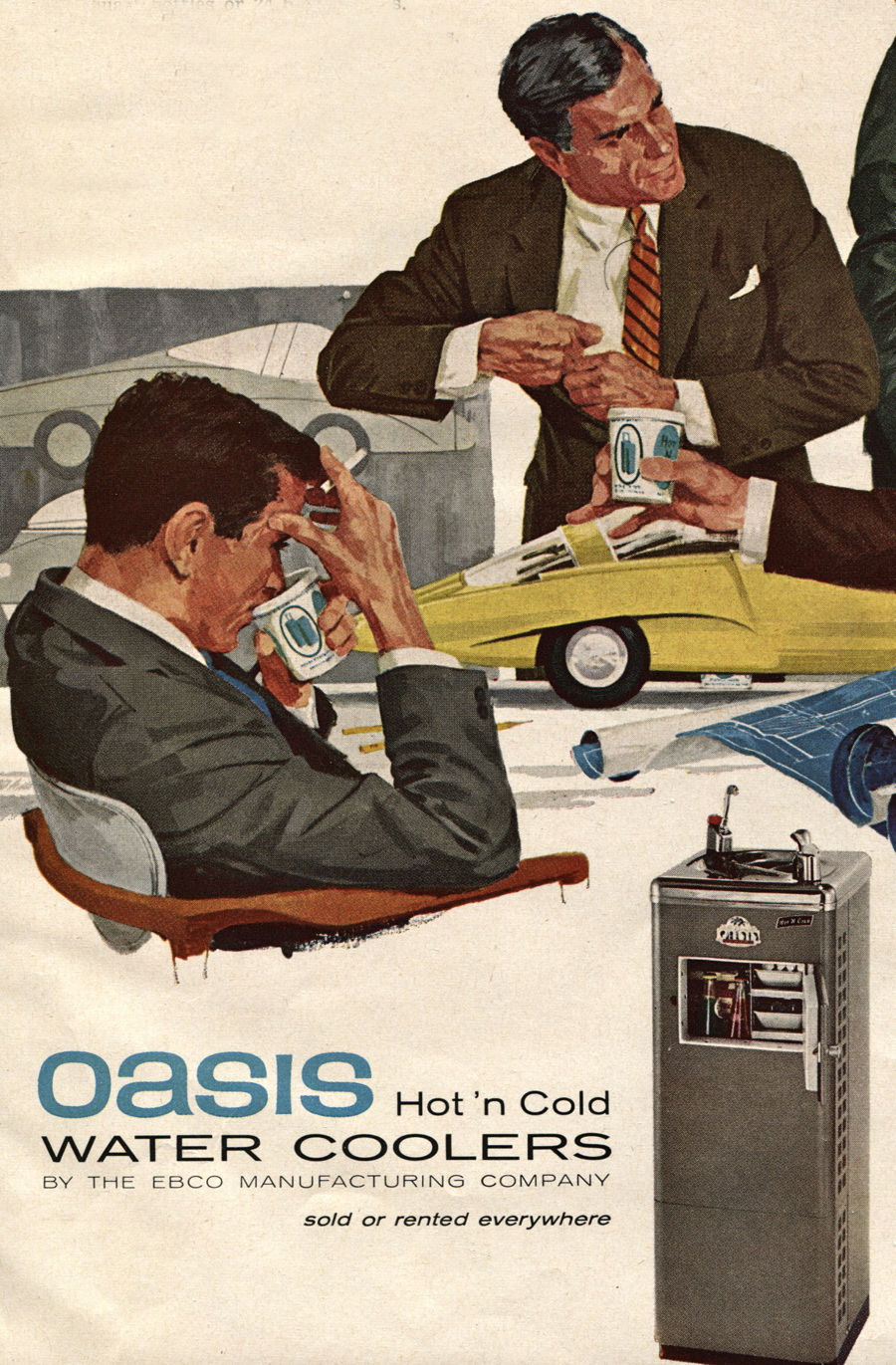
Every place I’ve worked of any size has had a water cooler of some sort, or bottled water in the fridge. But I’ve never seen water fountains like the one below, and I’ve never noticed people gathering around the water cooler to gossip or compare opinions of the previous night’s television lineup. But I’m told that was common back when running to Starbucks was not an option.
I found one interesting novelty ad from 1961. It heralded the introduction of something called “rub-down” lettering from a small company called Letraset. Now, according to the ad, “anyone: could do professional looking printed lettering.”
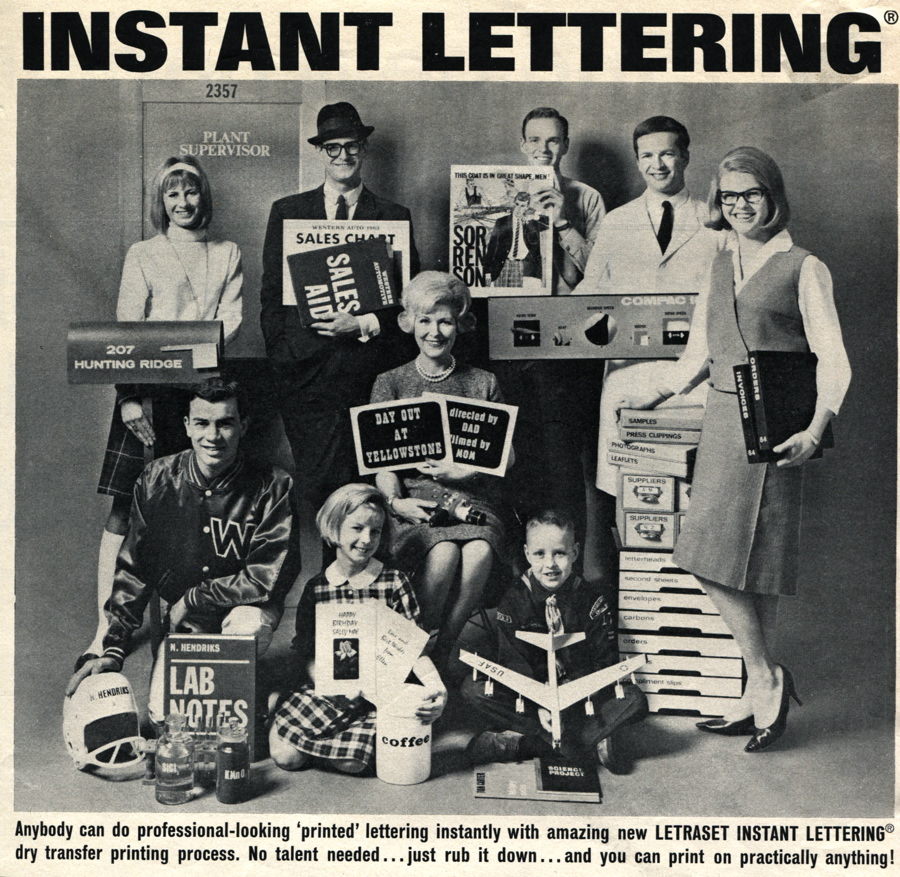
We still often sit at steel desks, only now they all have a computer on them and are mostly walled in behind fabric-covered panels. Our phones are no longer tied to our desks, and “coffee breaks” have taken on a whole new meaning. But one thing hasn’t changed: “anyone” can still do professional looking printed lettering, right at their desk!
This article was last modified on May 17, 2023
This article was first published on January 22, 2010
Commenting is easier and faster when you're logged in!

Recommended for you
How to Compare Two PDFs Using Acrobat
See all the differences in two PDFs at a glance with this quick Acrobat tip.
Scanning Around With Gene: Clever Things to Make at Home
I used to make a lot of gifts for Christmas, but I now suffer from a shortage of...

InDesign How-to: Auto-Size Text Frame Height
In this InDesign how-to video, Erica Gamet demos how to auto-size a text frame’s...