




InDesign’s Cross-References panel lets you create x-refs such as “see Oranges and Apples on page 23.” But cross-references have two important limitations:
- In general, the text you’re referencing needs to be on the page (“Oranges and Apples” in the example above)
- In general, the text has to have a paragraph style applied to it
However, I say “in general” because there is an easy workaround to both of these: use text anchors instead of relying on paragraph styles.
For example, I want to create a cross-reference that says “See ‘flightless birds’ on page…” (where the page number changes depending on where it falls in the document). However, you can see in the image below that the words “flightless birds” doesn’t even appear on my page! So I’m going to make a text anchor by placing my cursor in the text somewhere, then choosing New Hyperlink Destination from the Hyperlinks panel menu:

That let’s me insert a text anchor at the text cursor position. Name the anchor exactly how you want the text to appear in the cross-reference:

When you click OK, the anchor will be placed, but it’s invisible so you can’t see it. If Type > Show Hidden Characters is enabled, you’ll see a little colon at the position of the anchor. Or, you can see it clearly if you open Edit > Edit in Story Editor:
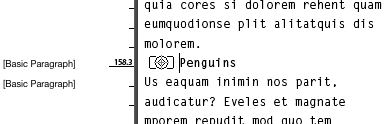
You can see above that the anchor is in a paragraph that doesn’t even have a heading paragraph style applied to it. (I normally would always use paragraph styles, but I’m just pointing out that it works even if you don’t.)
Okay, once the anchor is in place, you can position your text cursor wherever you want the cross-reference to be. Then open Window > Text & Tables > Cross-References, and click the New Cross Reference button at the bottom of the panel. In the New Cross-Reference dialog box, change the Link To popup menu to “Text Anchor,” choose the anchor you just made from the Text Anchor popup menu, and then set the Format popup menu to “Text Anchor Name & Page Number” — like this:

When you click OK, InDesign adds your cross reference into the text. Here you can see that it’s inside parentheses, which I typed before adding the x-ref:

Of course, I should probably also go back and add the word “See ” before that x-ref. That’s easy to do.
Why bother with cross-references like this? Because page numbers change! If you have 10 or 100 of these, you don’t want to have to update them manually whenever the document is edited. Cross-references take care of all of that for you.
This article was last modified on July 25, 2019
This article was first published on August 20, 2015
Commenting is easier and faster when you're logged in!

Recommended for you

Synchronize Text in More Than One Place in an InDesign Document
Need to synchronize a bit of text from one place to another in a document? It's...
How to Mess Up Your Hyperlinks Panel
Don't try this at home! (But if you do accidentally, here's how to fix it.)
Figure Numbering in InDesign (and cross-references to them)
How do you set up automatic figure and table numbers? And how do you point to th...