



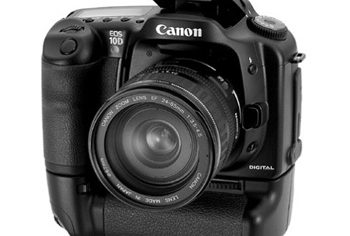
Controlling the 10D
Though improved autofocus and body changes are the most readily apparent alterations, the 10D has a large number of “under-the-hood” changes as well.
You’ll find many important new shooting parameters. You can now select either Adobe RGB or sRGB color spaces for your images. In addition to the old white balance control, you can also specify white balance in degrees Kelvin. The 10D provides a full range from 2,800° to 10,000°K in 100° increments.
A new white-balance bracketing feature automatically shoots and records a series of images, each with a slightly altered white balance. Later, you can pick the one you like and discard the others. For uncertain or difficult white balance situations, this can be a handy way to ensure proper color. While the D60 provided simple control for adjusting the camera’s contrast, sharpness, saturation, and color tone, the 10D improves these controls by adding two more levels of adjustment.
The 10D also includes a rotation sensor that keeps track of whether your images were shot in portrait or landscape orientation. The camera can automatically rotate the images when playing back on the built-in LCD. It’s also supposed to tag the images for rotation upon transferring to the computer, but we found that this didn’t always work when using the camera with a Mac running OS X.
Finally, while the D60 had a maximum ISO of 800 (down from the D30’s max of 1600), the 10D’s ISOs stretch all the way to 3200, providing a tremendous amount of flexibility for controlling exposure and for shooting in low light.
Image playback is much improved thanks to a brighter, higher resolution LCD screen. LCD Brightness can be controlled from the camera’s menu system, and the 10D now provides an excellent 10X playback zoom-and-scroll feature that makes it easy to review your images in extreme detail.
Like its predecessors, the 10D is incredibly fast at playing back and deleting images. This performance is not necessarily noticeable at first; it simply works the way it should. It’s only when you get your hands on another camera that you might realize the speed of the 10D’s playback, navigation, deleting, and formatting.
Overall, there is little to want in the 10D’s feature set. Though the camera is not bloated with features, it certainly has a finer degree of control than most users will probably need. Fortunately, the camera’s menu system is well organized, speedy, and easy to use. If there were one more feature we’d like to see, that would be the ability to fine tune and tweak particular white-balance settings. However, the camera’s manual white balance and white-balance bracketing features provide plenty of white-balance control as is.
Image Quality
While most digital cameras use a CCD image sensor, Canon opted for a custom-build CMOS chip when they designed the EOS D30. Technically, CMOS has a few advantages over CCD technology, particularly much lower power consumption. The most notable characteristic of Canon’s CMOS sensor is the extraordinary lack of visual noise in the images. The “D30 look” came to describe incredibly smooth, silky images with no noise at low ISOs and surprisingly little visual debris at higher ISOs like 800 and 1600.
Somehow, with the 10D, Canon has managed to reduce image noise at higher ISOs even further, and lack of visual artifacts is still one of the most striking things about the 10D’s images. You’ll be hard-pressed to find any noise in images up to ISO 400, and even at the faster speeds, artifacts are minimal.
Canon also claims that the DIGIC processor offers improved color over the D60. This is a little harder to quantify, because there really wasn’t much wrong with the D60’s color. However, on very close inspection, it is possible to find slightly improved color tone and saturation with the 10D (see Figure 2).
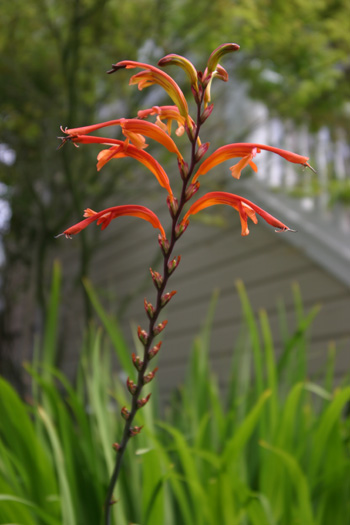

Figure 2: These images were shot with the same lens using identical exposure settings. The EOS 10D (top) yields a slightly more saturated image with deeper tone than the EOS D60 (bottom). Not all of our comparisons showed this much of a difference, but these images show that the 10D’s DIGIC processor can yield superior results.
Canon has opted for very minimal sharpening on all of its digital SLRs and the 10D is no exception. At first glance, it may appear that the images are too soft. However, this softness affords you absolute control over the sharpening process. If the default settings are too soft for your taste, you can increase them using the camera’s Sharpness setting. Or, you can leave the sharpness configuration where it is and sharpen your images by hand using an image editor.
Overall, as with the D60, the 10D’s image quality is excellent. The camera’s three metering modes provide excellent exposure results, even in tricky situations, and the camera’s silky smooth images show excellent tone and accuracy.
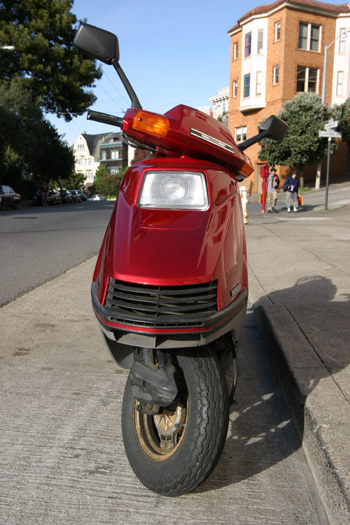 Figure 3: Like its predecessor, the 10D’s images are astonishingly noise-free, with excellent color and tone. This image was shot with the default sharpness settings, which are, plainly, a little soft.
The 10D seems to produce slightly smaller JPEG files than did the D60, and yet the images suffer from no additional compression artifacts. Like its predecessors, the 10D also provides the ability to save Raw files — raw image data that has not been processed or compressed by the camera — but the 10D also adds the option for saving a full-resolution JPEG along with the raw image. If you’ve got the on-board storage, this provides a substantial workflow advantage.
In our tests, the 10D’s Raw files were not compatible with Adobe’s new Camera Raw plug-in for Photoshop. Adobe says that the plug-in will not be updated, so 10D owners will have to wait for the next version of Photoshop to get this functionality. In the meantime, you’ll have to use Canon’s included Raw processing software, or a third party Raw application.
Lens choice has a lot to do with image quality, of course, and the 10D provides enough imaging power and resolution to support Canon’s finest-quality lenses. (As with the D30/D60, because the 10D does not use a sensor that is the full size of a 35mm piece of film, the focal length values of all your lenses will be multiplied by 1.6.)
Conclusion
Though the D30 and D60 were great cameras, their slow, light-hungry autofocus systems were often frustrating, and at times could cause one to miss a shot. The 10D solves this problem, and then some. The improved autofocus and image quality, re-designed body, and vast selection of new features, combined with the same excellent performance and noise-free images of Canon’s previous models make this a great camera even at $2,000. But at its current street price of $1,499, the EOS 10D is an excellent value for the money and which places Canon securely at the top of the market.
This article was last modified on January 18, 2023
This article was first published on May 13, 2003
Commenting is easier and faster when you're logged in!

Recommended for you

Sony RX100 V Review: The Ultimate Travel Camera
The new Sony RX100 V is the latest release in the Sony RX100 point-and-shoot ser...

The NYIP Complete Course in Professional Photography Now Available Online
Press Release New York Institute of Photography Launches Online Professional Pho...
Camera Lens Mug and Thermos
Earlier this week we saw how some creatives go all out to demonstrate their love...