



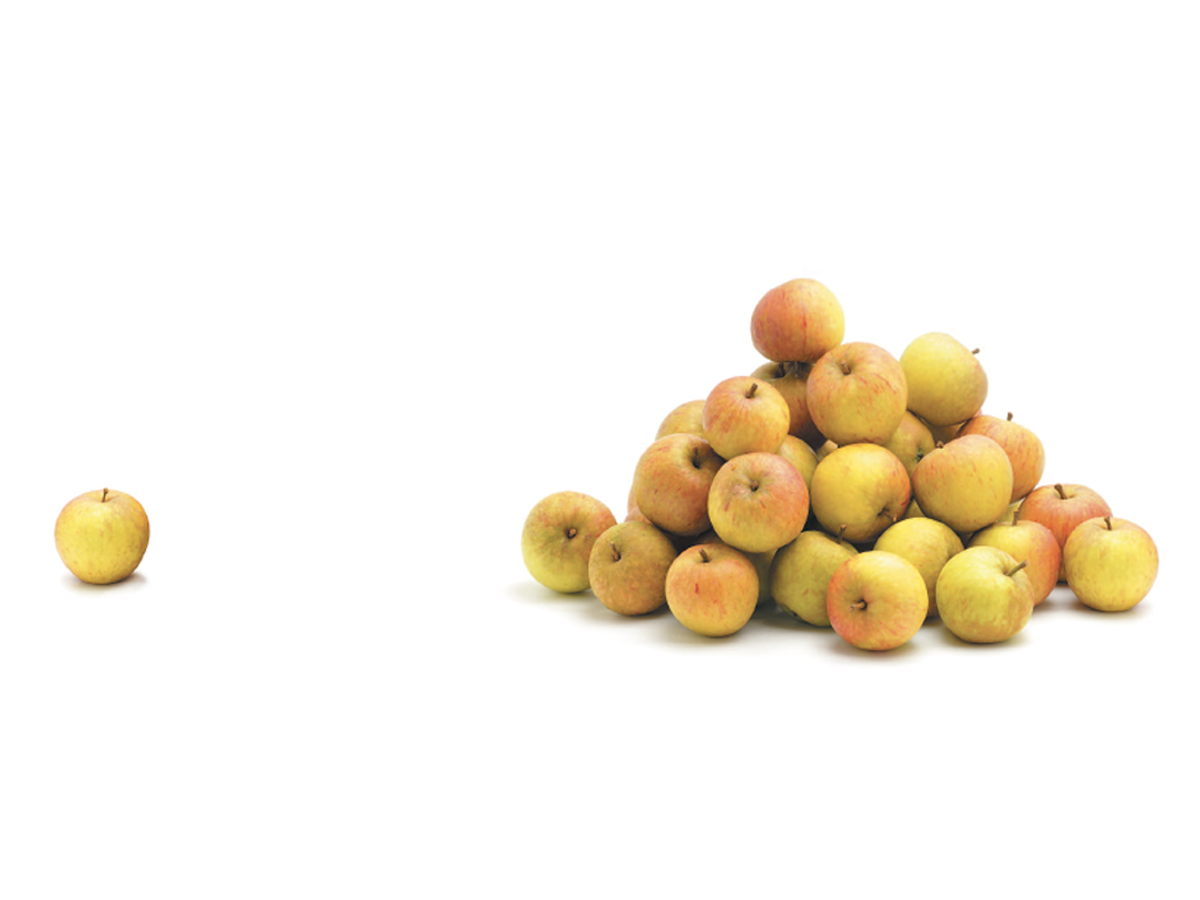
Early last century, psychologists in Austria and Germany developed a school of psychology called Gestalt, which attempts to explain human behavior in terms of pattern seeking. Gestalt theory explains how the eye organizes visual experiences and how the brain interprets them. When separate elements are grouped, they appear united just because they’re close, even if they’re not alike. This 7-page article from issue 52 of Before&After Magazine shows you how you can use Gestalt theory and group elements based on nearness .
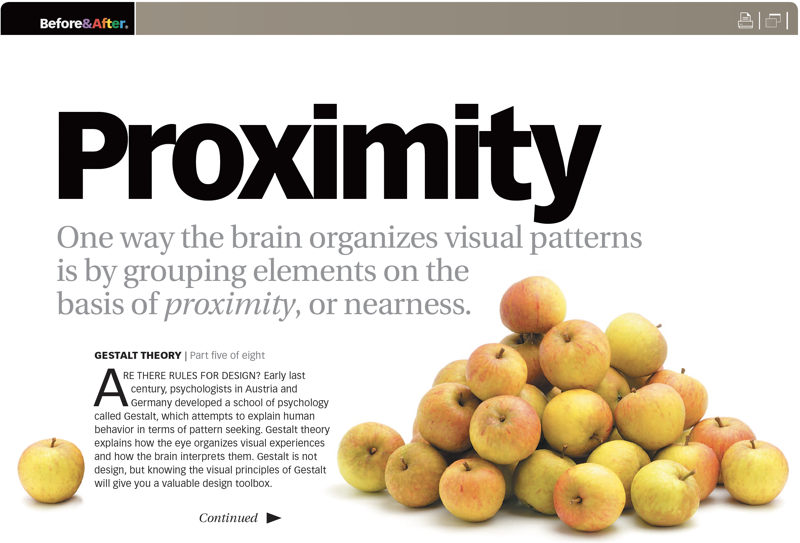
Grouping creates a more organized presentation, which looks better and allows the viewer to read the information more easily.
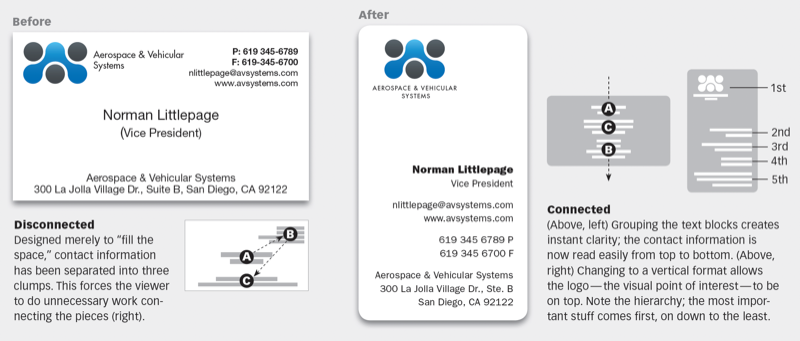
© John McWade/Before&After Magazine, courtesy of Gaye Anne McWade.
Commenting is easier and faster when you're logged in!

Recommended for you
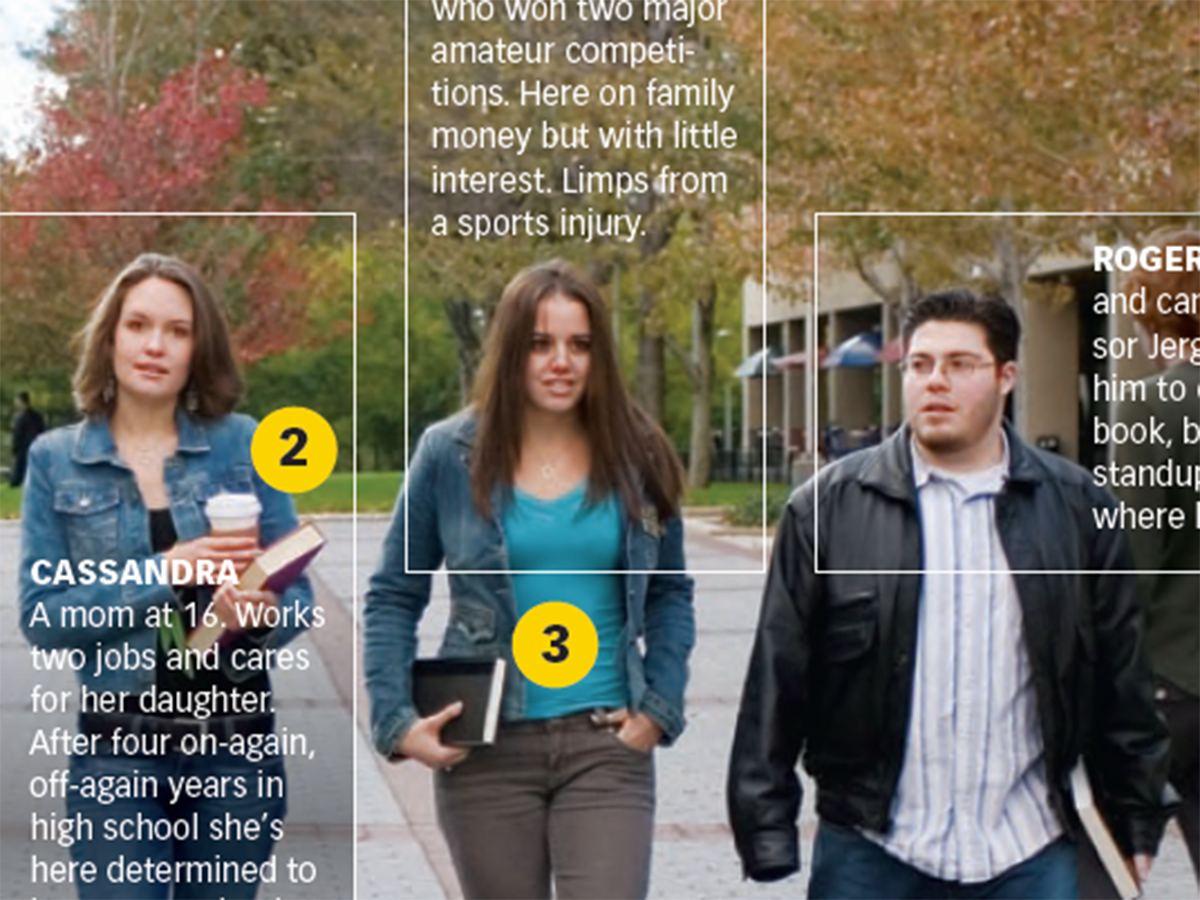
Before&After Design Tip: Multi-Caption Photo Tells Many Stories
Use more than one caption to unpack the detail in an image
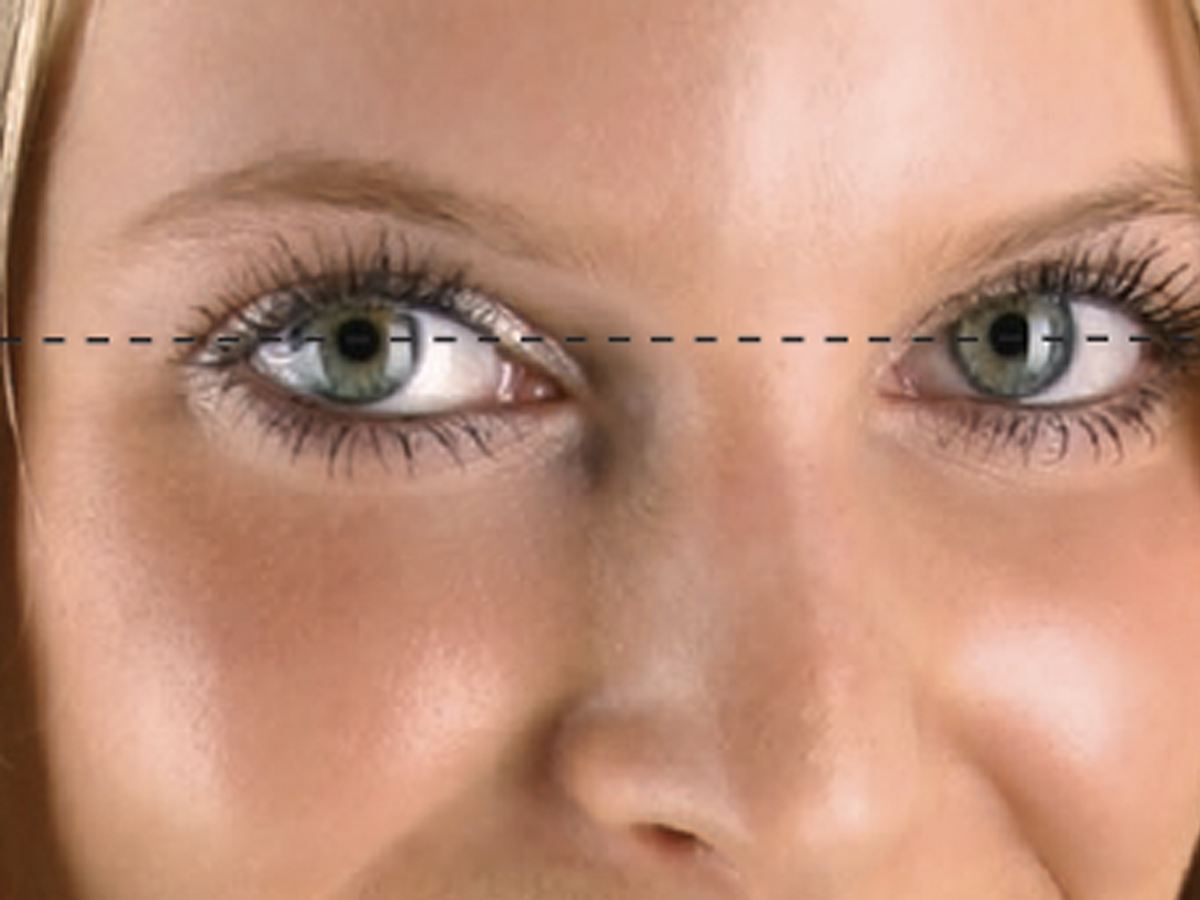
Before&After Design Tip: Crop Closeups at Eye Level
Learn how to effectively crop portraits using eye level as your guide

Before&After: Picture Your Group
Have a dozen or more mug shots? A grid of squares gets that gang of yours lookin...