

InDesigner: National Geographic Learning
Pam Pfiffner explores the classroom offerings of National Geographic Learning.


This article appears in Issue 49 of InDesign Magazine.
For many American children, our first exposure to other cultures came in the pages of National Geographic Magazine. Brilliantly colored photographs showed us people and places we barely knew existed. The pictures and maps were exciting, even titillating, but the information behind those images was over our heads. Who are these people? How do they live? What can we learn from them? Students today can put those concepts in context through the publications of National Geographic Learning, part of Cengage Learning. NGL designs K–12 curricula for students and instructors in the areas of English as a Second Language and for English Language Learners (ESL/ELL), Reading, Science, and Social Studies. Design duties are split between two offices: Monterey, California, led by creative director Michael Farmer, and Evanston, Illinois, led by creative director Christopher Roy. The design of the print and digital media produced by National Geographic Learning is image-rich, thanks to its access to the National Geographic Society’s photography and graphics library. Content is presented in a kid-friendly format that’s age-appropriate without being condescending. “Our customer expectations usually revolve around great image and content, which we continually deliver on,” says Chris Roy. 
In addition to producing books and interactive media for students, NGL is also responsible for designing instructional plans for teachers who must work within the constraints of time as well as meet national and state achievement standards.
“Effective instructional design is some of the most complex information design that is done,” says Michael Farmer. Lessons need to be designed for specific blocks of time — 60 or 90 minutes, for example. “The one resource all teachers have the least of is time. If we can successfully present instructional content with clarity and simplicity
within the timeframe a teacher has to present it, we have accomplished something significant for both the teacher and the student.” For example, each lesson in GEO, a middle-school product about world cultures and geography, is devised as a series of spreads. “Educators wanted the program to be functional and work within their course timeframe,” Roy says. “A spread-by-spread lesson approach fulfilled their need for making the program functional and user-friendly for them and their students.”

This cover from the National Geographic Explorers series, designed by Michael Farmer’s group, shows its connection to the parent institution with its use of a strong image, yellow frame and boilerplate masthead. Design guidelines for all National Geographic Society brands is to uphold the standards for which it is known, including “the use of authentic, world-class photography; bold, impactful imagery; and clean design,” says Farmer. That this brand targets a younger audience is shown in the playful type of the series title and cover line.
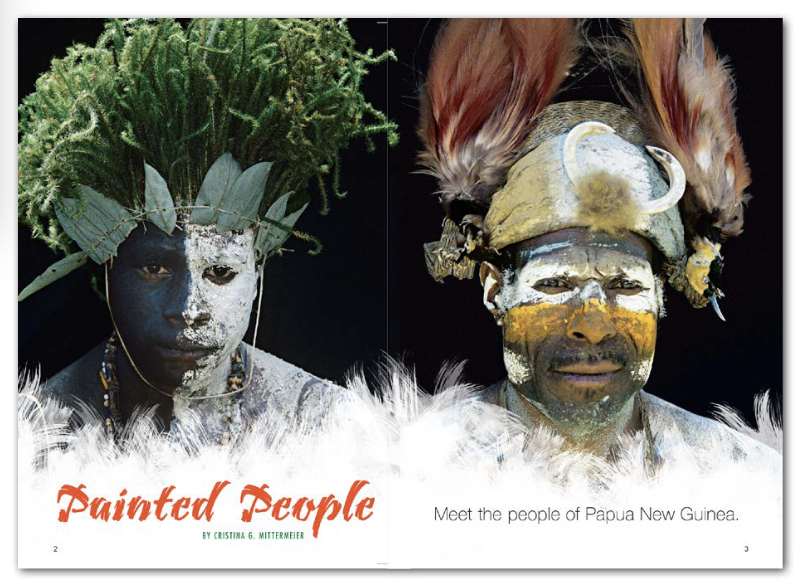
Stunning photography has always been a key element in all National Geographic Society products. Access to the image repository of the 124-year-old National Geographic Society is a major benefit for NGL. Design by Farmer’s group in Monterey, CA.

National Geographic is also known for maps that enhance the content. Farmer notes that the Explorer series of books not only has access to a trove of informational graphics, it also can leverage knowledge gained by a team of National Geographic Explorers who are recognized for their contributions to research and education.

Photography such as this lets the designers integrate type and image, with a little help from InDesign’s blend modes. Designed by Farmer’s group.
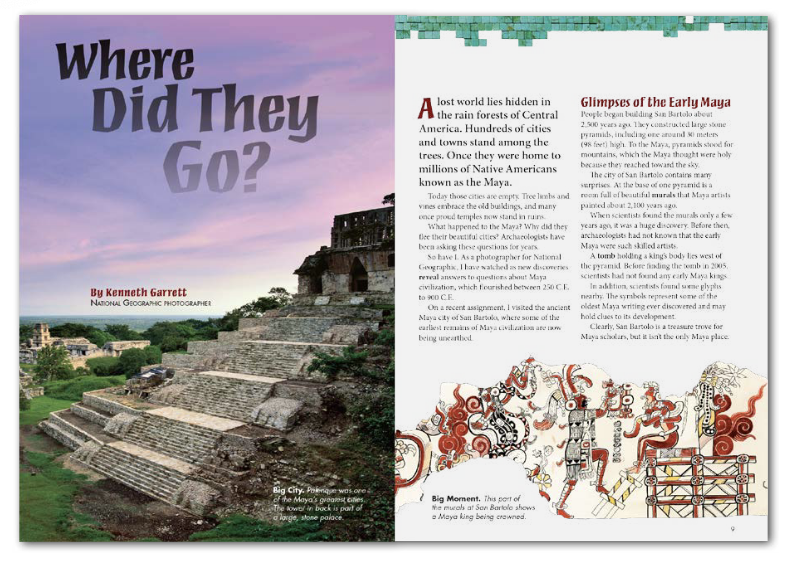
InDesign’s transparency effects allow the title to underscore the subject by making the font seem to vanish from the page. Farmer’s group designed this one.

The design of National Geographic Learning must explain complex concepts with clarity. Here type and graphics work together to show how the natural world can influence today’s technology. Designed in Monterey by Farmer’s group.

GEO is the name given to a series of lessons about world cultures and geography designed by Christopher Roy’s group in Evanston, IL. Not only does “GEO” provide a shorthand name for the program, but it also creates graphic continuity throughout the titles. “GEO gave me an opportunity to find images with circular forms within them and add the ‘G’ and the ‘E’ into the environment,” Roy says. “To test the concept we did quite a number of samples to see if we could adapt and find photographs to achieve this before presenting the idea to our stakeholders. It worked, and as a series the GEO sub-brand is a surprise visual element, as well as a visual thread, that holds the program experience together.” These lessons are available both online and in print.


GEO lessons are designed as spreads with jumping-off points for essential components, like geography, history, and location as well as an introduction to experts in the field who bring first-hand knowledge of the area as well as providing insight to issues that affect the region. “The program has a level of high design that’s rich in details, photography, and real world current— and relevant—content,” Roy says. “We have real in-the-field explorers and Scientists from National Geographic. Our content comes directly from our own experts.”
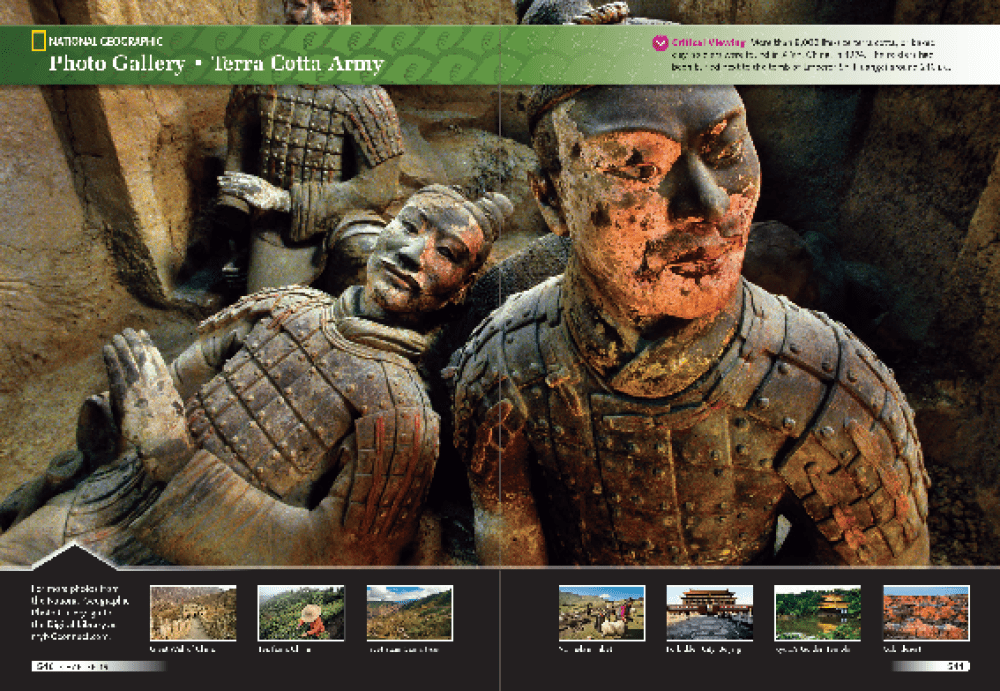


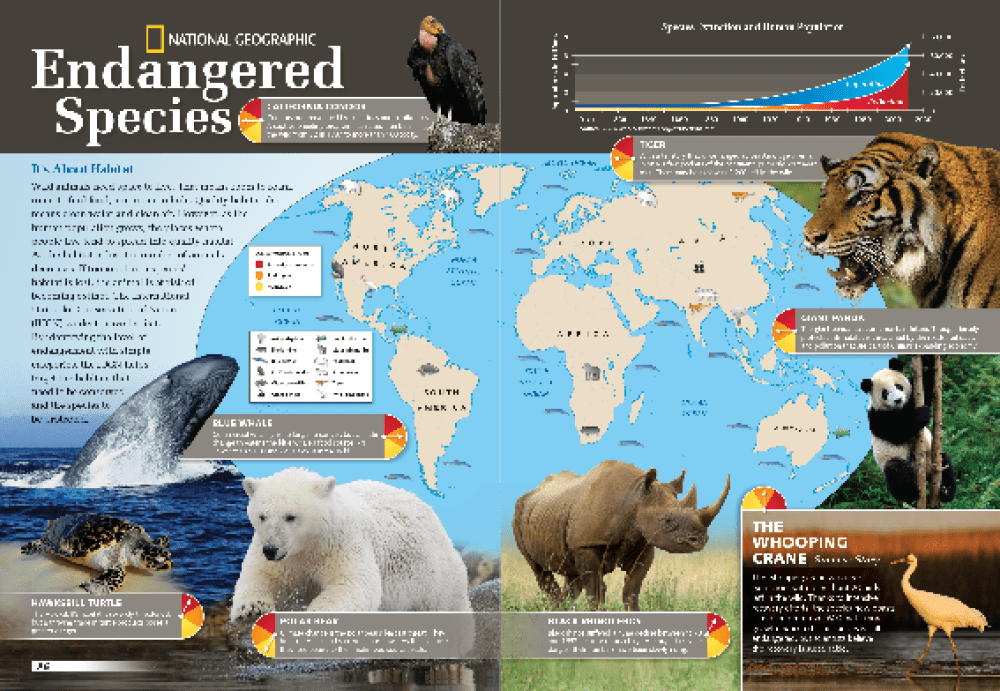
Interior spreads of GEO publications expand on the topics introduced in the opener. Above are: a photo gallery of the region; in-depth examination of a topic; insight by a National Geographic Society “Explorer”; and a special spread about a geographic or cultural issue. Highlights and annotations in the Explorers spread indication key concepts and vocabulary. Again, NGL designers have access to a rich repository of images from the National Geographic Society.
Commenting is easier and faster when you're logged in!

Recommended for you
InDesigner: Cindy Kelley
How unwavering passion led Cindy Kelley to a full-time career in freelance desig...

Interview with Kat Kremser, Vector Artist and Instructor
Q&A with Kat Kremser, who is presenting at the CreativePro Design + AI Summit
InDesigner: LensWork
A look at LensWork, a magazine devoted to black and white photography, is produc...