



Recently my two-year-old nephew came for a visit. "Computer," he said, pointing to the decal-adorned monitor on my desk. That got me thinking of all the words children learn these days, as part of their basic lexicon, that didn’t exist when I was learning to speak, at least as far as two-year-olds were concerned. And that got me to thinking of all the words adults learn these days that didn’t exist even two years ago. Words like Napstersesque. Napsterize. Napsterish.
Yes, it seems that Napster, everyone’s favorite MP3 trading platform, has so quickly and completely taken its place in our cultural lexicon that we can now bandy about words like Napsterize (which I read in an actual news article on a prominent Web site) without concern that they will be met with a collective "huh?" from the reading public. Napster and the concept of Napster have become the very definition of the triumph of technology over the traditional world (and old-school concepts like copyrights), and the name has lately gone on to help frame the debate over a new kind of Internet piracy: the digital encoding and trading of feature-length films over the Web.
High Anxiety
As we all know, music files are relatively small and therefore easy to exchange over the Web. But the amount of memory required to store a full-length feature film in any sort of watchable quality is enormous. For a while after the explosion of Napster onto the music scene, Hollywood moguls took comfort in this fact: The technology that would allow the viewing public to access movies over the Internet for free simply wasn’t available. Unfortunately for the moguls, that comfortable space didn’t last very long, for the technology they feared may already be here.
According to one estimate, about 350,000 illegal movies are now downloaded a day, and the rate could reach 1 million by year’s end. How are willing Internet users pulling this off? To start with, there’s a little something called DivX.
Squeeze Play
DivX is a video compression technology that has no relation to the defunct pay-per-view DVD technology espoused by Circuit City a few years back. The DivX technology was written by two admitted hackers known only by their pseudonyms, MaxMorice and Gej. Basically the software combines Microsoft’s MPEG 4 technology with an MP3 audio stream, and can compress feature-length movies enough to let them be downloaded in a couple of hours over a broadband connection while maintaining their original quality. Nothing like the click of a button it takes to grab an MP3 file via Napster, to be sure, but quick enough to make movie piracy a viable option.
Unlike the easy-to-use Napster, DivX takes a bit of computer know-how to negotiate and it is definitely still in its infancy, having just really caught on this spring. Still, there are fan sites such as www.divxnews.com that explain how to use DivX and that offer a sampling of movie downloads (I toyed with owning my own copy of "Erin Brokovich"), and the official (as it gets) DivX site offers versions of the technology for Mac, Linux, and BeOS users, as well as the more popular Windows version. (Though the Mac version’s code isn’t available, one site is offering $25,000 and an iMac DV Special Edition to any developers who can write up an open source Mac DivX application.)
But digital files, even those copied time and again over the Internet, have to come from somewhere. So, whence the movies? Well, some are the same sort of poorly recorded fare you can buy on any Manhattan street corner, but some are copies of studio-made DVDs that their owners have uploaded to their computer hard drives using a video capture card and a handy little program called CeCSS (Decode Content Scrambling System), which circumvents the digital roadblocks to duplication that movie studios build into their DVDs.
Legal Eagles
As with many a great technological advance, a teenage programmer is behind DeCSS (16-year-old Jon Johansen of Norway), originally conceived as a way for Linux users to play DVDs on their computers. Though Johansen seems to have escaped persecution (and prosecution) for now, the hacker magazine 2600 is being sued by the Motion Picture Association of America (MPAA) for publishing the source code to DeCSS. Even a New Jersey T-shirt company called Copyleft is under the gun for selling a T-shirt printed with 12 lines of DeCSS code.
This technology is not the only target of entertainment industry bigwigs. The MPAA is also suing Scour, a Napsteresque Web site that dispenses a Windows-only software product called Scour Exchange, which lets you do just that with movies and other digital files. Interestingly, Hollywood uber-agent Michael Ovitz is a leading investor in Scour.
Trading Places
Scour isn’t the only site out there where you can find movies to download. Even though the MPAA suits are making good copies of pirated films harder to come by, there are plenty that can be found with the likes of Gnutella, an increasingly popular file-transfer site where you can find anything from still images to MP3s to DivX-encoded movies. Then there is user-to-user file exchange system iMesh, not to mention Freenet (short for the Free Network Project), which hooks you up with servers that may store the digital files you’re seeking. The thing here is anarchy: Freenet makes a point of its hands-off policy.
Finally, those of you who have dabbled in the pirated software trade have probably heard of Hotline and Carracho, which are stand alone applications you can use to exchange pretty much any type of file over the Web. Go to www.tracker-tracker.com for more information about either of these technologies.
Road Trip
Even with all these options for budding film pirates, it’s unclear how rampant film downloads will become. Napster has been successful in large part because it’s a heck of a lot easier (and cheaper) to download a music track from someone’s hard drive than it is to trudge down to the local chain store and pick one out. But this isn’t yet the case for movies. In the time it takes to download a movie of often-sketchy quality, you can drive to the closest video store and rent six of them. And, unlike trips to the music store, going to the movie theater is a tried and true American pastime (and the only time many of us actually make it out of the house). I don’t know if the experience of watching movies on your computer is remotely ready to take its place. But the pace of technology is fast, and in two more years we may well be describing things with the unwieldy term DivXesque.
Read more by Andrea Dudrow.
This article was last modified on January 8, 2023
This article was first published on August 11, 2000
Commenting is easier and faster when you're logged in!

Recommended for you

MEI Announces Wave2 Version 2.5 with Support for Adobe Creative Suite 3
Managing Editor Inc. (MEI), an Adobe Systems portfolio company and a leading pro...

Alternatives to Adobe
After spending a good chunk of my career teaching folks how to use Adobe softwar...
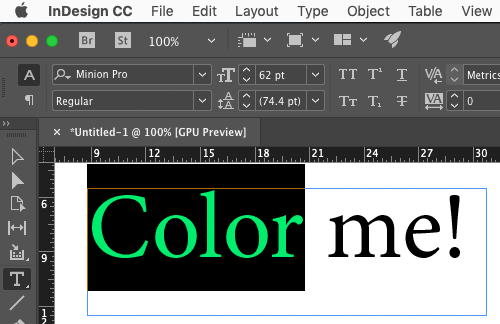
Use Split Window when Applying Colors to Text
How to fix the problem of seeing selected text in inverted colors in InDesign.