


Eye On the Web: The Animation Files


Most people remember their first time on the Web. For many of you, it was likely in that ancient time five or so years ago when the Web was still in its infancy. You probably remember the first thing you typed into a search engine (for me, it was Star Trek), and the first page it brought you to – static, text-heavy, with a smattering of images that squeezed through your 14.4 Kbps connection at about the speed of glacial flow on Everest. Yes, the not-so-good old days.
Luckily for everyone involved, things changed. With the introduction of Netscape Navigator 2.0, and the advent of the animated GIF (not to mention faster modems), the Web got cooler to look at. For the first time you could download a moving picture to your computer screen. Unfortunately, this didn’t mean that Web design got any better. Sure there were a bunch of innovative folks doing great things with motion on the Internet – making tiny cartoons and dancing navigation bars. But the introduction of the animated GIF also marked the onslaught of the gratuitous moving picture on the Web. This gave rise to legions of spinning pies, blinking eyes, flapping books, and, my personal favorite, American flags waving in the wind of cyberspace. As many of these images persist on the Web today, along with their bigger, longer, and more innovative cousins made possible by technologies such as Macromedia’s Flash, the question that begs to be answered is: When is animation appropriate on the Web, and when is it just, well, cheesy?
One place you can be sure animation is the right path to take is on the growing group of cartoon sites on the Web. Now that the Flash plug-in has become a lot more ubiquitous (and Macromedia periodically sends out press releases announcing another gazillion downloads), vector-based animations and cartoons have become a lot more popular. Indeed, some early-adopting designers are beginning to design entire sites in Flash, HTML be damned.
For a taste of Flash animation at its best, check out WildBrain.com. The site, designed by San Francisco’s own Angry Monkey, is a compendium of animated cartoons presented in an easy-to-stomach format. One of the things that’s so exciting about this site is that you are not watching the same small animation loop over and over again. Even on the main index page, an animation captures your attention by giving you a tour of a virtual cartoon factory.
But good animation need not be limited to animation-specific sites. DreamWorks Records’ site for the singer Rufus Wainwright features graphic elements that swim about the page as you read information about Rufus’ latest album or listen to clips of his songs. Like WildBrain.com, the nice thing about this site’s animated elements is that they are not discernibly looped. That is, it is not immediately apparent that the same short animation is playing over and over again (it’s this looping effect that can make animated banner ads so darned annoying).
An example of how not to use Web animations on artist sites such as Rufus’ can be found at the singer Fiona Apple’s home on the Web. The site design here is aesthetically pleasing, but the menu items on this page, about half of which are animated in that loopy repeating way that makes www.whitehouse.gov so distracting, are gratuitous animation at its finest.
Finally, there are sites that beg for animation but which, through some sick twist of fate, are devoid of such moving elements. Take Pixar, for example. The site for one of the most successful computer animation studios of all time (the studio’s latest feature flick, Toy Story 2, even won a Golden Globe for best picture), is almost completely bare of animation. A tiny box at the bottom of the index page shows the studio’s signature desk lamp doing some calisthenics, but that’s it. Now if ever there were a place on the Web where animation would be appropriate to the message, this is it. Yet, nothing.
The moral of the story is this: just because all the bells and whistles are out there, and tools for animating your site are readily available, doesn’t mean using them will make your site better. Conversely, just because you eschew animation in favor of a simpler, cleaner design, doesn’t mean your site will be better either. The important thing, and a lesson we are just beginning to learn on the Web, is to use the medium most appropriate to your message. For a site about cartoons, animation is great. For a site about the government, maybe you should stick to something else. Something like words. After all, the Web was built on them.
This article was last modified on January 18, 2023
This article was first published on March 6, 2000
Commenting is easier and faster when you're logged in!

Recommended for you
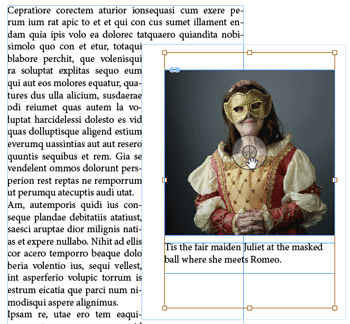
InQuestion: Fixing Problems With Text Wrap Applied to Graphics
Q. I’ve got an image grouped with a caption. The text on the page is jumping to...

Designing a Better Deck: Interview with Nolan Haims
Nolan Haims is on a mission to stop boring presentation designs. You know the ty...

There’s No Logos Like Show Logos
Originally published on January 30, 2009 Depending on who you ask, my musical ta...